

Food Container Sizes Chart: Complete Buying Guide
Food Packaging Guide
Food Container Sizes Explained: A Complete Guide for Takeout and Food Packaging
From a 1-ounce portion cup to a 96-inch supermarket deli case — how volume, diameter, lid families, and counter logistics all decide the container size that actually works for your menu.
A standard food container runs from a 1-ounce sauce cup barely wider than a lid, up through a 24- to 32-ounce entree container that most takeout kitchens treat as their workhorse size, and on to 96-ounce catering pans and full-length supermarket deli cases. Unlike a paper bag, which is rated by how many pounds of dry goods it can carry, a food container is almost always sized by fluid or dry volume — ounces, milliliters, pints, or quarts — because so much of what goes inside is liquid, semi-liquid, or shaped to a mold rather than loose and stackable.
This guide lines up every commonly used food container size in ounces, inches, and centimeters, then goes further than a typical size chart by explaining the resin and lid logic behind why certain sizes share a single lid, why coffee counters and fast-food chains converge on the same two or three sizes, and how the physical dimensions of a supermarket deli case quietly cap how large a grab-and-go container can be. For a full range of ready-to-order options, see this food container packaging overview.
What Is a “Standard” Food Container Size?
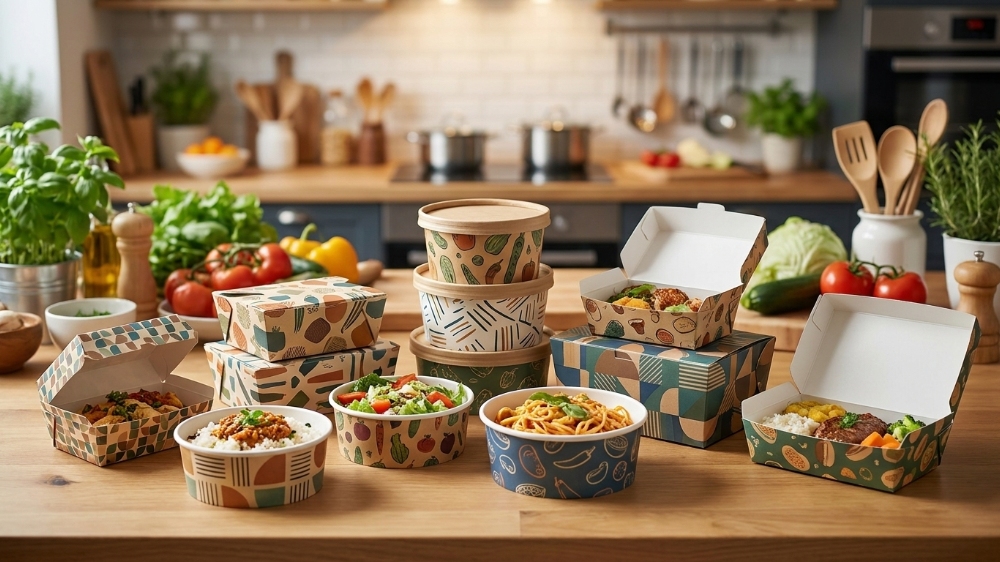
A food container’s labeled size is a volume figure first and a dimension second, which is the opposite of how most people read a packaging spec sheet. A container marketed as “32 oz” tells a buyer how much soup, salad, or rice it holds, not how wide it sits on a counter — and two containers with identical ounce ratings can still have different footprints depending on whether they’re built tall and narrow (soups, sauces) or wide and shallow (salads, entrees with sides). Industry sizing guidance generally puts the most common single-entree takeaway container in the 24- to 32-ounce range with a 7- to 9-inch width, a size most kitchens can use for pasta, rice bowls, salads, and lunches with sides without switching containers mid-shift.
That volume-first logic exists because food containers, unlike bags, routinely hold liquids and semi-liquids that would leak through a paper vessel. Sizes are consistently expressed in ounces or milliliters for capacity and in inches or centimeters for footprint, and most operators sort containers into three practical bands — 8 to 16 oz for sauces, sides and small appetizers; 24 to 32 oz for individual entrees and sandwiches; and 48 oz and above for family meals or combination platters. A packaging buyer specifying a custom mold, by contrast, needs the precise width x depth x height in millimeters for the tooling — one more reason “what size container do I need” has several correct answers depending on who’s asking.
Demand for this category is large enough that sizing decisions get made at real production scale rather than one SKU at a time. Fortune Business Insights values the global food container market at $245.53 billion in 2025, projecting growth to $258.71 billion in 2026 and $407.76 billion by 2034, with North America holding roughly a third of global share. A large share of that growth is coming from delivery and cloud-kitchen formats rather than dine-in service, and flexible packaging alone is projected to expand at a 5.10% CAGR through 2031, with meat and processed foods the single largest application segment — a shift that’s pushing manufacturers toward leak-tested, stackable rigid formats rather than the loose foam trays common a decade ago.
Food Container Size Chart: Ounces, Inches, and Capacity Compared
Capacity and footprint move together but not in lockstep, and treating “medium” as a single fixed size is the most common reason a soup order arrives half-empty-looking or a salad container won’t close. The chart below lines up the size classes food operators actually order against typical dimensions and best-fit uses.
| Size class | Typical capacity | Typical dimensions | Metric | Best suited for |
|---|---|---|---|---|
| Portion / Sauce cup | 1–4 oz | 2–3″ diameter x 1.5–2″ tall | ~30–120 ml | Condiments, dips, sampling, dressing on the side |
| Small deli cup | 8–12 oz | 4–4.5″ diameter | ~240–350 ml | Sides, small salads, sauces sold by the portion |
| Medium deli / soup cup | 16 oz | 4.5–5″ diameter | ~473 ml | Soups, stews, medium sides, oatmeal bowls |
| Standard entree container | 24–32 oz | 7–9″ wide, rectangular or round | ~700–950 ml | Single-entree meals, pasta, rice bowls, salads |
| Large / combo hinged clamshell | 32–48 oz | 8″ x 8″ to 9″ x 9″ | ~950 ml–1.4 l | Combo plates, multi-compartment meals, shared entrees |
| Family / catering tray | 66–202 oz (2–8 qt) | 10–20″ long | ~1.9–6 l | Catering pans, buffet service, event orders |
Round and rectangular containers scale differently once they pass entree size. Round microwavable containers are typically produced in 16, 20, 24, 32, and 38–42 oz sizes across 6-, 7-, and 9-inch diameters, while rectangular versions run 12, 24, 28, and 38 oz across roughly 5″x4″ to 8″x6″ footprints with 1.5–2 inch depth — meaning two containers labeled with nearly the same ounce figure can still look very different on a shelf depending on shape. On the paper side, disposable takeout boxes follow their own numbered system: many paper takeout containers are labeled #1 through #12, spanning capacities from about 0.5 oz up to 16 oz for the smaller numbers, before jumping into pint-and-up territory. Above that, common quart and multi-quart takeout box capacities run from 16 oz (473 ml) and 32 oz (946 ml) up to 66 oz (1,950 ml) and 112 oz (3,300 ml) for large-format Chinese-takeout and bulk orders.
Before finalizing a food container order, confirm:
- Whether the ounce rating is fluid capacity (liquids) or fill capacity (solids) — the two can differ by 10–15%
- Diameter or footprint against your fridge, display case, or delivery-bag rack, not just the ounce number
- Whether the lid is sold separately and shared across a size family, or unique to that one SKU
- Whether hot-fill, freezer, or microwave use is required — not every resin or paper stock supports all three
Materials and Lid Systems: What the Size Number Doesn’t Tell You
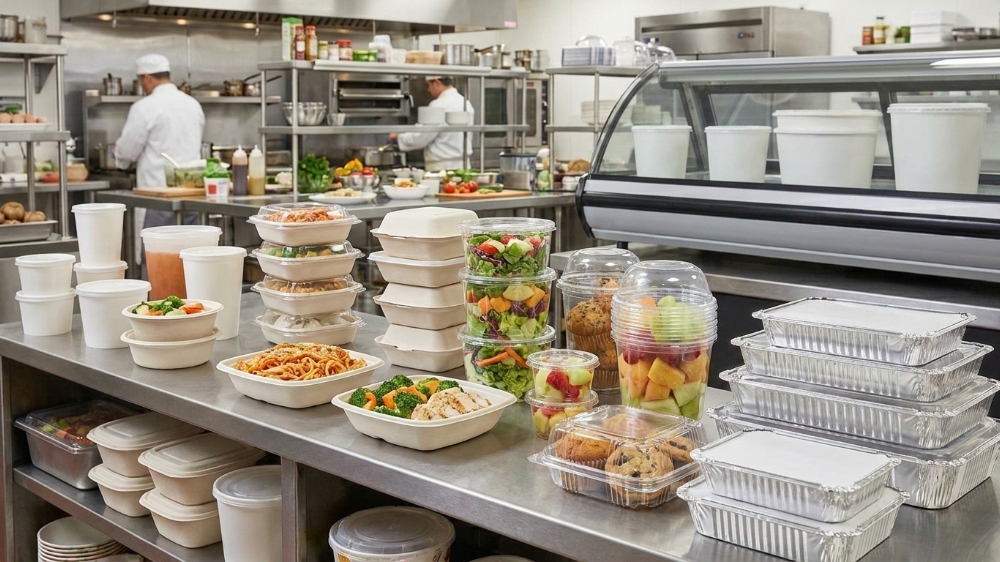
Most size charts stop at ounces and inches, but the material a container is molded from decides just as much about which size is usable for a given menu item — and it’s the piece most self-built spec pages skip entirely. Polypropylene (PP, resin code 5) is the default for microwave-safe deli cups and clamshells because it holds shape under reheating; PET (resin code 1) is common for cold salads, bakery, and produce because it’s rigid and clear but shouldn’t go in a microwave; expanded polystyrene foam (EPS) was historically the cheapest option for hinged clamshells and cups but is now restricted or banned outright across a growing list of U.S. states.
That regulatory shift changes which sizes are even available to order in some markets, not just which material wraps them. New York’s Department of Environmental Conservation confirms that as of January 1, 2026, the state’s existing foam foodware ban expanded to cover expanded polystyrene containers designed for cold storage, including coolers and ice chests, on top of the disposable food containers already prohibited since 2022. Virginia is following a phased timeline of its own: a 2021 law already applied to Virginia vendors with 20 or more locations as of mid-2025, with the expanded ban covering all food vendors statewide from July 1, 2026. Delaware, Rhode Island, and Oregon have enacted their own foam foodware bans, part of a broader pattern of state and local restrictions that now covers roughly a dozen states, which means a buyer sourcing the same nominal container size in different states may need to spec bagasse, molded pulp, or CPLA instead of foam for the identical footprint. Considering eco-friendly issues, you should choose a sustainability pacakaging partner.
Those substitute materials aren’t drop-in equivalents at every size. Recommended alternatives to foam include bagasse, bamboo, and molded pulp for microwave-safe and biodegradable options, alongside CPLA and PLA bioplastics for clearer, more rigid formats, but bagasse tends to run heavier and slightly bulkier than an equivalent-volume foam or PP container, which matters if a kitchen is optimizing for delivery-bag space rather than shelf storage.
On the lid side, the most cost-effective size strategy is one many operators overlook: standardizing on 2–4 sizes within a line that share a single lid — for example an 8 oz, 16 oz, and 32 oz set — cuts SKU count and simplifies both ordering and back-of-house storage. That single decision, more than any individual ounce figure, is usually what separates a kitchen that reorders smoothly from one that’s juggling a dozen mismatched lid types.
What Size Containers Do Coffee Shops and Fast-Food Counters Use?
Coffee counters and quick-service kitchens rarely size a container to a specific dish — they size it to an order-value tier that every register and expo line can grab without thinking, which is why the same two or three sizes keep showing up across unrelated chains. Sauces, dressings, and add-ons ride in the smallest cups; a single entree or sandwich side needs a mid-size cup with a snap lid; a full combo meal needs a container wide enough to keep a protein and two sides from sliding into each other in a delivery bag. Click to learn more about coffee cup sizes guide for businesses.
That order-tier logic maps closely onto the size bands covered above. Sides and sauces are typically portioned into 4 oz to 8 oz cups, while entrees generally need containers in the 24 oz to 48 oz range — almost exactly the counter-to-combo progression a drive-thru or coffee bar needs without stocking five different SKUs behind the counter. Sample and condiment cups sit at the very bottom of that range: portion cups are commonly sold in 1 oz to 4 oz sizes for dipping sauces, salsa, coleslaw, and tasting samples, small enough to hand out several per order without adding meaningful bulk to a bag.
Coffee counters specifically lean toward the 8–16 oz band because most orders pair a drink with at most one baked good or a small hot-food item like oatmeal — a category where cup and container sizing overlap; for the drink-cup side of that same counter, see this related standard takeaway coffee cup size guide for the full beverage-cup ladder. On the food side, a bento-style compartmentalized container is increasingly the default for combo orders because it keeps rice, vegetables, and protein visually and physically separate during transit, and the 32 oz container is reported as the single most-used size across takeout operations, accounting for roughly half of container usage in one operator survey — a strong signal that if a counter only stocks one entree size, 32 oz is the safest default.
Checkout-counter logistics add a constraint a size chart alone won’t show: containers are almost always stored pre-stacked in a dispensing rack or under-counter bin sized to one specific diameter, so a container even a half-inch wider than the stack won’t nest cleanly and slows down bagging during a rush. That’s the same practical reason most quick-service counters standardize on two or three sizes rather than trying to match a container exactly to every menu item.
Notes: We also prepare Pizza Box Sizes Guide & Cake Box Sizes Reference.
Grocery, Supermarket, and Deli-Case Sizing
Supermarket deli counters look simple from the shopper’s side — a scoop of salad, a container, a snap lid — but the sizing behind that counter is constrained by the refrigerated case itself before a single container ever gets chosen. Deli display cases are sold in two broad height profiles: full-height units run around 48 inches for larger storage and showcase space, while low-profile units run closer to 30 inches for locations with limited counter room. Width follows its own step pattern rather than a continuous range — common deli case widths cluster in the 36–48 inch, 48–60 inch, and 72-inch-and-up bands, and some suppliers stock a full range from 36 inches up to 96 inches to fit everything from a convenience-store counter to a full supermarket service deli. Multi-deck merchandising cases used for grab-and-go product add another fixed figure to the mix: Hillphoenix builds its standard deli service cases around a 51-inch height profile with up to two rows of shelving for merchandising.
Those fixed case dimensions quietly cap how large a grab-and-go container can be before it stops fitting the shelf depth or blocks sightlines to the products behind it — which is one reason chilled salads, parfaits, and cut-fruit cups sold from open-air grocery cases rarely exceed 16–24 oz even though a container that size would look undersized on a full-service takeout counter. For deli-counter service where food is scooped to order rather than pre-packed, sizing again follows the small/medium/large logic from the material section above: compact 8–12 oz containers suit a quick-lunch crowd wanting single-serve portions, while 24–32 oz sizes fit meal kits and family-style portions, and the 16 oz size in particular is called out as the most commonly used across food service, especially for takeout soups.
Before finalizing a grocery or deli-case container order, check:
- Case interior depth against the container’s full height, including a domed or vented lid
- Whether the case is full-height (~48″) or low-profile (~30″), which changes how tall a display stack can run
- Tamper-evident lid compatibility for self-serve or grab-and-go placement versus staffed counters
- Whether one or two sizes can cover 90% of counter orders, mirroring how single-SKU checkout bagging works
Meal-Prep, Retail, and Bulk Food Container Sizes
Meal-prep services, catering operations, and bulk retail sit at the opposite end of the size ladder from a coffee counter, and they follow a different sizing logic because the buyer is planning for multiple servings or multiple days rather than a single sitting. Restaurant-grade storage containers used for prep and bulk holding are commonly grouped into small (1–4 quarts), medium (6–12 quarts), and large (18–22 quarts) bands, plus oversized food boxes ranging from 2 to 22 gallons for walk-in storage and high-volume batch cooking — a scale most single-meal takeout charts never address.
Catering and buffet-style orders push volume even further. Large-format take-out trays commonly run 10 to 20 inches long with capacities between 2 and 8 quarts, built for sharing, transport, and bulk event service rather than single portions. For a subscription meal-prep line targeting one or two servings per box, the more relevant reference point stays much smaller — 24–32 oz containers sized for meal kits and family portions, chosen based on who the end user actually is rather than defaulting to the largest available size. Retail-shelf placement introduces one more variable that catering and single-serve takeout don’t share: containers destined for a grab-and-go cooler or shelf need visibility and labeling space as much as capacity, since a shopper is comparing several products side by side rather than ordering one dish at a register. Read Paper Bowl Sizes Guide to learn food container sizes in detail.
How to Choose the Right Food Container Size for Your Situation
The “right” standard size changes depending on who’s buying — a coffee counter optimizing for register speed, a QSR chain standardizing across thousands of units, a supermarket deli constrained by its display case, a meal-prep service planning multi-day portions, or a packaging buyer specifying a custom mold. Matching the buyer’s situation to a size, rather than defaulting to whatever ounce figure sounds safely “large,” avoids both underfilled containers and wasted packaging spend.
| Who’s choosing | Recommended size | Why |
|---|---|---|
| Coffee shop / café counter | 1–4 oz portion cups, 8–16 oz for soups and sides | Fast to bag one-handed; matches the drink-plus-one-item order pattern |
| QSR / fast-casual chain | 8 oz, 24–32 oz, and 48 oz on a fixed size ladder | Matches order-value tiers; keeps every register stocking the same SKUs |
| Independent restaurant takeout | 24–32 oz core, hinged clamshell for combos | Covers single entrees and multi-item plates without excess SKUs |
| Grocery / supermarket deli | 8–12 oz single-serve, 16–24 oz grab-and-go | Fits deli-case shelf depth and open-air cooler sightlines |
| Meal-prep / subscription service | 24–32 oz per serving, multi-compartment | Balances portion consistency with delivery-box stacking |
| Catering / bulk event service | 66–202 oz (2–8 qt) trays and pans | Reduces per-guest container count for buffet and shared service |
Businesses evaluating a full lineup rather than a single size can review ready-made options such as microwave-safe deli containers or fully custom-molded packaging by fill volume and lid family before committing to a production run. Whatever the segment, the same rule applies: test the actual dish, fill volume, and case or bag dimensions together before finalizing a size — the ounce figure on a spec sheet is only the starting point. Click to get connected with your packaging expert, Maibao Packaging.
Not sure which size fits your menu or counter?
Talk to a packaging specialist about matching container volume, lid family, and case or delivery-bag logistics to your actual order mix.
Frequently Asked Questions
What is the most common takeout container size?
The 24- to 32-ounce range is the most widely used size for single-entree meals, with the 32 oz container reported as the single most-ordered size across takeout operations. It fits pasta, rice bowls, salads, and lunches with sides without requiring a second container.
Can I use the same lid across different container sizes?
Yes, many container lines are designed so 2–4 sizes — commonly 8 oz, 16 oz, and 32 oz — share a single lid diameter. Standardizing on a shared-lid family reduces the number of SKUs a kitchen has to stock and reorder.
Is foam still legal for food containers?
It depends on the state — foam foodware bans are already in effect in states including New York, Maine, Maryland, Vermont, and Washington, with Virginia’s ban expanding to all vendors on July 1, 2026. Bagasse, molded pulp, and CPLA are the most common substitute materials at equivalent sizes.
Why does my grocery store’s grab-and-go container seem smaller than a restaurant’s?
Grab-and-go containers are sized partly to fit the refrigerated display case they sit in, and most deli cases run a 30- to 48-inch height profile with fixed shelf depth. That constraint, combined with the need for shopper sightlines to products behind them, keeps grocery grab-and-go sizes in the 8–24 oz range even when a larger container would hold the product just as well.
Post time: Jul-20-2026