

Standard Coffee Cup Sizes: Oz, ml & Dimensions Guide
Coffee Packaging Guide
Coffee Cup Sizes Guide for Businesses: Oz, ml, Dimensions & Lid Fit
From a 4 oz demitasse to a 24 oz iced jumbo — how volume, rim diameter, drink type, and shelf space all decide the “right” size.
A standard coffee cup size runs from a 4 oz (118 ml) espresso cup up to a 24 oz (710 ml) iced jumbo, with 8 oz, 12 oz and 16 oz covering most everyday hot and cold orders. The right pick depends less on volume alone and more on rim diameter, drink recipe, and where the cup has to physically sit — in a hand, a cup holder, or a supermarket cooler.
This guide lines up every standard size in ounces, milliliters and millimeters, then goes further than a typical size chart by explaining why fast-food chains, specialty cafés and retail buyers each gravitate toward different numbers on that same chart. For a full range of ready-to-order sizes, see this coffee packaging solution overview.
What Is a “Standard” Coffee Cup Size?
In U.S. recipe measurements, one cup equals 8 fluid ounces (237 ml) — but almost no coffee counter actually serves that as its default pour. Most cafés treat 12 oz as their everyday “regular,” while automatic drip machines often define a brewing “cup” as just 5–6 oz, which is a different measurement entirely from a drinking cup.
The word “cup” carries at least three separate meanings in the coffee world: a kitchen measuring cup (8 oz), a coffee-maker’s brewing cup (5–6 oz, based on grounds-to-water ratio rather than mug volume), and a takeaway cup size (whatever a given café or chain decides to call small, medium or large). None of these three numbers are interchangeable, which is why a “10-cup” coffee maker actually produces closer to 50–60 oz of brewed coffee rather than 80 oz.
Consumer demand is also reshaping what counts as standard. Coffee remains the most consumed beverage among U.S. adults, and past-day drinking has held at a two-decade high according to Daily Coffee News’ reporting on the National Coffee Association’s Spring 2026 data, which puts national daily consumption at roughly 507 million cups. That same report found hot coffee still dominates overall volume, with cold and iced formats holding a meaningful but smaller share even in the coldest months — a pattern that directly shapes which sizes cafés stock as “standard” for each season.
Coffee Cup Size Chart: Oz, ml, and Diameter Compared
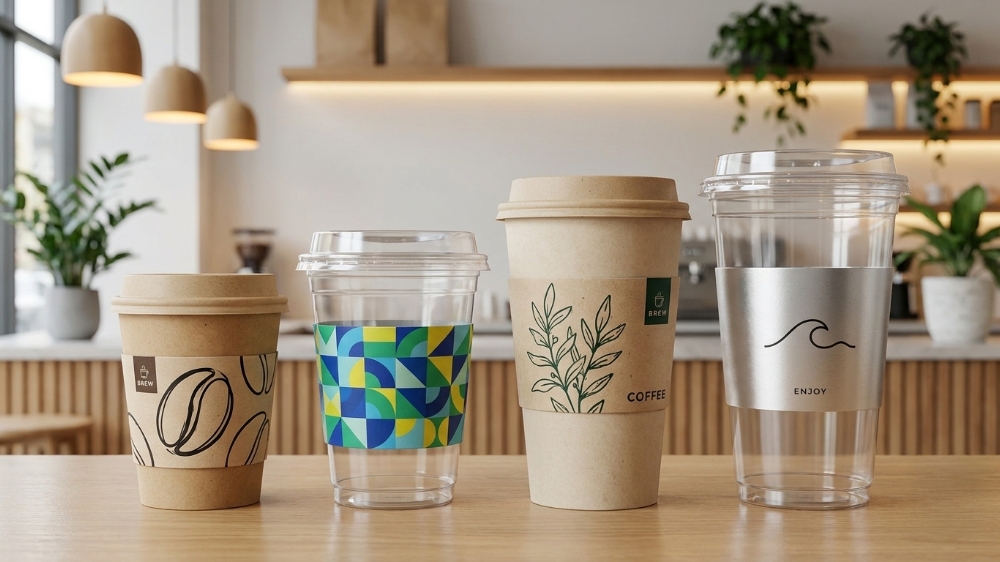
Capacity and rim diameter are two different specifications, and mixing them up is the single biggest reason a “12 oz” lid from one supplier won’t seal on a “12 oz” cup from another. The chart below lines up volume, metric conversion and typical rim size so the numbers you compare actually match real packaging.
| Size | Metric | Typical rim diameter | Best suited for |
|---|---|---|---|
| 2–4 oz | 60–118 ml | ~62 mm | Espresso, demitasse, cortado, sample pours |
| 6–8 oz | 177–237 ml | ~80 mm | Cappuccino, flat white, small drip coffee |
| 10 oz | 296 ml | ~90 mm | “Smart medium” — shares a lid with 12 oz and 16 oz |
| 12 oz | 355 ml | ~90 mm | Regular coffee, latte, cappuccino — the most ordered size |
| 16 oz | 473 ml | ~90 mm hot / ~98 mm cold | Large latte, iced coffee, cold brew |
| 20 oz | 591 ml | ~90–98 mm | Oversized to-go, iced drinks with heavy ice |
| 24 oz | 710 ml | ~104 mm | Jumbo iced coffee, frozen blended, bubble-tea crossover |
These rim diameters aren’t arbitrary — the packaging industry has converged around a small handful of standard sizes so that lids, sleeves and dispensing equipment stay interchangeable across a supplier’s range. As YoonPak’s paper cup sizing guide lays out, roughly 62 mm covers the smallest 4 oz cups, 80 mm covers the 6–8 oz range, 90 mm spans the popular 10–20 oz hot-cup family, and cold cups in the 16–20 oz range typically move up to about 98 mm to handle ice and condensation. Buyers building a menu around one lid family, rather than one ounce number, usually end up with far fewer packaging SKUs.
After learning coffee cup sizes, we also provide you entire sizes coffee cups for your business.
Why Rim Diameter — Not Just Volume — Decides Lid Fit
Two cups labeled “12 oz” can require two completely different lids if their rims aren’t cut to the same diameter. That mismatch is the most common sourcing mistake new coffee businesses make, and it isn’t visible until the wrong lid is already on the loading dock.
Foam adds another layer of complexity that volume alone can’t capture. Per YoonPak’s technical breakdown of specialty drink sizing, a properly textured cappuccino can be roughly a third to nearly half milk foam by volume, meaning an 8 oz cappuccino cup may only be holding around 5–6 oz of actual liquid coffee and milk. Swap that same cup over to a flat white — where the foam layer is much thinner — and the identical 8 oz cup will look and feel underfilled, even though nothing about the recipe volume changed.
If you want to get rid of these troubles, you could cotact a packaging expert to offer you one-stop sloution.
Before switching cup suppliers, confirm:
- The published rim diameter in millimeters, not just the ounce label
- Whether your current lids are rated for that exact rim spec
- The practical fill line below the rim, not the brimful capacity
- Whether hot-cup and cold-cup versions of the “same” size share a rim
Which Cup Size Fits Which Coffee Drink?
Espresso and its short relatives belong in a 2–4 oz cup so the crema stays thick and the shot stays hot, while milk-forward and iced drinks need 12 oz to 24 oz just to hold the milk, foam or ice a normal recipe actually requires. Matching cup to drink protects flavor as much as it protects your packaging budget. If you’re hesitating about 12oz or 16oz, you should read 12 oz vs 16 oz Coffee Cups: How to Choose the Right Size for Your Coffee Business.
- Espresso, cortado, piccolo — 2–4 oz keeps the shot concentrated and hot; a wider cup spreads the crema thin and lets it collapse within seconds.
- Cappuccino, flat white — 6–8 oz balances espresso, milk and foam without diluting the coffee flavor.
- Drip coffee, Americano, standard latte — 10–12 oz is the most-ordered range across cafés and offices alike.
- Large latte, mocha, flavored coffee — 16 oz gives room for syrup, extra milk or whipped toppings without crowding the lid.
- Iced coffee, cold brew, nitro — 16–24 oz is needed because ice can occupy a large share of the nominal volume, leaving less actual beverage than the ounce number suggests.
Cold formats deserve particular attention right now: past-week cold brew consumption has climbed roughly 31 percent year over year, and specialty coffee — much of which is served in the 12–24 oz range — recently hit a multi-year high in past-day consumption, according to the Specialty Coffee Association’s 2025 National Coffee Data Trends breakout report. Any business building a size lineup today should assume cold formats will keep pulling demand toward the larger end of the chart.
What Cup Sizes Do Fast-Food and Coffee Chains Actually Use?
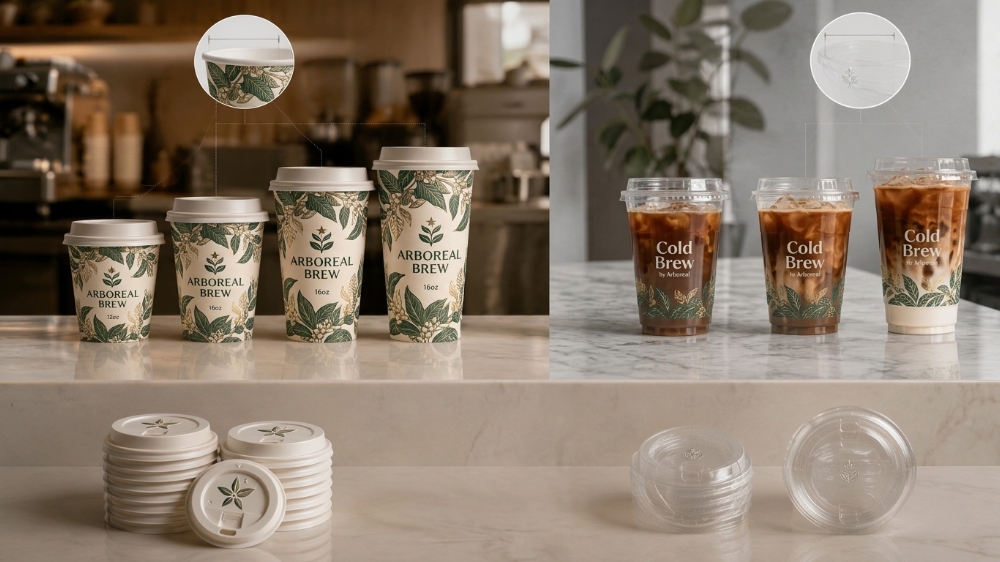
Quick-service coffee counters rarely stock more than three sizes, because every additional size means another lid, another price point, and another decision for staff to make correctly under time pressure. Most land on an 8/12/16 oz or 12/16/20 oz ladder, chosen specifically so as many sizes as possible share one lid family.
This is a deliberate operational choice, not an accident. Standardizing on a single 90 mm rim across the 10, 12, 16 and even 20 oz hot-cup range — the same convergence documented in YoonPak’s rim-diameter guide — lets a drive-thru or high-volume counter cut lid SKUs dramatically while still offering customers a visible size ladder. The tradeoff shows up on the cold side of the menu: cold cups commonly step up to a wider 98 mm rim in the 16–20 oz range specifically to manage ice and condensation, which is why a chain’s “large iced” and “large hot” are rarely built on the exact same cup tooling even when both are labeled 16 oz.
The size a chain leans on hardest also tracks national drinking patterns. With daily coffee consumption sitting at a 20-year high and cold formats becoming a year-round rather than seasonal habit — a shift documented across multiple National Coffee Data Trends reports — chains built around drive-thru and to-go service are increasingly defaulting to 16 oz as their “regular,” not their “large,” while dine-in specialty cafés more often keep 12 oz as the everyday pour.
How Big Are Supermarket Refrigerated Cases — and Why It Matters
A cold-brew or ready-to-drink coffee cup has to fit twice: once in a customer’s hand, and once inside a supermarket cooler that was engineered around a specific door width and shelf depth. Get the second fit wrong, and a perfectly good drink never earns a spot on the planogram.
Commercial glass-door merchandisers — the upright coolers most shoppers picture when they think of a grab-and-go beverage case — typically run 24 to 79 inches wide and 78 to 84 inches tall, according to The Restaurant Warehouse’s commercial refrigerator dimensions guide. Smaller, countertop-style beverage fridges used for impulse-buy placements near checkout tend to sit closer to 20 to 36 inches wide, 22 to 28 inches deep, and 33 to 40 inches tall — a meaningfully shallower footprint that limits how tall or deep a bottled or cupped RTD product can be if it needs to face forward and remain visible.
That shelf depth is the constraint most packaging buyers miss. A 22–28 inch shelf depth doesn’t just cap how many rows of product fit front to back — it also determines how much of a tall 16 oz or 24 oz cold cup’s label stays visible once a second row is placed behind it. A shorter, wider-diameter format can often outsell a taller one in the same footprint purely because more of its branding stays in a shopper’s line of sight.
Before finalizing an RTD or cold-cup format for retail, check:
- Finished pack height including lid, film or overcap
- Shelf depth of the target cooler class (countertop vs. full glass-door)
- How many display rows the retailer’s planogram expects
- Whether a shorter, wider cup improves shelf-facing visibility versus a taller one
How to Choose the Right Coffee Cup Size for Your Situation
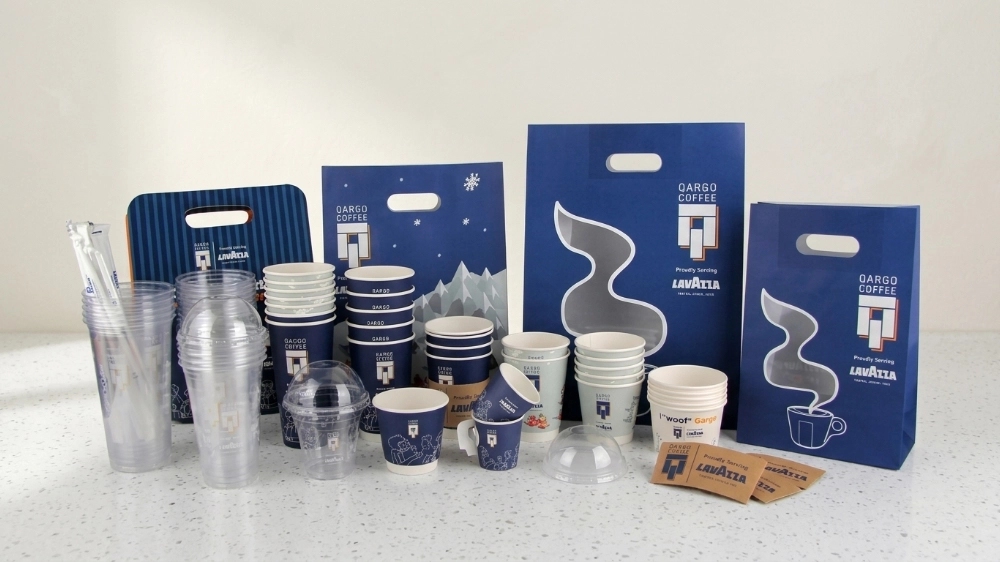
The “right” standard size changes depending on who’s buying — a café owner optimizing recipes, a home drinker choosing a mug, an event caterer serving a crowd, or a retail buyer working around a planogram. Matching the buyer’s situation to a size, rather than defaulting to whatever number sounds biggest, avoids both underfilled drinks and wasted packaging spend.
| Who’s choosing | Recommended size | Why |
|---|---|---|
| Specialty café owner | 8 oz or 12 oz core, 16 oz for iced only | Protects espresso balance; avoids near-identical recipes across sizes |
| Drive-thru / QSR operator | 12/16/20 oz sharing one lid | Fewer packaging SKUs, faster service, matches large-portion demand |
| Home coffee drinker | 8–12 oz mug for espresso-based drinks; 16 oz+ travel mug for commuting | Matches actual recipe ratios rather than “bigger is better” |
| Event or catering planner | 8–10 oz cups with lids, in bulk | Faster service line, less spillage risk, lower per-unit cost at volume |
| Retail / RTD brand buyer | 12 oz for shelf efficiency; 16 oz for value positioning | Shorter format displays better on shallow retail shelves; taller format signals more value |
Businesses evaluating a full lineup rather than a single size can review ready-made options such as 12 oz coffee cups with lids, 16 oz coffee cups with lids, or fully custom printed takeaway cups before committing to a production run. Whatever the segment, the same rule applies: test the actual drink, lid and dispenser together before finalizing a size — the ounce number on a spec sheet is only the starting point. CIick to get connection with your coffee packaging expert, Maibao Packaging.
Not sure which size fits your business?
Talk to a packaging specialist about matching cup size, rim diameter and case dimensions to your actual menu and shelf space.
Frequently Asked Questions
What is the standard coffee cup size in the U.S.?
There isn’t one single legal or technical standard — a recipe “cup” is 8 fl oz, but most cafés treat 12 oz as their everyday regular pour. The size that counts as “standard” really depends on whether you’re measuring ingredients, brewing, or ordering at a counter.
Does a 12 oz cup lid fit an 8 oz cup?
Only if both cups share the same rim diameter, which varies by supplier even at the same ounce size. Always confirm the rim spec in millimeters and test a physical sample before ordering in bulk.
Why do iced coffee cups need to be bigger than hot cups for the same drink?
Ice takes up a significant portion of a cup’s nominal volume, so a 16 oz iced cup may hold noticeably less actual liquid than a 16 oz hot cup. Sizing up for cold drinks keeps the finished beverage volume consistent with what customers expect.
What size coffee cup should a new café buy first?
A hot-drink-led café is usually safest starting with 12 oz as its core size, adding 16 oz only once iced or flavored drinks become a meaningful share of sales. Starting with one well-tested size is easier to manage than launching a full ladder on day one.
Post time: Jul-16-2026