Paper Bag Types Explained: 7 Types of Bags for Food, Retail & Takeout Businesses
Paper Bag Types: 7 Essential Bags for Food & Retail | Maibao
Foodservice & Retail Packaging Guide
Paper Bag Types Explained: 7 Types of Bags for Food, Retail & Takeout Businesses
Not all paper bags are equal. From grease‑proof flat‑bottoms to breathable SOS sacks, the right bag keeps food fresh, fits your brand, and meets evolving sustainability rules. Here’s how to choose.
A paper bag is more than a carrier – it’s a functional tool that protects your product, communicates your brand, and meets consumer expectations for sustainability. With the 2025–2026 FDA phase‑out of PFAS in food contact materials, the packaging landscape is shifting fast. Choosing the right bag type now requires understanding both material science and real‑world use cases.
This guide breaks down seven fundamental paper bag types, their strengths and weaknesses, and the specific scenarios where each excels – whether you’re running a fast‑food drive‑through, a boutique bakery, or an e‑commerce retail operation, and you’re wonder Do Paper Bags Leak with Greasy Food & How to Prevent Oil Leaks in Takeout Packaging? You could find the answers in this guide.
1. Kraft paper bags – the workhorse of takeout and retail
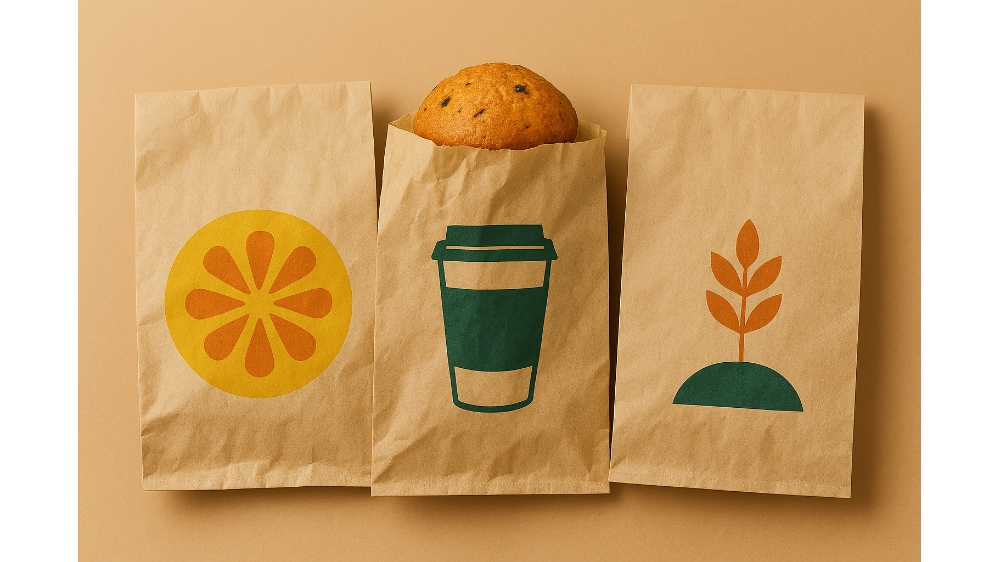
Kraft bags are made from unbleached, high‑strength paper pulp, offering excellent tear resistance and a natural, rustic look. They are the most cost‑effective option for dry goods and short‑hold takeout, but they lack grease resistance.
Kraft paper bags are the most common type in foodservice and retail. Their natural brown colour comes from the kraft pulping process, which retains lignin and yields long, strong fibres. This makes them highly durable – ideal for carrying heavy items like bottles, canned goods, or multiple takeout containers.
However, uncoated kraft absorbs moisture and grease quickly. A fresh bag of hot fries will become translucent with oil within minutes. For this reason, kraft bags work best for dry, non‑greasy items: pastries, bread, produce, or packaged groceries. They are also a favourite for branded retail due to their earthy aesthetic, which signals sustainability – a trend highlighted in recent consumer behaviour reports from People’s Daily (2026) that show takeout bag reuse and branding are rising in urban markets. Learn more about kraft paper bag by The Complete Guide of Kraft Paper Bags for Food Packaging.
2. White paper bags – premium look, higher print contrast
White paper bags are made from bleached kraft, offering a clean, bright canvas for high‑impact branding. They are smoother and more printable than brown kraft, but the bleaching process slightly reduces fibre strength.
White bags are the premium sibling of brown kraft. They are produced by bleaching the pulp, which removes lignin and results in a brighter, more uniform surface. This makes them ideal for full‑colour printing, logos, and intricate designs – a must for brands that rely on visual identity.
In terms of performance, white paper shares the same limitations as uncoated kraft: poor grease and moisture resistance. They are best suited for dry foods (sandwiches wrapped in deli paper, baked goods, or candy) and retail merchandise where presentation matters more than function. Some manufacturers apply a light coating to improve printability, but this does not significantly enhance barrier properties.
3. SOS bags – self‑opening sacks for speed and convenience
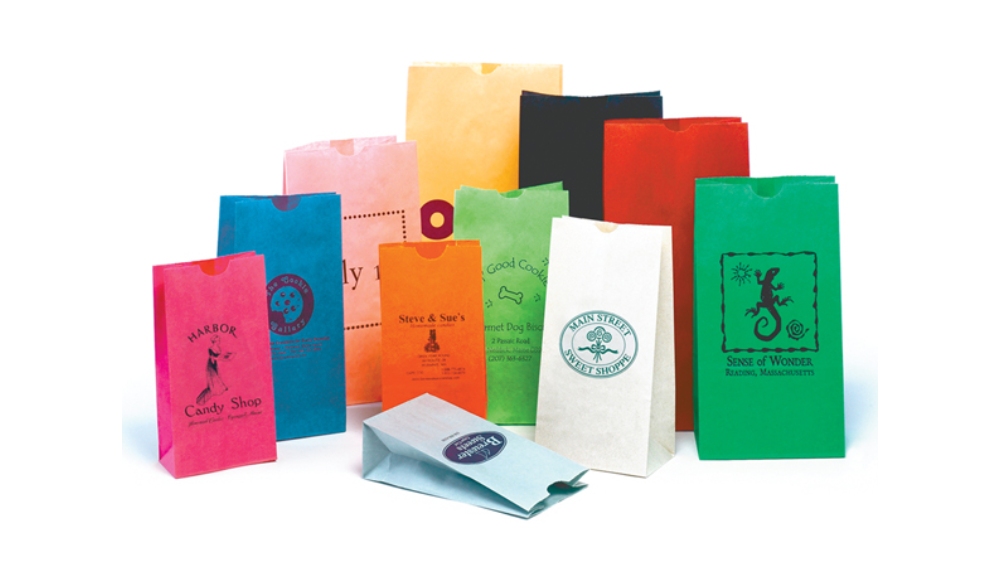
SOS (Self‑Opening Sack) bags have a flat bottom and gusseted sides that pop open instantly, making them perfect for high‑volume counter service. They stand upright on their own, allowing quick loading of items like fries, sandwiches, or produce.
The SOS design is a marvel of packaging efficiency. When the bag is opened, the gussets expand and the bottom flattens, creating a stable base that stays open without assistance. This speeds up packing lines in fast‑food restaurants, delis, and farmer’s markets.
SOS bags are typically made from kraft or white paper, and their flat bottom prevents items from tipping over. They come in various sizes, from small (for a single pastry) to large (for family‑sized meals). However, like all uncoated paper bags, they offer limited protection against moisture and grease – so they are best used for dry or wrapped items. Many operators pair SOS bags with a separate grease‑proof liner for messy foods, as recommended in recent Beijing municipal guidelines (2026) that encourage proper material matching to reduce waste.
4. Flat‑bottom bags – stability for meals and heavy items
Flat‑bottom bags, also called block‑bottom bags, have a rectangular base that provides maximum stability for multiple items. They are the go‑to choice for takeout meals that include a sandwich, fries, and a drink (in a carrier) because they stand securely.
Unlike conventional bags that taper to a point, flat‑bottom bags feature a gusseted base that unfolds into a rigid rectangle. This allows them to stand upright on tables or delivery bags, preventing spills and keeping food organised. They are particularly popular in fast‑casual restaurants and meal‑kit services where customers expect neat, compartmentalised packaging.
Flat‑bottom bags are available in both kraft and white paper, and some versions include a twist‑handle for easier carrying. However, they remain porous – so for greasy items (e.g., fried chicken), they need to be combined with a coated inner liner or a separate grease‑proof bag. The open top also means heat escapes quickly, which is fine for short holds but less ideal for long delivery.
5. Block‑bottom bags – the retail favourite with extra space
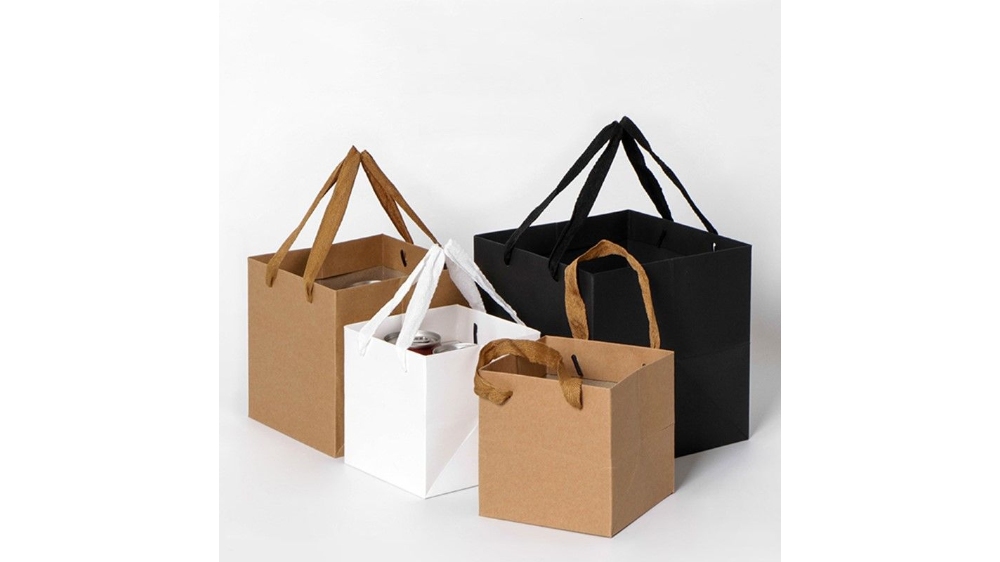
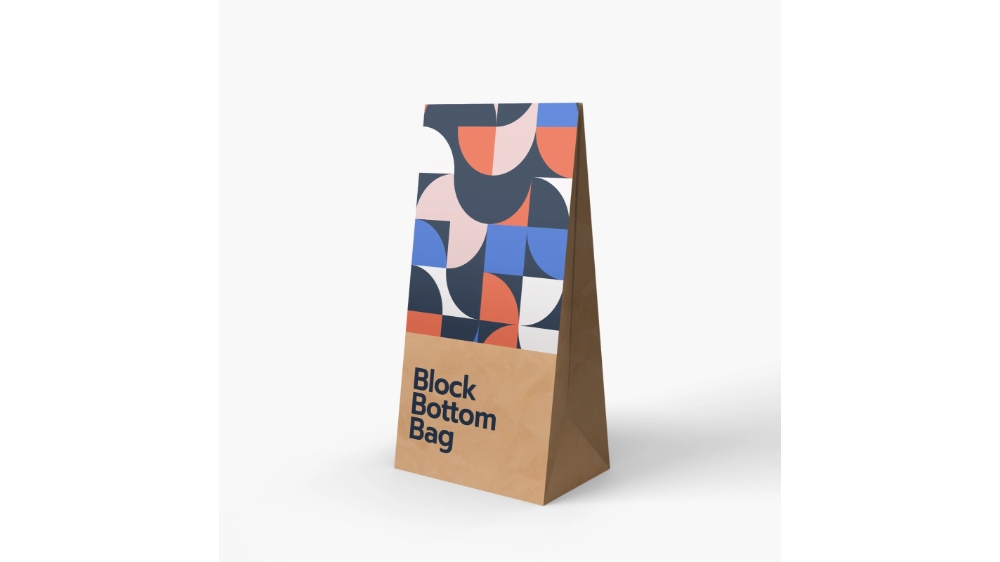
Block‑bottom bags are similar to flat‑bottom but with a more squared, rigid base that adds volume for bulky items. They are widely used in retail boutiques, gift shops, and premium food halls for their structured look.
The block‑bottom construction uses additional folding to create a deep, box‑like base that can hold heavier or odd‑shaped products such as bottles, jars, or multiple boxes of confectionery. The extra material gives the bag a premium feel and excellent stackability, making it a favourite for upscale retail and corporate gifting.
While the base is robust, the sides are still gusseted and open at the top, so they do not provide a seal. For foodservice, they are best used for dry bakery items (cookies, croissants) or packaged snacks where grease is not a concern. They are also a great choice for branded merchandise because the large surface area on the front and back allows for prominent logo placement.
6. Gusseted bags – expandable capacity for variable loads
Gusseted bags have folded side panels that expand when filled, allowing them to accommodate bulky or irregularly shaped items. They are the most versatile type, used everywhere from produce sections to takeout counters.
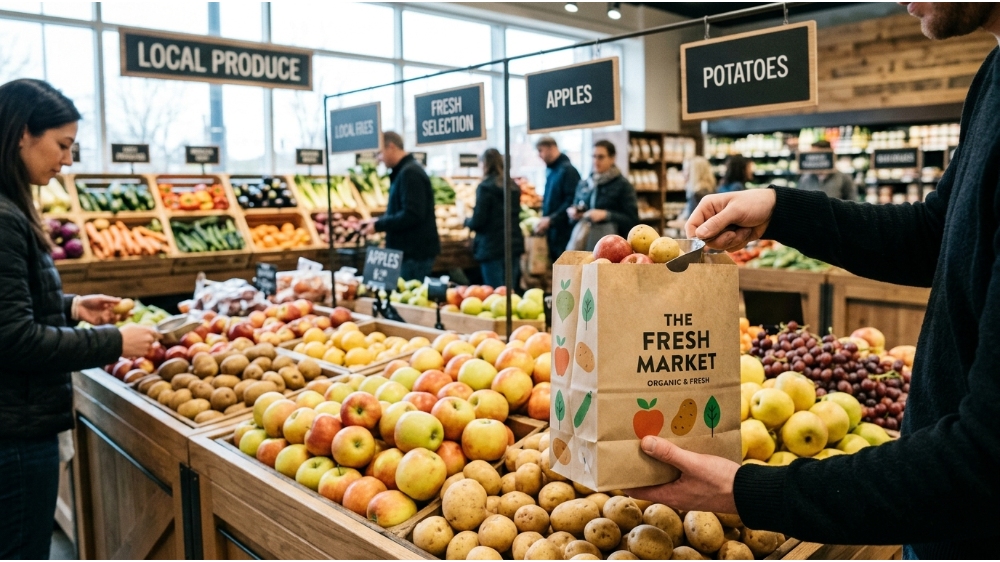
The gusset (the side fold) is the defining feature. When empty, the bag lies flat, saving storage space. When filled, the sides open outward, increasing the bag’s width and volume. This makes gusseted bags ideal for loose produce (apples, potatoes), bulk grains, or multiple wrapped sandwiches.
Gusseted bags are available in kraft, white, and even coated variants. The open top and lack of a flat bottom mean they do not stand well on their own – they usually need to be held or placed in a carrier. For foodservice, they are often used as secondary packaging (e.g., a bag for a boxed meal) or for dry snacks like popcorn and nuts. Their expandability makes them a popular choice for self‑service where customers fill their own bags.
7. Coated and barrier bags – engineered for greasy, moist, or hot foods
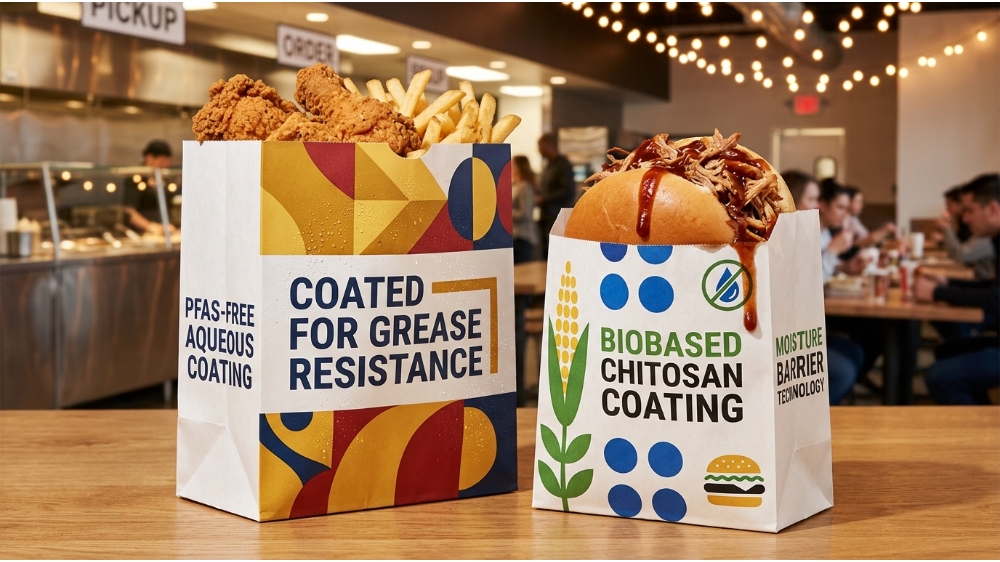
Coated paper bags feature a thin layer of PE, aqueous coating, or plant‑based barrier to repel grease and moisture. They are essential for fried foods, saucy items, and any takeout that travels more than 10 minutes.
Standard paper bags fail with oily foods because the oil penetrates the fibres, causing stains, weakening the structure, and transferring to customers’ hands. Coated bags solve this by adding a barrier layer on the inside. The most common coatings are:
Polyethylene (PE) coating – the traditional choice, offering excellent grease resistance and some moisture protection, but not compostable.
Aqueous coatings – water‑based, repulpable, and increasingly used as a PFAS‑free alternative. A 2026 study on paper‑based laminates showed aqueous coatings provide similar barrier performance to PE while being more environmentally friendly.
Biobased coatings – made from starches, cellulose, or chitosan. Recent research on Chi/AESO/kraft paper barriers (2026) demonstrated that chitosan‑based coatings can effectively block oil and water vapour, making them a viable compostable option.
For operators, the choice of coating matters not only for performance but also for regulatory compliance. The FDA has been phasing out PFAS (per‑ and polyfluoroalkyl substances) in food contact materials since 2025–2026, pushing the industry toward safer alternatives. Many states and municipalities have their own restrictions, so working with a supplier that offers FDA‑compliant, PFAS‑free coatings is critical.
Coated bags are available in all formats (SOS, flat‑bottom, gusseted) and are the recommended choice for any food that is fried, sauced, or held for more than 10 minutes. They also provide better heat retention compared to uncoated paper, which is a bonus for delivery.
Paper bag type comparison: which one fits your business?
Selecting the right bag depends on three factors: food type (greasy/dry), hold time (minutes to delivery), and branding needs. The table below summarises the strengths and best uses for each type.
Bag type
Grease resistance
Moisture control
Stability / stand‑up
Best use
Kraft (uncoated)
Poor
Poor
Moderate (if flat bottom)
Dry goods, groceries, short‑hold (under 10 min)
White (uncoated)
Poor
Poor
Moderate
Premium retail, dry bakery, branded merch
SOS (uncoated)
Poor
Poor
Excellent (flat base)
Counter‑serve, dry foods, speed packing
Flat‑bottom (uncoated)
Poor
Poor
Very good
Meal combos, sandwiches, heavy items
Block‑bottom (uncoated)
Poor
Poor
Excellent
Retail, bulky items, premium gifting
Gusseted (uncoated)
Poor
Poor
Low
Produce, bulk snacks, variable volumes
Coated / barrier (PE, aqueous, biobased)
Excellent
Good
Varies (all formats available)
Fried foods, saucy items, delivery >10 min
For operators focused on sustainability, aqueous‑coated and biobased options are the future. The development of biodegradable kraft paper from agricultural waste (2025 research from NSTL) shows that high‑performance, compostable bags are becoming commercially viable. However, always verify the coating’s compliance with local regulations and test your specific food item under real delivery conditions.
Uncoated kraft bags are the most sustainable if you don’t need grease resistance, as they are fully recyclable and compostable. For greasy foods, choose aqueous‑coated or biobased‑coated bags that are PFAS‑free and repulpable.
Can I put hot food in a paper bag?
Yes, but only for short periods. Uncoated paper handles heat well but will soften from steam. For hot, greasy food (e.g., fried chicken), use a coated or barrier bag to prevent oil seepage and maintain structural integrity.
What does “SOS” stand for in bags?
SOS stands for “Self‑Opening Sack” – a design that pops open instantly with a flat bottom, making it easy to fill quickly in high‑volume settings like fast‑food counters.
Are white paper bags less sustainable than brown kraft?
Not necessarily. White bags are bleached, which uses additional chemicals and energy, but many are made from recycled fibre. The sustainability difference is minimal if both are sourced from certified sustainable forests and are recyclable.
Need help selecting the right paper bag for your menu or retail line?
Talk to our packaging specialists about material options, custom printing, and compliance with the latest FDA and local regulations.