Kraft Paper Bags for Food Packaging: Uses, Benefits & What Businesses Should Know
Kraft Paper Bags for Food Packaging: The Complete Guide
Foodservice Packaging Guide
Kraft Paper Bags for Food Packaging: Uses, Benefits & What Businesses Should Know
Kraft paper bags are the workhorse of takeout and retail food packaging. From fresh-baked bread to greasy burgers, they offer strength, natural aesthetics, and sustainability. But not all kraft is created equal. This guide breaks down what foodservice operators, cafes, and retailers need to know about kraft paper bag specifications, coatings, and applications—so you choose the right bag for every menu item.
A baker scoops warm croissants into a kraft bag. A barista slides a pasty into a branded paper sack. A fast‑food worker loads a double cheeseburger into a grease‑resistant kraft pouch. Kraft paper bags are everywhere—but their performance varies wildly. Some fall apart with one greasy sandwich; others hold up for hours. The difference is in the engineering: GSM, coatings, wet strength, and construction.
This guide explains the science and practical choices behind kraft paper food bags. We’ll cover material strength, natural aesthetics, sustainability credentials, customization options, and which bag works best for every foodservice segment—from delicate pastries to heavy deli sandwiches. Whether you run a coffee shop, a bakery, or a fast‑food chain, you’ll leave with a clear framework for choosing kraft bags that protect your food and represent your brand.
What makes kraft paper bags ideal for food packaging?
Kraft paper stands out because of its high tear resistance, breathability, and natural fiber strength. Unlike recycled paper, kraft is made from virgin wood pulp through the sulfate process, which preserves long cellulose fibers—giving the paper exceptional tensile strength and durability. This makes it strong enough to carry heavy items like bagels, sandwiches, or produce, yet porous enough to allow moisture vapor to escape, keeping crispy foods crisp.
In a Reddit thread on r/Bagels, a user asked: “Looking for kraft paper bags that don’t fall apart with fresh bagels.” That’s a real-world concern: high-moisture foods can weaken standard bags. The solution lies in choosing the right basis weight (GSM) and, if needed, a moisture-resistant coating. Foodservice operators need bags that balance integrity, appearance, and cost—and kraft delivers across all three when specified correctly.
Strength and durability: GSM, burst resistance, and tear strength
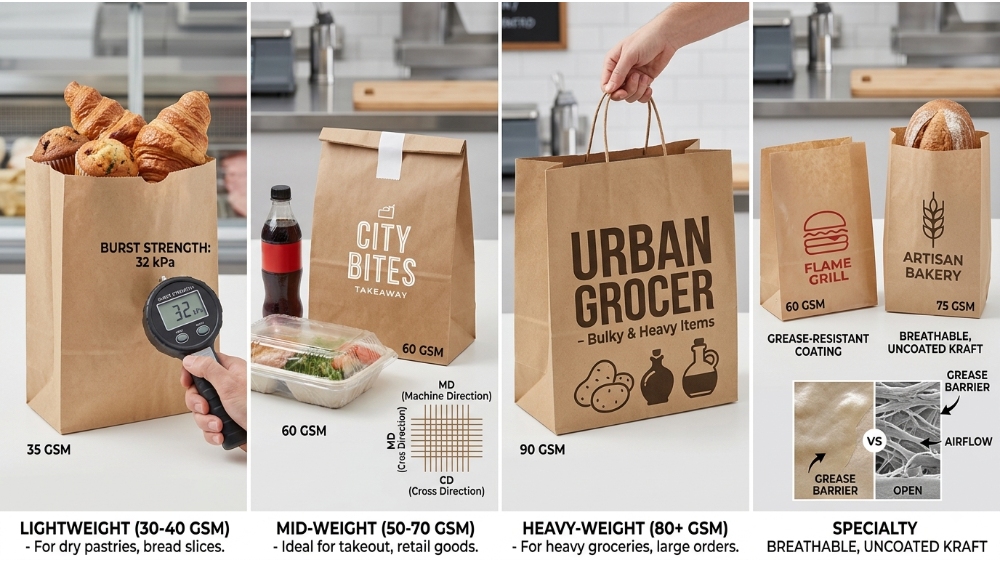
The strength of a kraft paper bag is primarily determined by its grammage (GSM)—grams per square meter—and its burst and tear resistance (measured by TAPPI standards). Lightweight bags (30‑40 GSM) are fine for dry goods like pastries or bread slices, but fail with heavy or moist items. Mid‑weight (50‑70 GSM) is the sweet spot for most takeout and retail applications, offering a good balance of strength and cost. Heavy‑weight (80+ GSM) is used for bulky groceries, large orders, or items with sharp edges (like crusty bread).
Tear resistance is also influenced by the fiber orientation and the presence of wet‑strength additives. Many food-grade kraft bags incorporate a small amount of resin to maintain integrity when exposed to condensation from hot food. For example, a standard burger bag typically uses a 55‑60 GSM kraft with a grease‑resistant coating, while a bread bag for artisan loaves might use a 70‑80 GSM uncoated kraft to allow breathability while supporting the weight of a heavy sourdough.
Appearance and branding: why kraft’s natural look works for cafes and bakeries
Kraft paper has a warm, earthy, and minimal aesthetic that resonates with modern consumers. Surveys show that 73% of consumers find paper packaging more visually appealing than plastic, and that perception strongly influences purchase intent—especially in premium segments like specialty coffee and artisan bakeries. The natural brown (or white bleached kraft) conveys authenticity, craftsmanship, and sustainability, making it a favorite for brands that position themselves as natural or eco-conscious.
For coffee shops, a custom‑printed kraft bag with a logo transforms a functional item into a brand touchpoint. Bakeries often choose white kraft for a clean, upscale look, or natural brown for a rustic feel. The texture of kraft also accepts printing well—from simple one‑color logos to full‑color designs—making it highly versatile for branding. And because kraft is perceived as more “natural” than glossy coated paper, it aligns with the clean‑label movement in food.
Sustainability: biodegradability, recyclability, and compostability
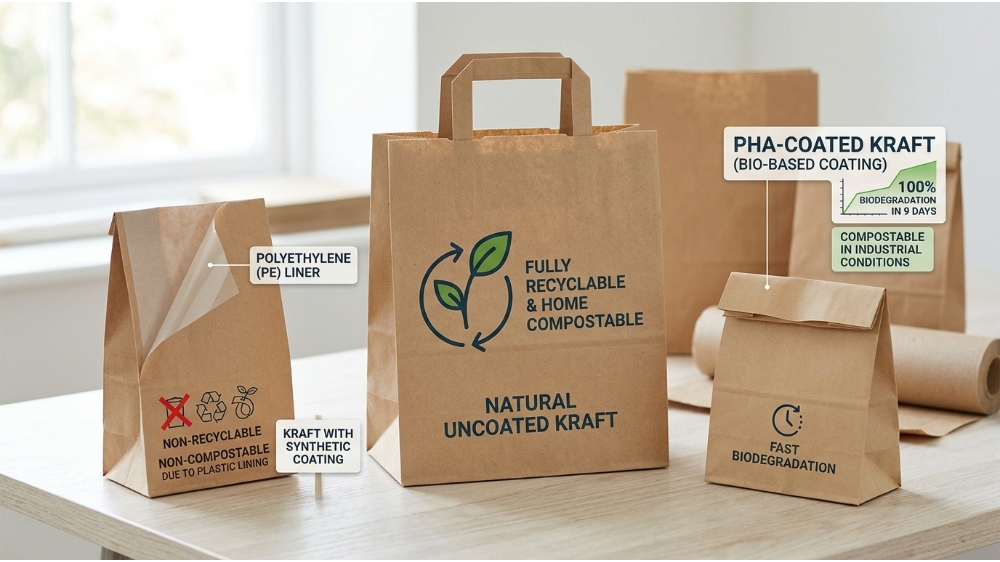
Kraft paper bags are biodegradable, recyclable, and compostable—provided they are free from plastic linings or synthetic coatings. In a 2026 study, PHA‑coated brown kraft paper achieved 100% biodegradation within 9 days under composting conditions, demonstrating that even coated kraft can be fully broken down if the coating is biobased. Uncoated kraft is even more straightforward: it can be recycled in standard paper streams and breaks down in home compost within weeks.
However, not all “kraft” bags are equal. Some have a thin polyethylene (PE) layer to resist grease, which makes them non‑recyclable and non‑compostable. Businesses seeking genuine sustainability should look for aqueous‑based or PHA coatings that offer grease resistance without compromising compostability. The FDA maintains a list of food‑contact substances that are safe and compliant—always verify your supplier’s materials meet local food contact regulations.
Customization options: printing, sizes, and coatings
Customization goes beyond printing a logo. Kraft bags come in a range of sizes (from small pastry bags to large grocery sacks), gusset widths, and closure styles (flat or folded tops, with or without handles). The most common customisations include:
Printing: Flexographic or digital printing for logos, patterns, or nutritional information.
Coatings: Grease‑resistant (aqueous or PE), moisture‑barrier, or breathable (uncoated).
Reinforcements: Reinforced bottom for heavy loads, or a tear‑resistant patch.
Handles: Twisted paper handles, flat handles, or die‑cut handles for retail.
For foodservice, the most requested custom features are branded printing on the front panel and grease‑resistant inner coating for greasy items like burgers or fried chicken. With modern digital printing, even small batches can be customized cost‑effectively, allowing independent cafes and bakeries to compete with larger chains on packaging appeal.
Applications across foodservice: bakery, coffee shops, restaurants, fast food, grocery, takeaway, dry food, sandwiches, bread
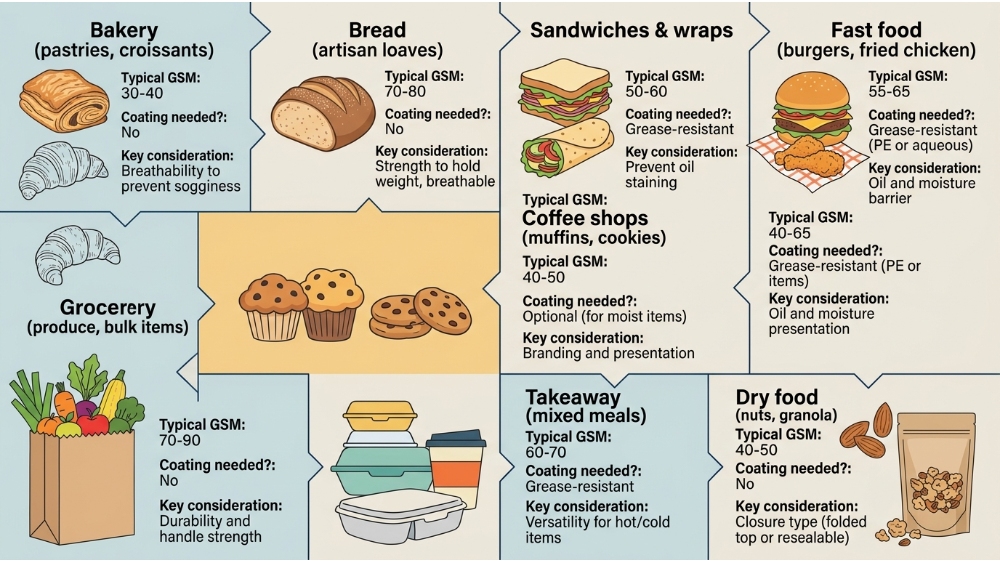
Kraft bags serve a wide spectrum of food categories—each with distinct requirements:
Application
Typical GSM
Coating needed?
Key consideration
Bakery (pastries, croissants)
30‑40 GSM
No
Breathability to prevent sogginess
Bread (artisan loaves)
70‑80 GSM
No
Strength to hold weight, breathable
Sandwiches & wraps
50‑60 GSM
Grease‑resistant
Prevent oil staining
Fast food (burgers, fried chicken)
55‑65 GSM
Grease‑resistant (PE or aqueous)
Oil and moisture barrier
Coffee shops (muffins, cookies)
40‑50 GSM
Optional (for moist items)
Branding and presentation
Grocery (produce, bulk items)
70‑90 GSM
No
Durability and handle strength
Takeaway (mixed meals)
60‑70 GSM
Grease‑resistant
Versatility for hot/cold items
Dry food (nuts, granola)
40‑50 GSM
No
Closure type (folded top or resealable)
For each application, the right bag combines the correct GSM, coating, and construction to maintain food quality and customer satisfaction. A bakery, for instance, might use lightweight uncoated bags for croissants but switch to a heavier coated bag for filled sandwiches. The key is to match the bag to the food’s moisture and oil profile.
Grease and moisture resistance: coated vs. uncoated kraft
The single biggest complaint about kraft bags is grease staining and structural failure from oil. Uncoated kraft absorbs oil quickly, leading to unsightly spots and potential bag failure. For foods with moderate oil (like muffins or cookies), uncoated kraft may be acceptable. For fried foods, burgers, or saucy sandwiches, a coating is essential.
Two primary coating types dominate: PE (polyethylene) and aqueous‑based coatings. PE provides excellent grease resistance and a complete barrier, but it renders the bag non‑recyclable and non‑compostable. Aqueous coatings, often made from plant‑based materials, offer comparable grease resistance while maintaining compostability—they can achieve a kit rating of 12 (excellent oil resistance) and a Cobb value as low as 16 g/m² (water absorption). For businesses prioritizing sustainability, aqueous‑coated kraft is the clear winner, though it may be slightly more expensive.
Some manufacturers also produce PHA‑coated kraft, which is fully biodegradable and has been proven to break down within days in industrial composting. This is a promising alternative for eco‑conscious brands that still need high‑performance grease protection.
How to choose the right kraft paper bag for your business
Start by assessing your menu: what foods will go in the bag? Rate each item by oiliness, moisture, weight, and sharpness. Then consider your hold time—if food sits in the bag for over 15 minutes, moisture and grease have more time to penetrate. For short‑hold (under 10 minutes), uncoated mid‑GSM kraft may suffice. For delivery or extended carryout, coated bags are safer.
Next, evaluate branding and presentation. If you want a premium look, consider white kraft or custom printing. If sustainability is a key selling point, opt for aqueous‑coated or uncoated bags and make that claim visible on the packaging. Also factor in storage: kraft bags should be stored in a dry area to prevent moisture absorption before use.
Finally, test before bulk ordering. Pack your actual food items in sample bags, simulate delivery conditions (including shaking and stacking), and inspect for grease bleed, structural integrity, and customer feedback. A small test run can save you from costly complaints later. Working with a packaging supplier that offers custom testing and consultation ensures you get the right bag for your specific needs.
Yes—provided they meet FDA or local food‑contact regulations. Most food‑grade kraft bags are manufactured with virgin fibers and safe coatings (if any) that are non‑toxic and suitable for direct food contact.
Can I put hot food directly in a kraft paper bag?
Yes, but the bag must be designed for heat. Uncoated kraft handles heat well but may absorb steam and weaken; coated or reinforced kraft is better for hot, greasy items to maintain integrity.
Do kraft paper bags keep bread fresh?
They allow moisture to escape, which prevents crusty bread from becoming soggy. For soft bread, a breathable kraft bag is ideal—it maintains texture better than plastic, which traps moisture and accelerates staling.
How can I tell if a kraft bag is recyclable or compostable?
Check for labeling (e.g., BPI compostable, or recycling symbol #20/#21). Uncoated kraft is universally recyclable; coated kraft with PE is not, but aqueous‑coated kraft is both recyclable and compostable in most facilities.
Post time:
Aug-12-2026
For inquiries about our products or pricelist, please leave your email to us and we will be in touch within 24 hours.