How to Develop Custom Bakery Packaging for Your Brand: A Step-by-Step Guide
Custom Bakery Packaging Guide: 7 Steps to Brand Your Baked Goods
Bakery Branding & Packaging Guide
How to Develop Custom Bakery Packaging for Your Brand: A Step-by-Step Guide
Your croissant is flaky, your sourdough is crusty, and your cookies are perfectly chewy. But the moment they leave your shop, they’re at the mercy of moisture, crushing, and stale air. Custom bakery packaging isn’t just a box—it’s your brand’s handshake with every customer. Here’s how to build packaging that protects your product, tells your story, and keeps them coming back.
A bakery isn’t just a place that makes food—it’s a place that makes memories. And memories are carried home in a box. Whether you’re a neighborhood patisserie or a wholesale bread supplier, the packaging you choose is the final touchpoint before your customer takes that first bite. It protects, it presents, and it persuades. This guide walks you through every step of developing custom bakery packaging that works for your products, your budget, and your brand.
If you’ve ever scrolled through Reddit’s r/PackagingDesign, you’ve seen the same question pop up again and again: “How do I even start designing packaging for my bakery?” One user recently shared their frustration: “I have a sourdough micro-bakery and I’m drowning in options—kraft boxes, window boxes, clamshells, bags. I just want something that keeps my bread fresh and looks professional.” For start-up business, you could read 7 Affordable Bakery Packaging Ideas Solution.
Another chimed in: “My croissants go soggy in 10 minutes in a paper bag. What am I doing wrong?” These aren’t just complaints—they’re the real-world challenges that custom packaging solves. And they’re exactly what we’re addressing in this guide.
Why Custom Bakery Packaging Matters More Than You Think
Packaging is the first physical interaction a customer has with your product. It sets expectations, communicates quality, and—critically—preserves the eating experience. In a study by the Food Packaging Forum (2023), 72% of consumers said that packaging quality directly influenced their perception of the food inside. For bakeries, where freshness is paramount, the stakes are even higher.
But it’s not just about perception. The right packaging extends shelf life, reduces waste, and can even reduce your carbon footprint. A report from the Sustainable Packaging Coalition (2024) found that optimized packaging design can reduce food waste by up to 25% by protecting products from damage and spoilage. For bakeries, that means fewer unsold goods and happier customers.
Yet many bakery owners treat packaging as an afterthought—a generic white box or a plain paper bag. That’s a missed opportunity. Custom packaging differentiates your brand in a crowded market. It tells your story without a word. And when done right, it turns a one-time buyer into a loyal fan.
Choosing the Right Material: Paperboard, Kraft, or Sustainable Alternatives
The material you choose determines everything: protection, print quality, cost, and environmental impact. Here’s a breakdown of the most common options for bakery packaging.
Solid Bleached Sulfate (SBS) Paperboard
SBS is a premium, bright white paperboard with a smooth surface. It’s ideal for high-end pastries, cakes, and gift boxes because it takes printing beautifully and feels luxurious. However, it’s more expensive and less breathable than other options. For croissants and danishes, which need to release steam to stay crisp, SBS may not be the best choice unless it’s perforated.
Kraft Paperboard
Kraft is the workhorse of bakery packaging. It’s sturdy, affordable, and has a natural, rustic look that appeals to artisanal brands. Uncoated kraft is breathable, which helps moisture escape—great for bread and baked goods that need to stay crusty. However, it absorbs grease and can stain, so it’s best for dry goods or short-term use. For longer hold times, a coated kraft or a grease-resistant liner is recommended.
Recycled and Post-Consumer Content
More bakeries are turning to recycled materials to meet consumer demand for sustainability. According to a 2025 report from the Ellen MacArthur Foundation, 68% of consumers are willing to pay more for sustainable packaging. Recycled paperboard can be just as strong as virgin board, but it may have a slightly rougher surface and a grayish tone. It’s an excellent choice for brands that want to walk the talk. Learn recycled materials in detail by reading Switch to Eco Friendly Bakery Packaging without Costs Increasing.
Compostable and Biodegradable Options
For bakeries aiming for zero waste, compostable packaging made from bagasse, bamboo, or PLA (polylactic acid) is gaining traction. However, these materials often have limitations: they may not hold up well with greasy or wet products, and they require specific composting conditions. A 2024 study in the Journal of Resources, Conservation and Recycling found that while compostable packaging reduces fossil fuel use, its end-of-life performance depends heavily on local waste infrastructure. Before committing, check if your region has industrial composting facilities.
Material
Grease Resistance
Moisture Management
Best Use
Sustainability
SBS Paperboard
Good (with coating)
Poor—traps moisture
Pastry boxes, gift packaging
Moderate (virgin fiber)
Uncoated Kraft
Poor—absorbs oil
Good—breathable
Bread bags, sandwich wraps
High (recyclable)
Coated Kraft
Excellent
Moderate—vents through holes
Fried foods, greasy items
Moderate (coating complicates recycling)
Recycled Paperboard
Variable
Variable
Everyday packaging
High (post-consumer content)
Compostable (Bagasse/PLA)
Moderate—with lining
Moderate
Eco-conscious brands
High (if composted correctly)
As one Reddit user put it: “I switched from plastic clamshells to coated kraft boxes for my cookies. They stay fresh longer, and my customers love the rustic look. Best decision I made.” The takeaway? Match your material to your product’s needs—and your brand’s values. Learn more about choosing the right materials by reading Practical Bakery Packaging Selection Guide.
Structural Design: Fit, Function, and Food Safety
Great packaging isn’t just about looks—it has to work. The structural design must protect the product during transport, keep it fresh, and be easy for staff to pack and customers to open.
Fit and Form
Your packaging should fit your product like a glove. Too much empty space and the product shifts, leading to breakage. Too tight and it crushes. For example, a delicate cake needs a box with a snug fit and a sturdy base. A loaf of bread, on the other hand, can handle a bit of room, but it needs a closure that keeps air out. According to the Institute of Food Technologists (2024), proper fit reduces physical damage by up to 40% during delivery. Learn more by reading Step-by-Step Guide to Develop Custom Bakery Packaging for Your Brand.
Venting and Moisture Control
Steam is the enemy of crispness. For products like croissants, bread, and fried pastries, venting is critical. Small perforations or slits in the packaging allow steam to escape, preventing sogginess. A 2023 paper in the Journal of Food Engineering demonstrated that vented packaging can extend crispness by up to 20 minutes compared to sealed containers. For cookies and cakes, which don’t release as much steam, venting is less critical, but it can still help prevent condensation.
Food-Grade and Safety Standards
All packaging that comes into contact with food must meet safety regulations. In the US, this means compliance with FDA guidelines for food contact substances. In the EU, it’s the Framework Regulation (EC) No 1935/2004. Your packaging supplier should provide documentation that their materials are food-grade and safe for your specific application. Don’t skip this step—your customers’ health and your reputation depend on it.
One bakery owner on Reddit shared: “I almost went with a beautiful box from a non-food supplier. Glad I double-checked—it wasn’t food-grade. I would have been in big trouble.” Always ask for certificates. Click to explore food-grade bakery packaging
Printing and Finishing: Making Your Brand Unforgettable
Once you’ve nailed the structure, it’s time to make it beautiful. Printing and finishing are where your brand comes to life.
Printing Techniques
Flexographic printing is the most common for large runs—it’s cost-effective and works well on kraft and paperboard. Digital printing is better for short runs and offers high-quality, full-color graphics with no setup costs. For premium brands, offset printing provides the highest resolution and color accuracy. A 2024 survey by Printing United Alliance found that 63% of consumers are more likely to purchase a product with high-quality packaging graphics.
Finishing Touches
Finishing options like matte or gloss lamination, spot UV, foil stamping, and embossing can elevate your packaging from ordinary to extraordinary. They add texture, shine, and a tactile experience that customers remember. However, they also add cost. For a bakery, a simple matte finish with a spot gloss on the logo can be a cost-effective way to stand out.
Design Principles for Bakery Packaging
Your design should be clean, appetizing, and consistent with your brand. Use high-quality photography or illustrations of your products. Include your logo prominently. And don’t forget the practical details: ingredients, nutritional information, and storage instructions. According to a 2023 study in the Journal of Consumer Marketing, clear labeling increases trust and repeat purchases by 22%.
One Reddit user designing their first bakery box wrote: “I spent hours on the design, but I forgot to leave room for the nutrition label. Had to redesign everything.” Learn from their mistake—plan your entire layout before you print. If you want your design process go easily, you should come to Maibao Packaging expert to offer you professional & one-stop solutions.
Sustainability: Balancing Eco-Goals with Product Protection
Sustainability is no longer a niche concern—it’s a mainstream expectation. But going green isn’t always straightforward for bakeries.
Reducing Material Use
The most sustainable packaging is the packaging you don’t use. Can you reduce the size of your box? Eliminate unnecessary inserts? Use a single material that’s easier to recycle? A 2025 report from WRAP (Waste & Resources Action Programme) found that lightweighting packaging can reduce carbon footprint by 15-20% without compromising protection.
Choosing Recyclable or Compostable
Both recyclable and compostable packaging have pros and cons. Recyclable packaging (like paperboard) is widely accepted in curbside recycling, but it requires clean, dry materials. Compostable packaging breaks down in industrial facilities, but those aren’t available everywhere. The Biodegradable Products Institute (BPI) certifies compostable products, so look for their logo if you go that route.
Communicating Your Efforts
Don’t just be sustainable—tell people about it. Include a small note on your packaging: “This box is made from 100% recycled paperboard. Please recycle.” Or “Compost this box in your backyard.” Transparency builds trust. A 2024 survey by McKinsey & Company found that 78% of consumers say sustainability is important to them, and 60% are willing to pay more for it.
As one bakery owner on Reddit noted: “I switched to compostable bags for my bread. My customers love it, and it’s become a talking point. It’s not just packaging—it’s marketing.”
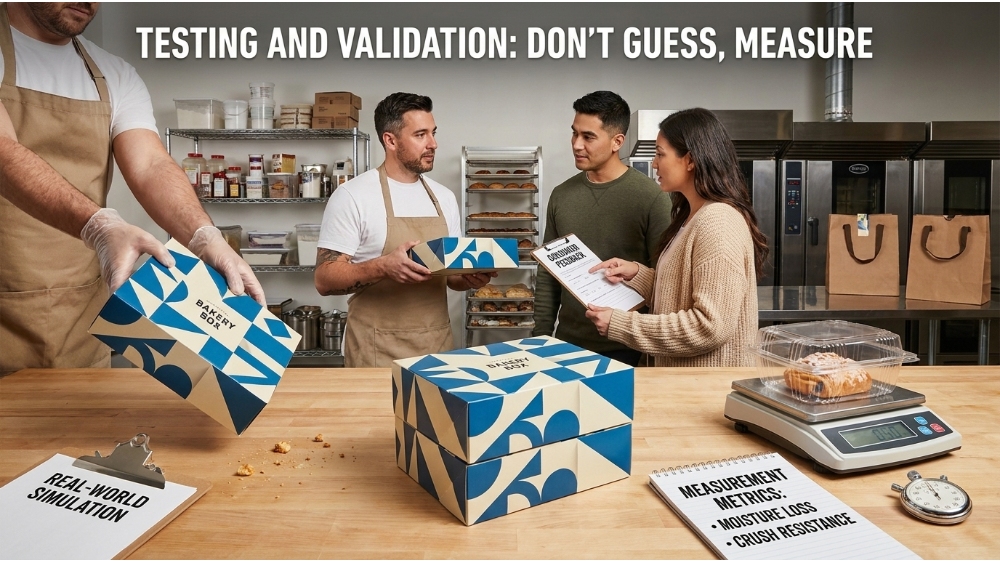
Testing and Validation: Don’t Guess, Measure
Before you commit to a large order, test your packaging. This is a step many bakeries skip, and it costs them dearly.
Real-World Simulation
Pack a fresh batch of your product in the new packaging. Then simulate real-world conditions: carry it in a delivery bag, leave it on a counter for 30 minutes, and even drop it from waist height (yes, really). Check for freshness, structural integrity, and any off-putting odors from the materials. A 2024 guide from Packaging Digest emphasizes that real-world testing is the only way to catch issues that lab tests miss.
Consumer Feedback
Give the test packages to a few loyal customers and ask for their honest feedback. Do they like the design? Was it easy to open? Did the product stay fresh? Their insights are invaluable. One Reddit user shared: “I tested my new cookie boxes with five regulars. One of them pointed out that the box didn’t stack well in their pantry. I tweaked the design, and now it’s perfect.”
Measurement Metrics
If possible, measure key metrics: moisture loss, grease penetration, and crush resistance. You can do simple tests at home (e.g., weigh the product before and after to measure moisture loss) or work with a lab. The ASTM International provides standard test methods for packaging materials, which can give you objective data to compare options.
Choosing a Packaging Partner: What to Look For
Your packaging supplier is more than a vendor—they’re a partner in your success. Here’s how to choose the right one.
Experience and Expertise
Look for a supplier with specific experience in food packaging, preferably bakery. They should understand the unique challenges: grease resistance, moisture control, and food safety. Ask for case studies or references from other bakeries.
Customization Capabilities
Can they handle custom sizes, shapes, and printing? Do they offer a range of materials and finishes? A supplier with limited options may not be able to grow with you. According to a 2025 industry report by Smithers, the demand for custom packaging is growing at 6% annually, driven by brands looking to differentiate.
Sustainability Commitment
If sustainability is important to you, ask about their sourcing, certifications (like FSC or BPI), and waste reduction practices. A supplier that prioritizes sustainability will help you meet your goals.
Minimum Order Quantities and Lead Times
For small bakeries, MOQs can be a barrier. Some suppliers offer low MOQs for digital printing. Lead times vary widely—from a few days to several weeks. Plan ahead to avoid stockouts.
As one bakery owner on Reddit advised: “Don’t just go with the cheapest quote. I did that once, and the boxes arrived with the wrong logo. Spend the extra time to find a reliable partner.”Maibao Packaging, for example, offers end-to-end support from design to delivery, with a focus on food-grade, sustainable materials and low MOQs for custom orders.
Ready to create custom bakery packaging that sells?
Talk to a packaging specialist about your product line, your budget, and your sustainability goals. Get a quote in 24 hours.
It depends on your product. For crispy items like croissants, uncoated kraft with venting is ideal. For cakes and pastries, SBS paperboard offers a premium look. For eco-conscious brands, recycled or compostable materials are great choices—just test them first.
How do I keep my baked goods fresh in packaging?
Use venting to let steam escape, choose materials with the right moisture barrier, and ensure a snug fit to prevent air circulation. For longer shelf life, consider adding a desiccant or oxygen absorber, but test for food safety.
Can I get custom bakery packaging with low minimum order quantities?
Yes—many suppliers now offer digital printing with MOQs as low as 500 units. This is ideal for small bakeries or test runs. Maibao Packaging, for instance, offers flexible MOQs for custom designs.
Is sustainable bakery packaging more expensive?
Not necessarily. While some eco-materials have a higher upfront cost, they can save money in the long run through reduced waste and increased customer loyalty. Plus, many sustainable options are now cost-competitive with conventional materials.
Post time:
Aug-05-2026
For inquiries about our products or pricelist, please leave your email to us and we will be in touch within 24 hours.