

A paper bag is a simple object—folded board, a flat bottom, maybe a twisted handle. But behind that simplicity lies a global supply chain that spans forests, pulp mills, paper machines, and converting plants. For foodservice operators, the paper bag is also a branding canvas, a grease barrier, and a sustainability signal. Understanding where paper bags come from—and how they’re engineered—helps you choose food packaging that performs, protects your food, and aligns with your brand values.
Paper Bag Origins: From Pulp to Custom Packaging Solutions
Sustainable Packaging Deep Dive
Where Do Paper Bags Come From? From Paper Materials to Custom Packaging Solutions
Before a paper bag holds your takeout order, it travels from forest to mill to converting plant. This guide traces the journey of paper bags—from raw fiber sourcing and pulp processing to the custom printing and coating technologies that make them foodservice-ready.
The origins of paper bags: a brief history
The paper bag as we know it emerged in the mid‑19th century, driven by the same forces that shaped modern retail and takeout: the need for convenient, disposable, and sanitary packaging. Early paper bags were simple envelopes, but the breakthrough came in 1852 when Francis Wolle patented the first machine for making paper bags. His design used a flat sheet folded and pasted into a bag shape—a significant step forward, but still limited in capacity.
The real game‑changer arrived in 1871, when Margaret Knight invented a machine that could produce flat‑bottomed paper bags, the kind still used in grocery stores and many foodservice operations today. Knight’s design used a series of folding and gluing mechanisms that allowed the bag to open into a square base, making it stable and easy to fill. Her patent (U.S. Patent No. 116,842) laid the foundation for the modern paper bag industry, and her story remains a powerful example of innovation in packaging.
From these early machines, the paper bag evolved alongside the foodservice industry. The rise of fast‑food, takeout, and delivery in the 20th century created demand for bags that could hold grease, resist tearing, and carry branding. Today’s paper bags are the product of over 150 years of incremental engineering—each fold, coating, and handle design optimized for a specific use case.
Raw materials: where paper bag fiber actually comes from
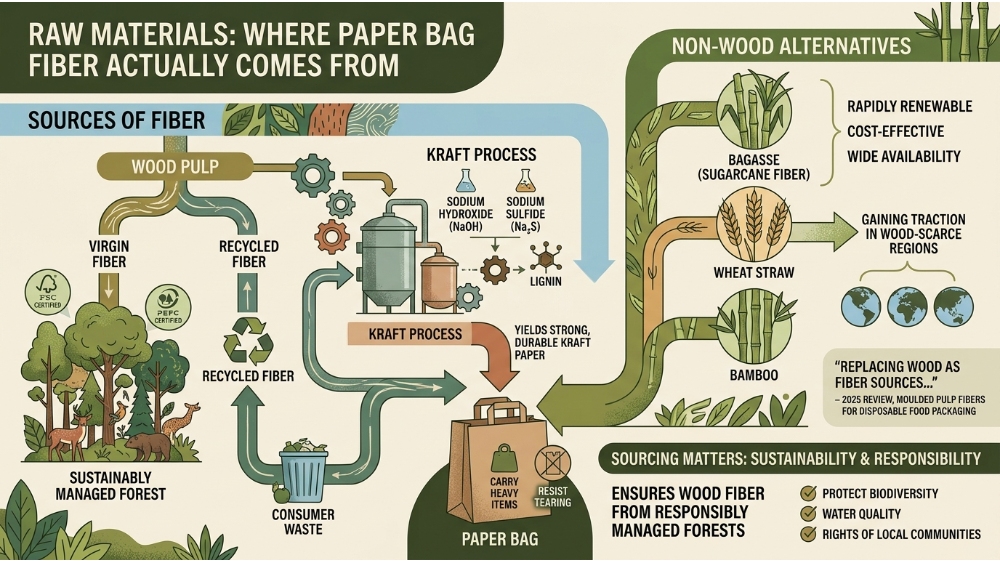
The journey of a paper bag begins with fiber. Most paper bags are made from virgin wood pulp, sourced from sustainably managed forests, or from recycled fiber, which reduces demand for virgin timber. The pulp used for bags is typically kraft pulp, produced through the kraft process—a chemical pulping method that uses sodium hydroxide and sodium sulfide to break down lignin, the natural glue that holds wood fibers together. Kraft pulp yields strong, durable paper that resists tearing, making it ideal for bags that carry heavy or greasy items.
But wood pulp is not the only source. Agricultural residues like bagasse (sugarcane fiber), wheat straw, and bamboo are increasingly used as alternatives to wood. According to a 2025 review published in Moulded Pulp Fibers for Disposable Food Packaging, bagasse, wheat, and bamboo are replacing wood as fiber sources due to their cost‑effectiveness, wide availability, and rapid renewability. Non‑wood pulping is gaining traction in regions where forests are scarce, and it offers a way to reduce pressure on conventional wood‑based resources.
Sourcing matters. The pulp and paper industry is under increasing scrutiny for its environmental footprint, and many foodservice brands now require certification from organizations like the Forest Stewardship Council (FSC) or the Programme for the Endorsement of Forest Certification (PEFC). These certifications ensure that the wood fiber used in paper bags comes from responsibly managed forests that protect biodiversity, water quality, and the rights of local communities.
From pulp to paper: how paper bags are manufactured
The transformation from wood chips to paper bag involves several distinct stages, each of which affects the final bag’s strength, appearance, and performance. The process starts at the pulp mill, where wood chips are cooked in digesters with chemicals to separate cellulose fibers from lignin and other components. The resulting pulp is washed, bleached (if a white or bright finish is desired), and then refined—beaten and fibrillated to improve fiber‑to‑fiber bonding.
Next comes the paper machine, a massive piece of equipment that forms, presses, and dries the pulp into a continuous sheet of paper. The pulp slurry is sprayed onto a moving wire mesh, where water drains away and the fibers mat together. The wet sheet passes through a series of press rolls to remove more water, then through heated dryer cylinders to reach its final moisture content (typically around 5‑7%). The resulting paper is wound into large rolls, each weighing several tons.
The final stage is converting: turning the paper roll into finished bags. This happens on a bag machine, which unwinds the paper, prints it (if custom graphics are required), folds it into a tube, applies adhesive to the seam, and cuts and folds the bottom to create the familiar flat‑bottom or square‑bottom design. Handles, if needed, are added during this stage—either as twisted paper handles or as die‑cut holes that serve as handles. Modern bag machines can produce hundreds of bags per minute, with precise control over fold quality, glue application, and print registration. Click to learn more about paper bags factory
Coatings and barriers: making paper food‑safe
Raw paper is porous and absorbs moisture and grease—two problems for foodservice applications. To make paper bags suitable for holding hot, oily, or wet foods, manufacturers apply coatings that create a barrier without compromising the bag’s recyclability or compostability. The most common coating for foodservice paper bags is polyethylene (PE), a plastic that provides excellent grease resistance and moisture protection. PE‑coated paper is widely used for bags that carry fried foods, sandwiches, and bakery items.
However, PE coatings complicate recycling because they are not easily separated from the paper fiber. This has driven interest in aqueous coatings and biopolymer coatings, which are applied as water‑based dispersions and can be repulped during the recycling process. A 2026 study in OpenLB described a new paper‑based laminate containing cellulose, ethylene‑vinyl alcohol (EVOH), and an anaerobic degradation additive (ECO‑ONE) that replaces traditional trilaminate plastics while improving barrier properties. Similarly, fluorine‑free coatings based on chitosan and acrylated epoxidized soybean oil (AESO) are emerging as sustainable alternatives for food‑contact paper.
For operators, the choice of coating matters: a bag that leaks grease through the bottom is a customer‑experience failure, while a bag that cannot be recycled undermines sustainability claims. The best approach is to work with a packaging supplier who can match coating chemistry to the specific food item—hot and greasy, cold and dry, or somewhere in between.
Paper vs. plastic: the environmental trade‑offs
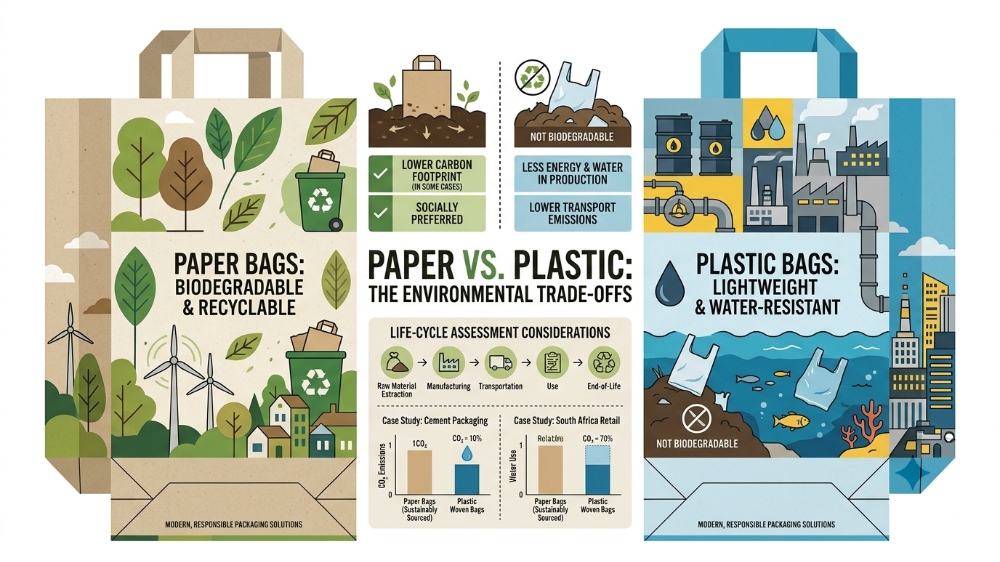
Paper bags are often marketed as the sustainable alternative to plastic, but the reality is more nuanced. A life‑cycle assessment (LCA) that accounts for raw material extraction, manufacturing, transportation, use, and end‑of‑life tells a complex story. Paper bags require more energy and water to produce than plastic bags, and they are heavier, which increases transportation emissions. However, paper bags are biodegradable, compostable, and widely recyclable—advantages that plastic bags do not share.
A comparative cradle‑to‑grave LCA of single‑use shopping bags in South Africa found that paper bags have a lower environmental impact in some categories but higher in others, depending on the specific impact metric and the waste management system assumed. Another study on cement packaging in China reported that paper bags emitted just 0.022 kg of CO₂ per bag, compared to 0.637 kg for laminated plastic woven bags and 0.536 kg for paper‑plastic composite bags. This suggests that paper bags can have a significantly lower carbon footprint than plastic alternatives, especially when the paper is sourced from sustainably managed forests and the bags are recycled after use.
For foodservice operators, the sustainability case for paper bags is strongest when paired with responsible sourcing (FSC or PEFC certification), minimal coating (aqueous or biopolymer instead of PE), and clear recycling instructions for customers. Paper bags are not a silver bullet, but they are a tangible step away from single‑use plastics—and customers increasingly expect that step.
Tips: Learn more about paper bags sustainability by Paper Bags Biodegradable, Recycling & Compost Guide.
Custom paper bags: branding through packaging
A paper bag is more than a carrier—it’s a mobile billboard for your brand. Custom paper bags allow foodservice operators to extend their brand identity beyond the restaurant walls, turning every takeout order into a marketing impression. The customization options are extensive: full‑color printing, spot colors, embossing, foil stamping, and custom handle styles all contribute to a bag that feels premium and reinforces brand recognition.
From a technical perspective, custom printing on paper bags is typically done using flexographic or offset printing, with inks that are food‑compliant and low‑migration. Hubergroup Print Solutions, for example, has launched coldset and heatset inks specifically for food‑compliant paper packaging, ensuring that the ink does not transfer to the food or compromise the bag’s recyclability. For operators with high‑volume needs, custom bags can be produced with consistent color and registration across large print runs, ensuring that every bag looks as good as the one before it. You could learn paper bag printing methods in detail by Paper Bag Printing 5 Approaches: Flexo, Offset, Digital, Screen & Finishes.
Custom bags also offer functional benefits: a bag with a reinforced bottom can carry heavier loads; a bag with a grease‑resistant coating can hold fried chicken without leaking; a bag with a window can showcase the food inside. The key is to design the bag with both brand and function in mind—a balance that requires collaboration between the operator and the packaging supplier.
Choosing the right paper bag for your foodservice business
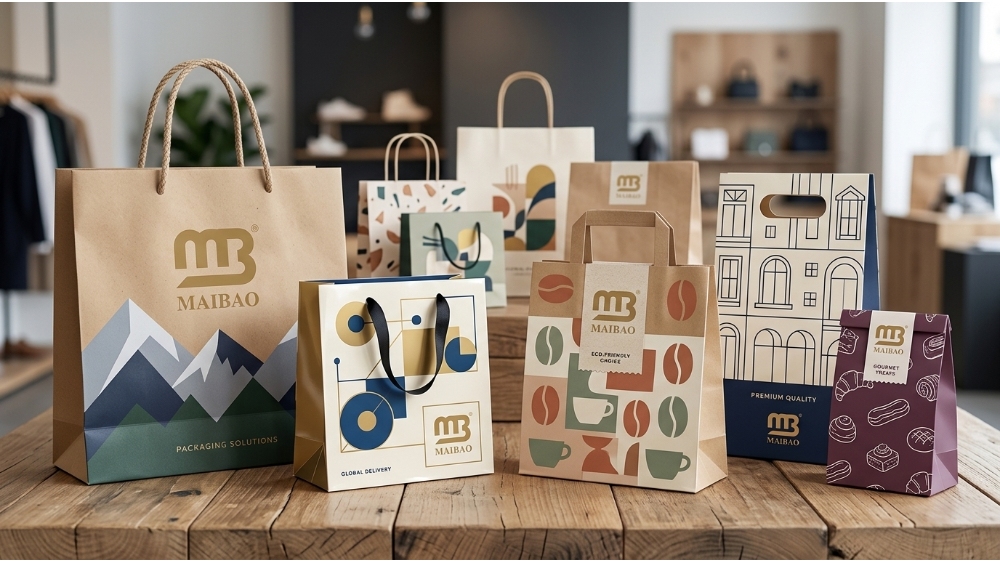
Selecting the right paper bag involves weighing several factors: the type of food, the expected hold time, the distance the bag will travel, and the brand image you want to project. Start with the food itself. A hot, greasy burger needs a bag with a grease‑resistant coating and a sturdy bottom. A cold pastry, by contrast, can be carried in an uncoated kraft bag with a simple fold‑over closure.
Next, consider the hold time. Bags used for dine‑in or short‑counter service have different requirements than bags used for delivery. For delivery, the bag must withstand handling, stacking, and temperature changes—which may mean a thicker paper, a reinforced bottom, or a bag with a separate inner liner for moisture control. Delivery‑optimized bags often include features like tear‑resistant handles, gusseted sides for expansion, and a secure closure mechanism (such as a peel‑and‑seal strip) to keep food contained during transit.
Finally, think about sustainability and brand alignment. If your brand emphasizes environmental responsibility, choose a bag made from recycled content or certified virgin fiber, with a compostable or recyclable coating. If your brand is premium and design‑forward, invest in custom printing and finishing that elevates the unboxing experience. The right bag is the one that balances performance, cost, and brand values—and that balance is different for every operator.
| Bag type | Best for | Key features | Sustainability |
|---|---|---|---|
| Uncoated kraft | Dry goods, pastries, short holds | Breathable, low cost, natural look | Recyclable, compostable |
| PE‑coated paper | Greasy, hot foods (burgers, fried chicken) | Excellent grease barrier, moisture protection | Recyclable with PE separation (limited) |
| Aqueous‑coated paper | Eco‑premium delivery, moderate grease | Repulpable, good grease resistance | Recyclable, compostable |
| Recycled‑content paper | Brands with strong sustainability focus | Lower virgin fiber use, variable strength | Recyclable, reduces virgin demand |
| Custom‑printed / branded | Marketing‑driven operators, delivery | Full‑color graphics, reinforced handles | Varies by coating and fiber source |
Paper bag selection checklist:
- Match coating to food type (grease, moisture, temperature)
- Match strength to load weight and handling distance
- Match sustainability claims to actual materials and certifications
- Match design to brand identity and customer expectations
Need custom paper bags that perform and persuade?
Talk to a packaging specialist about matching bag design, materials, and coatings to your menu, your delivery radius, and your brand story.
Frequently Asked Questions
Where do paper bags come from originally?
Paper bags trace their origins to 19th‑century innovations, starting with Francis Wolle’s 1852 bag‑making machine and Margaret Knight’s 1871 patent for the flat‑bottomed bag. These inventions transformed paper bags from simple envelopes into the sturdy carriers we use today.
What raw materials are used to make paper bags?
Most paper bags are made from kraft pulp derived from wood, but agricultural residues like bagasse, wheat straw, and bamboo are increasingly used as sustainable alternatives. Recycled fiber is also common, reducing demand for virgin timber.
Are paper bags more environmentally friendly than plastic?
Paper bags have a lower carbon footprint than many plastic alternatives, especially when sourced from certified sustainable forests and recycled after use. However, they require more energy and water to produce, so the environmental advantage depends on the specific life‑cycle context.
Can paper bags be custom printed for foodservice brands?
Yes—custom printing on paper bags is widely available using flexographic or offset printing with food‑compliant inks. Custom bags can include full‑color graphics, embossing, and reinforced handles, turning every takeout order into a brand impression.
Post time: Aug-11-2026