Why Fast Food Restaurants Use Paper Bags: Benefits, Uses & Packaging Trends
Why Fast Food Uses Paper Bags | Benefits & Sustainable Trends
Foodservice Packaging Guide
Why Fast Food Restaurants Use Paper Bags: Benefits, Uses & Packaging Trends
From crispier fries to lower carbon footprints, paper bags have become the go-to takeout solution for global chains and independents alike. Here’s the science, the economics, and the trends behind the shift.
The paper bag has staged a quiet comeback. Once overshadowed by plastic’s convenience and low cost, today’s paper takeout bags are engineered for grease resistance, structural strength, and breathability — while aligning with consumer and regulatory demand for sustainable packaging. This guide unpacks the science, the material innovations, and the business case for paper bags in fast food service.
Why do fast food restaurants use paper bags instead of plastic?
Fast food operators choose paper bags for three converging reasons: functionality (breathability that preserves crispness), branding (a premium canvas for custom printing), and regulatory & consumer pressure to reduce single-use plastics. In 2025, McDonald’s China transitioned to bio-based packaging and FSC-certified paper bags, cutting virgin plastic use by an estimated 5,800 tons annually — a move echoed by Burger King, Subway, and KFC.
Plastic bags are still cheaper per unit, but the total cost of ownership is shifting. With plastic taxes expanding across Europe, Canada, and parts of the U.S., and with consumer willingness to pay a premium for sustainable packaging growing, paper bags are becoming economically competitive. Moreover, the Open Library of Bioscience (2026) reports that paper-based laminates can reduce waste volume by 85-90% compared to multi-material plastic pouches, making them a clear winner in lifecycle assessments.
What are the practical benefits of paper bags for takeout and delivery?
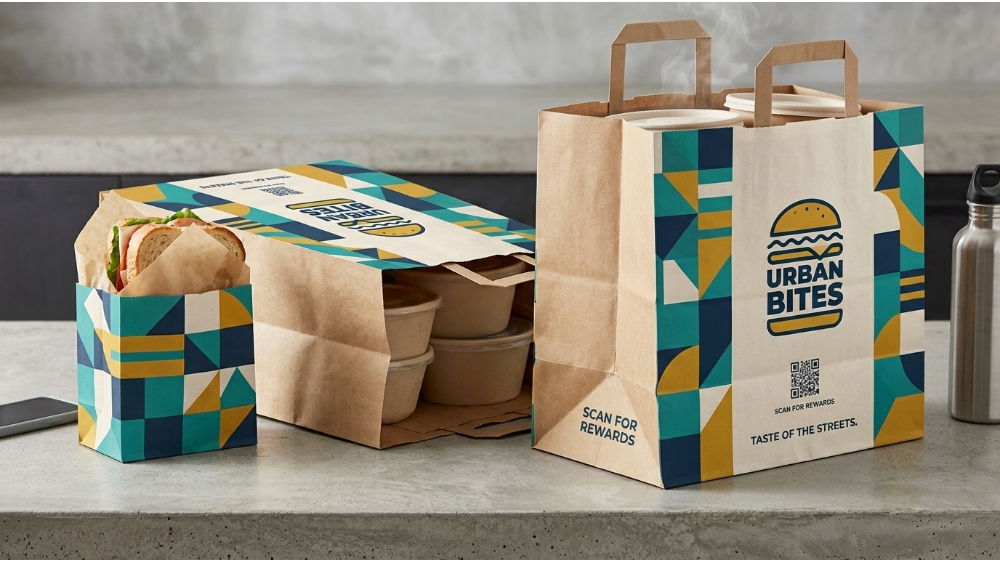
Structural integrity — modern paper bags use reinforced bottoms and side gussets that can hold up to 10–15 pounds of food, rivaling plastic’s carrying capacity. Grease resistance — coatings like aqueous, PE, or new mineral-cellulose barriers prevent oil bleed-through, keeping hands and car seats clean. Brand visibility — the wide, flat surface of a paper bag is an ideal billboard for logos, slogans, and QR codes, driving in-person and social-media impressions.
In China, fast food chains have been leveraging custom-printed paper bags as a marketing tool; Women of China (2026) noted that takeout bag repurposing (customers reusing bags for shopping or storage) extends brand exposure far beyond the meal, a benefit plastic bags rarely provide. For operators, this translates to lower customer acquisition costs over time.
Key benefits at a glance:
Breathable — prevents sogginess from steam condensation
Customizable — full-colour digital printing available
Grease-resistant options — coated kraft and aqueous barriers
Recyclable/compostable — when specified with the right coatings
Do paper bags keep fast food fresher than plastic bags?
Yes — the porous structure of uncoated and coated paper allows steam to escape, reducing internal relative humidity from near 100% (in a sealed plastic bag) to around 60–70% within 10 minutes. This slows the moisture migration that turns fries limp and burger buns soggy. A China Economic Herald (2026) report on McDonald’s FSC-certified paper packaging highlighted that hold-time tests showed fries remained acceptable for 18–22 minutes in paper bags, versus 6–8 minutes in plastic.
Plastic traps every molecule of water vapor released by hot food, creating a microclimate that accelerates starch retrogradation and texture degradation. Paper, by contrast, allows a controlled exchange of air — the same principle that makes vented fry boxes effective. For fried chicken, onion rings, and other breaded items, the difference is even more pronounced; a paper bag can preserve crunch for an extra 10–15 minutes in typical delivery scenarios.
Are fast food paper bags environmentally sustainable?
The answer depends on fiber sourcing and coating chemistry. Paper bags made from FSC-certified (Forest Stewardship Council) virgin fiber or from high-percentage recycled content have a lower carbon footprint than virgin plastic bags — provided they are disposed of in recycling or composting streams. McDonald’s China’s 2026 transition to FSC-certified paper bags is projected to save 5,800 tons of plastic annually and reduce greenhouse gas emissions by 42% over the product lifecycle, according to the chain’s internal LCA.
However, PE-coated paper bags are not recyclable in standard paper streams; they must be sent to waste-to-energy or landfill. That’s why next-generation coatings like the Papkot mineral-cellulose coating (2025) are gaining traction — they provide grease resistance while remaining fully biodegradable and repulpable. Subway has also piloted reusable paper bag programs in select markets, and Beijing News (2026) reported that consumers are increasingly upcycling takeout bags, extending their useful life and reducing waste.
Kraft vs. bleached vs. coated paper bags — what’s the difference?
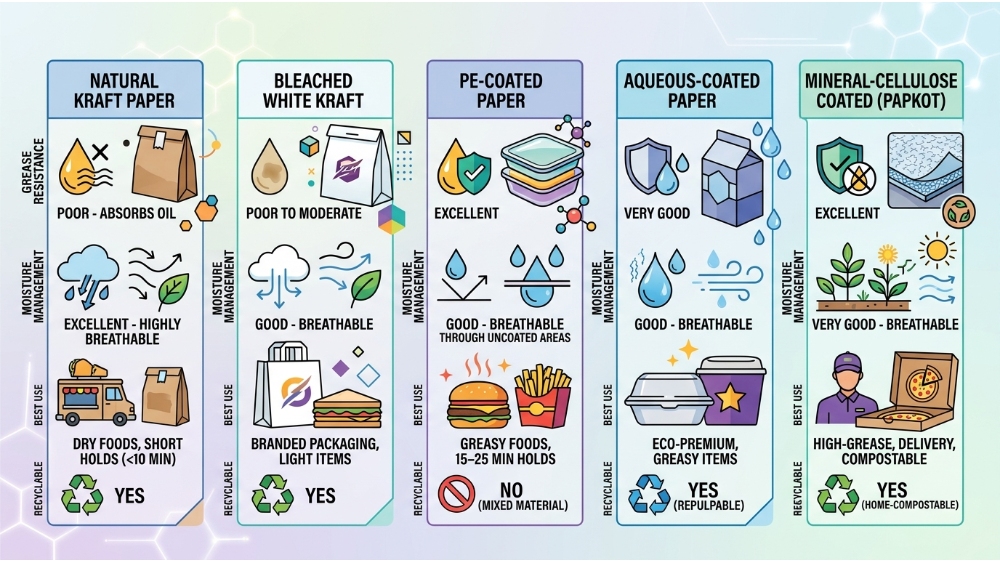
Not all paper bags perform the same. Understanding the three main categories helps operators match material to their menu and hold time.
The Papkot mineral-cellulose coating (2025) represents a breakthrough: it uses no plastics or fluorochemicals, yet repels oil and moisture as effectively as PE coatings. This makes it ideal for chains aiming for “plastic-free” certification.
Can paper bags be recycled or composted?
Uncoated and aqueous-coated paper bags are widely accepted in curbside recycling programs. PE-coated bags are not — the polyethylene layer contaminates the paper fiber during the pulping process, so they must go to landfill or incineration. Compostability is possible with bio-based coatings (PLA, cellulose, starch) but requires industrial composting facilities; only mineral-based coatings like Papkot’s are certified for home composting.
Operators should clearly label their bags with disposal instructions to avoid customer confusion. For takeout, many brands now print “recyclable” or “compostable” on the bag itself, turning correct disposal into a brand-positive moment. As of 2026, several U.S. states have enacted laws requiring clear labeling of compostable packaging, so staying ahead of this trend is both compliance and marketing.
Latest packaging trends: bio-coatings, FSC, and reusable designs
The fast food industry is rapidly adopting bio-based coatings — PLA (polylactic acid), cellulose derivatives, and mineral-based barriers — to replace traditional PE without sacrificing grease resistance. Subway’s 2026 reusable paper bag pilot in China allowed customers to return bags for a discount, creating a closed-loop system that reduced single-use bag consumption by 30% in test stores.
FSC certification is becoming table stakes for major chains; McDonald’s, Burger King, and Starbucks have all committed to 100% FSC or recycled fiber by 2027. Meanwhile, digital printing enables short-run custom bags for promotions, seasonal menus, or local store marketing — a trend that independent restaurants are leveraging to differentiate from national chains.
Paper bags vs. other fast food packaging options
Paper bags occupy a middle ground between plastic bags (low cost, no breathability, poor brand perception) and rigid paperboard boxes (higher cost, excellent protection, better for multiple items). For a single burger or fries, a paper bag is more economical and takes up less storage space. For a full meal with drinks, a paper bag with a flat bottom and reinforced handles can carry the load.
Compared to foam clamshells (banned in many jurisdictions) and molded fiber trays (highly breathable but prone to grease soak), coated paper bags offer the best balance of cost, performance, and sustainability for the majority of quick-service operations. For businesses that frequently deliver, a vented paper bag with a grease-absorbing insert can extend hold times beyond 25 minutes.
How to choose the right paper bag for your business
Start by defining your average hold time — from fryer/pack to customer. For under 10 minutes, natural kraft is fine. For 10–20 minutes, choose aqueous- or PE-coated paper. For over 20 minutes, opt for a mineral-coated bag with an absorbent liner. Next, consider your menu mix: fried chicken and onion rings need stronger grease barriers than burgers or sandwiches.
Test with your actual product: pack a fresh batch, seal it in a delivery bag, and assess texture at 5-minute intervals. If the bag shows oil spots at 10 minutes, move to a coated option. If fries are soggy at 15 minutes, the bag is retaining too much steam — add small vent perforations (3mm holes) or switch to a more breathable grade.
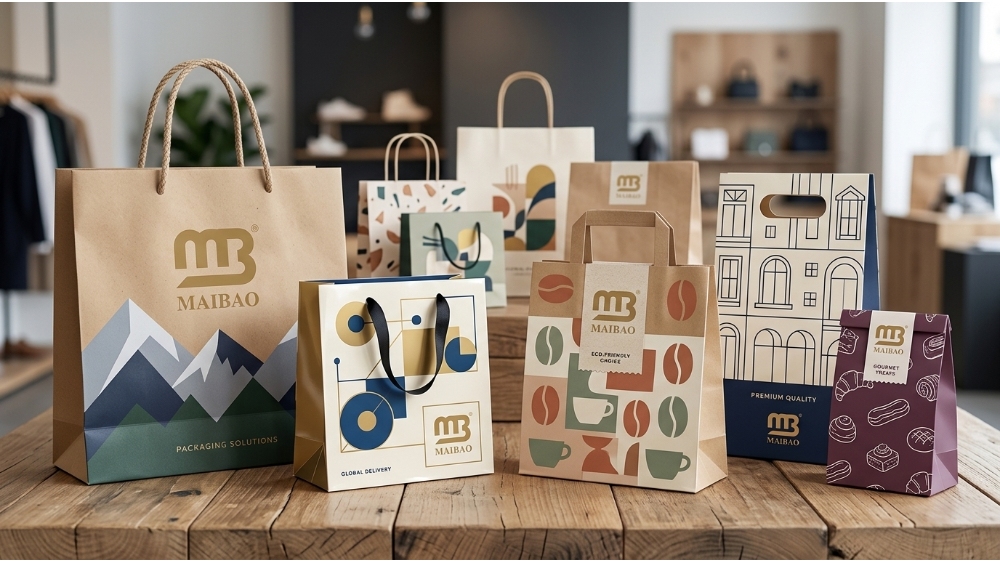
For multi-location chains, consistency is key. Partner with a supplier like Maibao Packaging that can maintain uniform bag quality across all your stores and provide custom printing that reinforces your brand. Contact Maibao’s packaging experts for tailored recommendations and sample testing.
Need paper bags that keep food fresh and showcase your brand?
Talk to a packaging specialist about matching bag material, coating, and print design to your menu and delivery radius.
Are paper bags more expensive than plastic bags for fast food?
Generally, yes — paper bags cost 2–4x more per unit than standard plastic. However, when factoring in plastic bag taxes, brand differentiation, and customer loyalty, the total cost of ownership often favors paper, especially for premium and eco-conscious brands.
Do paper bags leak grease through the bottom?
Uncoated kraft bags can leak grease from hot, oily foods. Coated bags (PE, aqueous, mineral) are engineered with a barrier layer that prevents bleed-through. Always specify coating when ordering bags for greasy items.
Can I print custom logos on paper bags affordably?
Yes — digital and flexographic printing allow full-colour logos at reasonable minimum order quantities (typically 500–1,000 units). For larger chains, gravure printing offers the lowest per-unit cost at high volumes.
Are paper bags compostable if they have a coating?
Only if the coating is certified compostable (e.g., PLA, cellulose, mineral-based). PE-coated bags are not compostable. Always check the coating type and look for OK Compost or similar certification labels.
Post time:
Aug-10-2026
For inquiries about our products or pricelist, please leave your email to us and we will be in touch within 24 hours.