Are Paper Bags Better Than Plastic Bags: Guide for Businesses Choosing Packaging
Paper Bags vs Plastic Bags: Business Packaging Guide
Sustainable Packaging Guide
Are Paper Bags Better Than Plastic Bags? Guide for Businesses Choosing Packaging
Paper or plastic? The answer isn’t as simple as it seems. For businesses, the choice between paper and plastic bags involves environmental impact, cost, durability, and consumer perception. This guide breaks down the science, economics, and practical considerations to help you make the right decision for your brand.
The paper-versus-plastic debate has been raging for decades, but for businesses, the decision is about more than environmental idealism. It’s about cost, performance, consumer perception, and regulatory risk. This guide provides a data-driven framework for choosing between paper and plastic bags, drawing on life cycle assessments, consumer studies, and material science.
Whether you’re a restaurant owner, retailer, or e-commerce business, the packaging you choose sends a signal to your customers and impacts your bottom line. For a full range of sustainable packaging options, explore Maibao’s food packaging solutions.
Environmental Impact: Life Cycle Assessment of Paper vs. Plastic
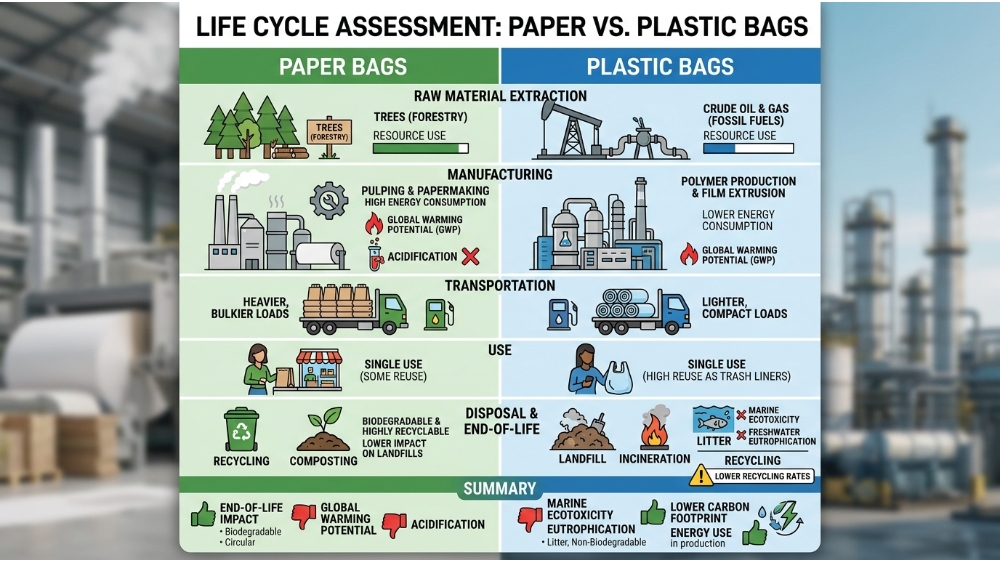
The environmental footprint of a bag depends on its entire life cycle—from raw material extraction to manufacturing, transportation, use, and disposal. A comprehensive life cycle assessment (LCA) published in the International Journal of Life Cycle Assessment (2022) compared single-use plastic bags with paper and biodegradable alternatives. The study found that paper bags have a higher global warming potential and acidification impact than plastic bags, primarily due to the energy-intensive pulping and papermaking processes. However, paper bags have a lower impact on marine ecotoxicity and freshwater eutrophication.
Another study published in Sustainable Production and Consumption (2023) evaluated the water-energy-climate nexus of replacing single-use plastics with biomaterial packaging in Thailand. The researchers found that paper bags, while biodegradable, require more water and energy to produce than plastic bags. The key takeaway: there is no clear environmental winner. Paper bags have lower end-of-life impacts (they biodegrade and are more easily recycled), but plastic bags have a lower carbon footprint and require fewer resources to manufacture.
For businesses, this means that the “better” choice depends on your local waste infrastructure, your customers’ disposal habits, and your brand’s sustainability goals. If your region has robust paper recycling and composting facilities, paper bags may be the more circular option. If your region lacks such infrastructure, the lower carbon footprint of plastic bags might be preferable.
Cost Comparison: Paper Bags vs. Plastic Bags for Businesses
Cost is often the deciding factor for businesses. Paper bags are typically more expensive than plastic bags—often two to three times the cost per unit. According to industry data, a standard paper grocery bag costs between $0.10 and $0.20, while a comparable plastic bag costs between $0.03 and $0.08. This price difference is driven by the higher raw material costs and more complex manufacturing process for paper.
However, the total cost of ownership extends beyond the purchase price. Plastic bags are lighter, which reduces shipping costs. They also take up less storage space. Paper bags, on the other hand, can enhance brand perception and may allow you to charge a premium for sustainable packaging. Some businesses find that the marketing value of paper bags offsets their higher cost.
For foodservice businesses, there’s an additional consideration: paper bags are often required for certain types of food (e.g., greasy or oily items) to prevent sogginess and maintain food quality. In these cases, the functional benefits of paper may justify the higher cost.
Durability and Performance: Strength, Tear Resistance, and Load Capacity
When it comes to durability, plastic bags generally outperform paper. Plastic bags have higher tear resistance and elongation, meaning they can stretch and carry heavy loads without breaking. A study on plastic shopping bag performance found that plastic bags have an elongation of 121–413%, compared to paper bags, which have little to no elongation. This makes plastic bags more suitable for carrying heavy or sharp-edged items.
However, paper bags have improved significantly in recent years. Modern paper bags are made from kraft paper with reinforced handles and gusseted bottoms, which can carry up to 10–15 pounds. For many retail and foodservice applications, this is more than sufficient. The choice between paper and plastic ultimately depends on the weight and nature of the items you’re packaging.
For businesses that prioritize sustainability, paper bags offer the advantage of being biodegradable and easily recyclable. Plastic bags, while durable, can persist in the environment for hundreds of years and are a major source of marine pollution.
Consumer Preference: What Do Customers Really Want?
Consumer perception is a powerful driver of packaging choice. A study on consumer attitudes toward paper packaging found that 73% of consumers find paper packaging more aesthetically pleasing than plastic, and 67% are willing to purchase paper-based food containers. Additionally, 53% of consumers are willing to pay more for paper packaging. This suggests that paper bags can be a valuable branding tool, signaling environmental responsibility and quality.
However, consumer preferences are not uniform. Some consumers prioritize convenience and durability over sustainability. Others are skeptical of “greenwashing” and may view paper bags as less practical. Businesses should consider their target audience and brand positioning when choosing between paper and plastic.
For businesses targeting eco-conscious consumers, paper bags can be a powerful differentiator. For businesses targeting price-sensitive or convenience-oriented consumers, plastic bags may be more appropriate.
Food Packaging Safety: Paper vs. Plastic for Takeout and Delivery
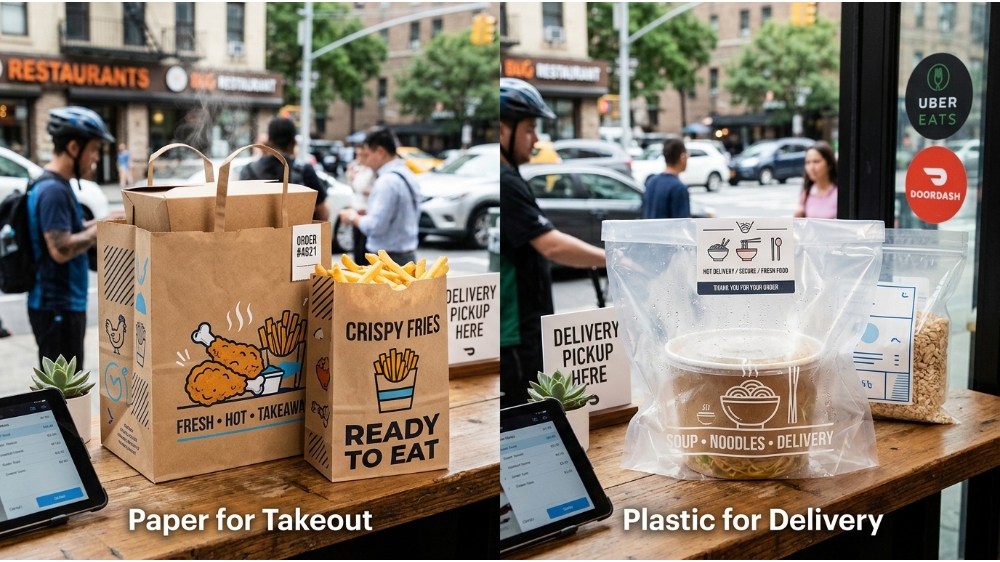
Food safety is a critical consideration for any foodservice business. Both paper and plastic bags have their strengths and weaknesses. Paper bags are breathable, which allows steam to escape and helps keep fried foods crispy. However, they can absorb grease and become soggy, especially with oily or saucy foods. Plastic bags are moisture-proof and grease-resistant, but they can trap steam, leading to soggy food.
For hot, greasy foods like french fries or fried chicken, paper bags with a grease-resistant coating are often the best choice. For cold or dry items, plastic bags may be more practical. The FDA regulates food contact materials, and both paper and plastic bags must meet safety standards for direct food contact. FDA guidance on food contact substances requires that all materials used in food packaging be safe for their intended use.
Businesses should also consider the environmental impact of their food packaging choices. Paper bags are generally more sustainable than plastic, but they must be properly sourced and manufactured to avoid deforestation and excessive water use.
Regulatory Landscape: Bans, Taxes, and Compliance
Regulations are increasingly shaping the packaging landscape. Many cities and countries have implemented bans or taxes on single-use plastic bags. For example, the European Union has adopted the Packaging and Packaging Waste Regulation (PPWR), which sets ambitious targets for reducing packaging waste and increasing recycling. In the United States, several states and municipalities have banned plastic bags or imposed fees on them.
These regulations create a strong incentive for businesses to switch to paper or other sustainable alternatives. However, businesses must also comply with regulations on paper sourcing and food contact materials. For example, the FDA has restrictions on the use of PFAS in food packaging, which affects some paper-based products.
Businesses should stay informed about local and national regulations and work with suppliers who can provide compliant packaging. Partnering with a knowledgeable packaging supplier can help you navigate this complex regulatory landscape.
How to Choose the Right Bag for Your Business
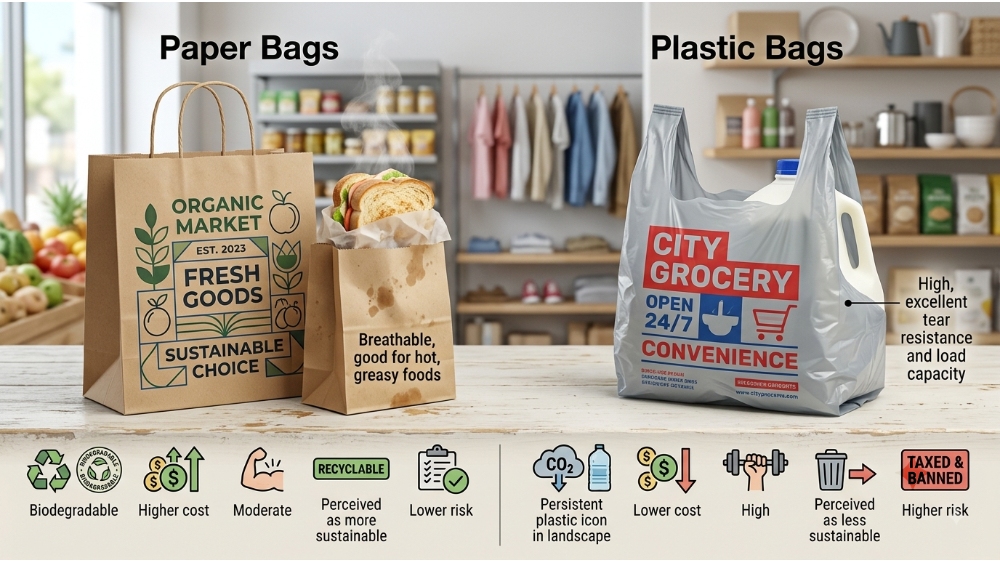
Choosing between paper and plastic bags requires a holistic assessment of your business needs, your customers’ preferences, and your sustainability goals. Here’s a framework to guide your decision:
Lower carbon footprint, but persistent in environment
Cost
Higher cost per unit
Lower cost per unit
Durability
Moderate, improved with reinforced designs
High, excellent tear resistance and load capacity
Consumer perception
Perceived as more sustainable and premium
Perceived as less sustainable, but more convenient
Food safety
Breathable, good for hot, greasy foods
Moisture-proof, good for cold or dry items
Regulatory risk
Lower risk, often exempt from bans
Higher risk, subject to bans and taxes
Ultimately, the best choice depends on your specific context. For many businesses, a hybrid approach—using paper bags for certain items and plastic for others—may be the most practical solution.
For businesses looking to transition to more sustainable packaging, working with a supplier who can provide a range of options is essential. Contact Maibao Packaging for a sourcing consultation tailored to your menu, hold times, and delivery radius.
Need sustainable packaging that aligns with your brand values?
Talk to a packaging specialist about matching bag design, material, and sustainability goals to your business needs.
Are paper bags better for the environment than plastic bags?
It depends on the metric. Paper bags have a higher carbon footprint but lower end-of-life impact. Plastic bags have a lower carbon footprint but persist in the environment. The best choice depends on local waste infrastructure and consumer behavior.
Are paper bags more expensive than plastic bags?
Yes, paper bags typically cost two to three times more than plastic bags. However, the total cost of ownership may be offset by marketing value and regulatory compliance.
Which type of bag is more durable, paper or plastic?
Plastic bags are generally more durable, with higher tear resistance and elongation. However, modern paper bags with reinforced handles and gusseted bottoms can carry up to 10–15 pounds.
What do consumers prefer, paper or plastic bags?
Many consumers prefer paper bags for their aesthetics and sustainability, with 73% finding paper more pleasing and 53% willing to pay more for it. However, preferences vary by demographic and context.
Post time:
Aug-11-2026
For inquiries about our products or pricelist, please leave your email to us and we will be in touch within 24 hours.