Fast Food Packaging Trends: Sustainable Designs and Innovations for Restaurants
Fast Food Packaging Trends: Sustainable Designs and Innovations for Restaurants
Foodservice Packaging Guide
Fast Food Packaging Trends: Sustainable Designs and Innovations for Restaurants
From PFAS bans to reusable systems, fast food packaging is undergoing its biggest shift in decades. This guide covers the trends, materials, and design strategies shaping the future of takeout—and how restaurants can adapt without compromising quality or margins.
Fast food packaging is at a crossroads. For decades, the industry relied on cheap plastics, foam, and PFAS-coated paper to deliver burgers, fries, and drinks quickly and safely. But shifting consumer expectations, stricter regulations, and material innovations are forcing a rethink.
Restaurants of all sizes are now exploring sustainable alternatives that don’t sacrifice performance. This guide examines the key trends, materials, and design strategies driving the shift—and offers a practical framework for choosing packaging that works for your menu, your budget, and the planet.
What are the latest fast food packaging trends?
Three major trends are reshaping the industry: the shift to bio-based and compostable materials, the phase-out of PFAS and other harmful chemicals, and the rise of reusable packaging systems. Each is driven by a combination of consumer pressure, government regulation, and corporate sustainability commitments.
In 2025, McDonald’s China announced a transition to PLA-lined paper packaging and molded fiber cutlery, aiming to reduce plastic use by over 5,800 tons annually. The move reflects a broader shift among major QSR brands toward certified compostable and recyclable materials. Meanwhile, the U.S. FDA’s 2025 PFAS ban has effectively outlawed the use of per- and polyfluoroalkyl substances in food-contact paper, accelerating the search for new greaseproofing solutions.
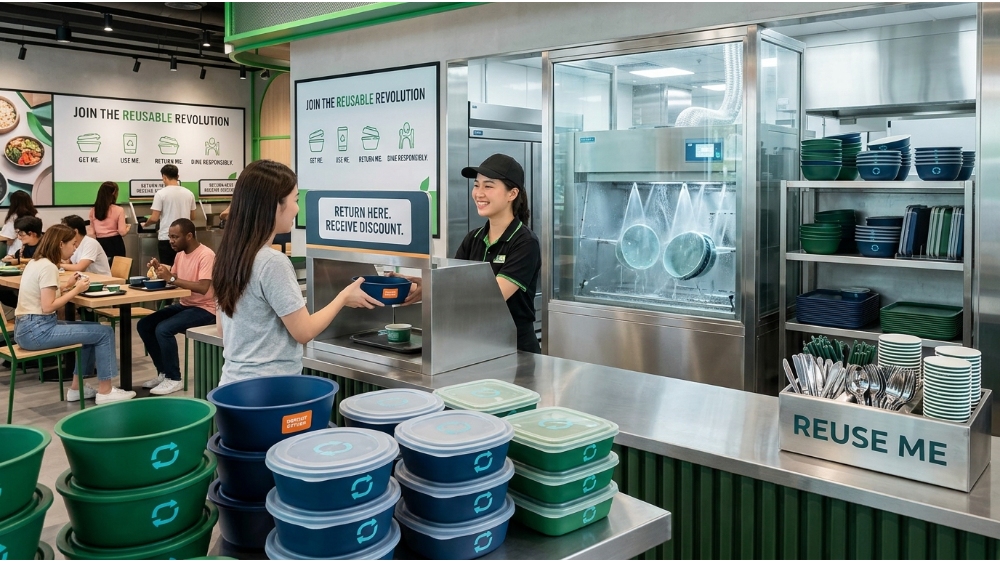
Reusable and returnable packaging is also gaining traction, particularly in markets with deposit-return systems. Subway recently piloted a reusable box program in select locations, allowing customers to return containers for a discount on their next order. While still nascent, this model signals a potential long-term shift away from single-use packaging altogether.
What sustainable materials are replacing plastic?
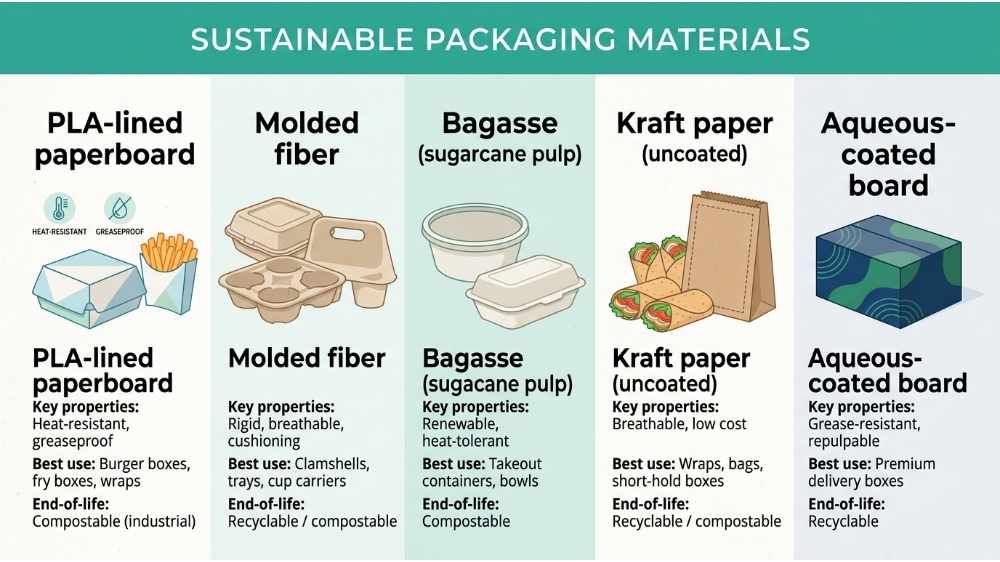
Traditional plastic and foam are being replaced by a new generation of materials that balance performance, cost, and environmental footprint. The most common alternatives include PLA-lined paperboard, molded fiber, and bagasse (sugarcane pulp). Learn more about sustainability by reading Fast Food Sustainable Packaging Guide.
Material
Key properties
Best use
End-of-life
PLA-lined paperboard
Heat-resistant, greaseproof
Burger boxes, fry boxes, wraps
Compostable (industrial)
Molded fiber
Rigid, breathable, cushioning
Clamshells, trays, cup carriers
Recyclable / compostable
Bagasse (sugarcane pulp)
Renewable, heat-tolerant
Takeout containers, bowls
Compostable
Kraft paper (uncoated)
Breathable, low cost
Wraps, bags, short-hold boxes
Recyclable / compostable
Aqueous-coated board
Grease-resistant, repulpable
Premium delivery boxes
Recyclable
Each material comes with trade-offs. PLA-lined board offers excellent grease resistance but requires industrial composting to break down. Molded fiber is highly renewable and compostable but can absorb grease unless treated. The choice depends on your hold time, menu items, and available waste infrastructure.
For restaurants looking to reduce plastic without sacrificing performance, food packaging solutions now offer a wide range of coated and uncoated paper options that meet both functional and sustainability goals.
How are regulations like the FDA PFAS ban shaping packaging?
Regulation is the single most powerful driver of packaging change. The FDA’s 2025 prohibition on PFAS in food-contact materials has forced manufacturers to reformulate greaseproofing agents, moving away from “forever chemicals” to safer alternatives like plant-based waxes and silicone coatings.
In parallel, Beijing’s new packaging guidelines aim to “slim down” delivery packaging, restricting the volume and layers of material used. These rules encourage restaurants to use fewer, lighter materials and to avoid over-packaging—a trend likely to spread to other major cities. For operators, this means rethinking not just the “type” of packaging, but the “amount”.
Compliance with these regulations is not optional, but it also presents an opportunity. Restaurants that proactively adopt PFAS-free, lightweight packaging can differentiate themselves as sustainability leaders, potentially capturing eco-conscious customers and avoiding future transition costs.
Are reusable packaging systems the future of fast food?
Reusable systems are gaining momentum, especially in Europe and parts of the U.S. These programs allow customers to receive food in durable, returnable containers that are collected, washed, and reused—often in exchange for a small deposit.
Subway’s reusable box pilot is one high-profile example. The initiative offered sandwiches in a sturdy polypropylene container that customers could return to participating stores for a discount. While still in early stages, the program demonstrated that customers are willing to participate in return systems when incentivized.
Reusable packaging faces challenges: high upfront costs, logistics, and customer behavior change. For large chains with high volume, the economics can work. For independent restaurants, the infrastructure may not yet be viable. However, as deposit-return schemes expand and consumer habits shift, reusable packaging is likely to become a significant part of the fast food landscape—particularly for dine-in and on-premises consumption.
How does packaging design affect food quality and waste?
Good packaging design does more than hold food—it preserves quality, reduces waste, and enhances brand experience. The trend toward sustainable materials is also driving a rethink of form and function.
Design principles for sustainable fast food packaging:
Use venting and airflow to prevent sogginess (e.g., fry box holes)
Design for stackability to reduce shipping volume
Choose modular formats that fit multiple menu items
Include clear labeling for proper disposal (recycle/compost)
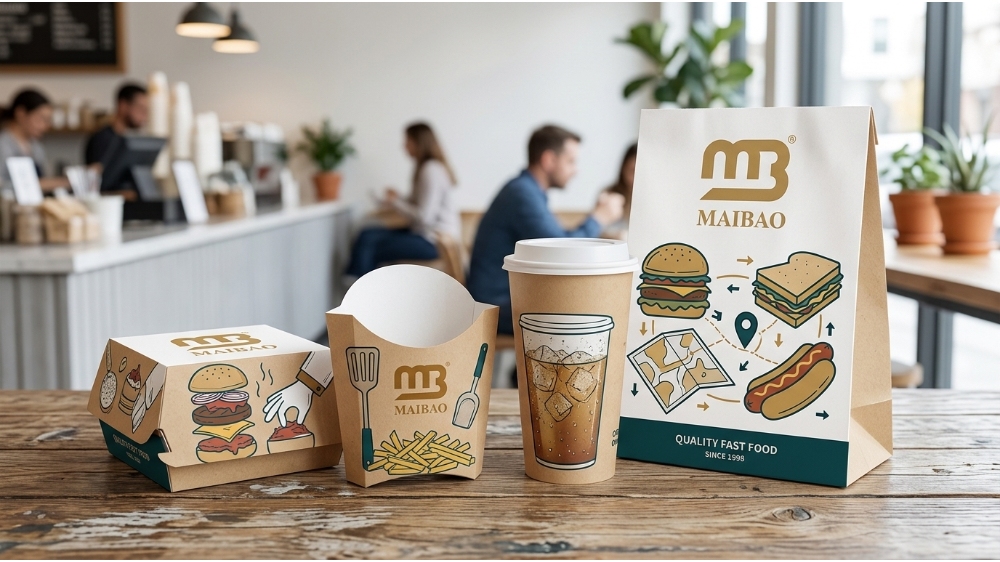
For fries, the classic vented box remains a proven design. For burgers, burger boxes with elevated lids prevent condensation from dripping onto the bun. These design principles hold true regardless of material—and when combined with sustainable substrates, they deliver both quality and environmental benefits.
Reducing packaging waste also means using less material overall. Lightweighting—using thinner, stronger paperboard—can cut material use by 15-20% while maintaining structural integrity. This not only reduces environmental impact but also lowers shipping costs and storage space.
How to choose the right sustainable packaging for your restaurant
Selecting the right packaging involves balancing performance, cost, sustainability, and compliance. Start by evaluating your menu, hold times, and delivery distances. Then consider your local waste infrastructure—can your customers compost PLA-lined boxes, or will they go to landfill?
For most quick-service and fast-casual restaurants, a combination of aqueous-coated paperboard for hot, greasy items and uncoated kraft for dry or short-hold items offers a practical balance. For delivery, PE-coated or PLA-lined boxes with optimized venting provide the best compromise between moisture management and grease resistance.
Testing is essential. Order samples from multiple suppliers, pack your actual menu items, and simulate delivery conditions. Check for grease bleed, structural integrity, and food quality at 10, 20, and 30 minutes. Use the results to refine your choice.
For restaurants scaling across multiple locations, consistency is key. Work with a packaging partner who can supply certified, consistent formats across your entire menu. For a sourcing consultation on sustainable packaging matched to your specific needs, contact Maibao Packaging.
Ready to transition to sustainable packaging?
Get expert guidance on materials, design, and compliance for your restaurant.
What is the most eco-friendly fast food packaging?
The most eco-friendly option depends on your menu and local infrastructure. For hot, greasy items, aqueous-coated paperboard offers a recyclable solution. For dry or cold items, uncoated kraft or molded fiber are highly sustainable.
Are PLA-lined boxes actually compostable?
PLA-lined boxes are industrially compostable, meaning they require high-temperature composting facilities. They are not suitable for backyard composting and may not break down in landfill. Check local composting availability before choosing PLA.
How can I make my packaging more sustainable without increasing costs?
Start by reducing material volume—lightweighting and right-sizing boxes can cut costs and waste. Also consider switching to uncoated kraft for items that don’t require grease resistance. These changes often reduce material costs while improving sustainability.
Is reusable packaging practical for quick-service restaurants?
Reusable packaging is most practical for dine-in or on-premises consumption where return logistics are simpler. For delivery, reuse programs require significant infrastructure. However, as deposit systems expand, reusable packaging will become more viable.
Post time:
Aug-03-2026
For inquiries about our products or pricelist, please leave your email to us and we will be in touch within 24 hours.