

Imagine a piping hot curry arriving at your customer’s door… only to find it soggy, leaking, or cold. For food businesses in 2026, this is more than just a delivery headache—it’s a risk to your brand, compliance, and customer trust. Stricter regulations on single-use plastics and “forever chemicals” like PFAS are forcing restaurants to rethink every container. That’s where experienced Food Packaging manufactures come in, offering smarter, eco-friendly solutions that protect meals, satisfy customers, and keep your business ahead of the rules.
1. Key Factors to Consider When Choosing Takeaway Food Packaging
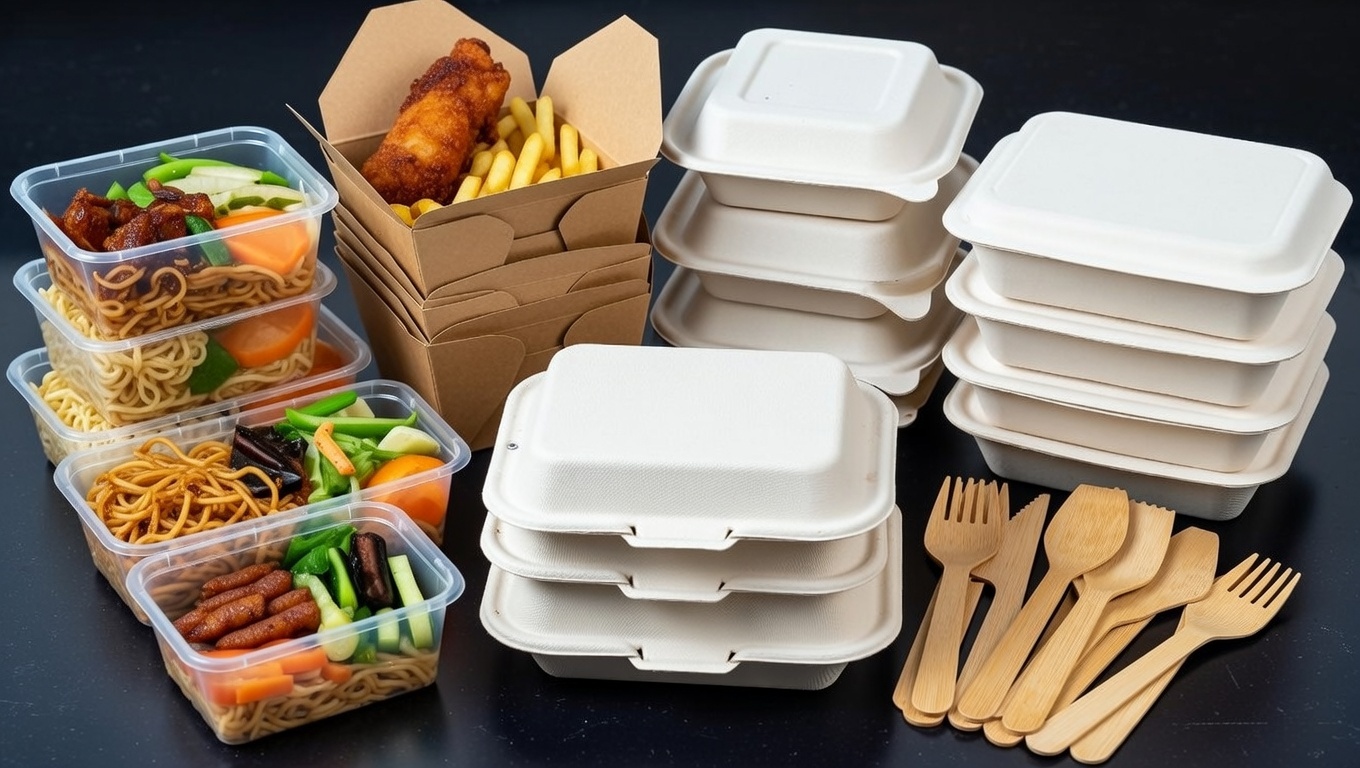
Selecting the best packaging materials for takeaway food starts with understanding what the food needs and what rules apply. Good choices keep food fresh, avoid spills, and help the environment.
1.1 Food Type, Temperature, and Serving Style
Hot foods like soups or curries need materials that hold heat and resist warping. Cold items such as salads require insulation to stay crisp. Greasy or saucy dishes demand strong barriers to stop oil from soaking through. Serving style matters too—delivery needs sturdy, stackable options, while quick pickup can use simpler bags or boxes.
1.2 Food Safety, Leak Resistance, and Durability
All food packaging materials must be food-safe, meaning no harmful chemicals leach into the meal. Leak-proof takeaway food containers prevent messes during transport. Durability stops crushing or tearing, especially for stacked orders. In 2026, many materials avoid PFAS “forever chemicals” due to bans in places like the EU, and US rules push for safer alternatives.
1.3 Cost, Availability, and Environmental Rules in 2026
Cost and supply chain stability remain important, but environmental regulations now play a larger role. Many regions restrict single-use plastics, encouraging businesses to adopt recyclable, biodegradable, or compostable food packaging materials. Choosing compliant packaging reduces regulatory risk and improves brand reputation.
2. Traditional Takeaway Food Packaging Materials Still in Use
Despite growing sustainability concerns, some traditional materials remain widely used due to performance and cost efficiency.
2.1 Plastic Containers (PP, PET, PS, and Other Plastics)
Plastic containers stay popular for takeaway because they are lightweight, strong, and great at stopping leaks. Polypropylene (PP) handles heat well and works in microwaves for reheating meals like soups or rice. PET gives clear views, perfect for showing off salads or cold drinks. Polystyrene (PS) insulates to keep things hot or cold but faces more restrictions due to environmental concerns. These plastics are cheap and durable for transport, but they do not break down easily unless recycled. In 2026, many places allow food-grade plastics if they are recyclable, but businesses shift toward recycled-content versions to follow rules.
2.2 Aluminum Foil Containers and Foam Packaging
Aluminum foil containers hold heat very well and are good for oven-ready or hot meals like casseroles and baked items. They are fully recyclable in many places and keep food warm longer than some other materials. Foam packaging, often from PS, provides excellent insulation for both hot and cold foods but breaks down slowly in landfills and gets banned in more areas. Aluminum can handle grease without issues but may cause condensation with cold foods. Both offer solid performance for certain takeaway needs, though greener options replace them where possible in 2026.
3. Paper and Cardboard Packaging Materials for Takeaway
Paper and cardboard options give a natural look and recycle easily, making them a common choice for many takeaway foods. They are lightweight and work well for branding with printing. Coatings add protection against grease or moisture without too much extra cost. These materials fit well for dry or semi-wet items and support sustainability goals.
3.1 Kraft Paper Boxes, Bags, and Wraps
Kraft paper is strong, made from wood fibers, and comes in unbleached or bleached forms for a natural feel. It is fully recyclable and often home-compostable if uncoated, ideal for dry foods like sandwiches, fries, or bakery items. Businesses like it for easy printing of logos and menus. For wetter foods, it needs a plant-based coating to stop leaks, but uncoated versions stay simple and eco-friendly. Kraft bags and wraps are affordable and reduce plastic use for quick orders.
3.2 Coated Paperboard for Greasy, Saucy, or Wet Foods
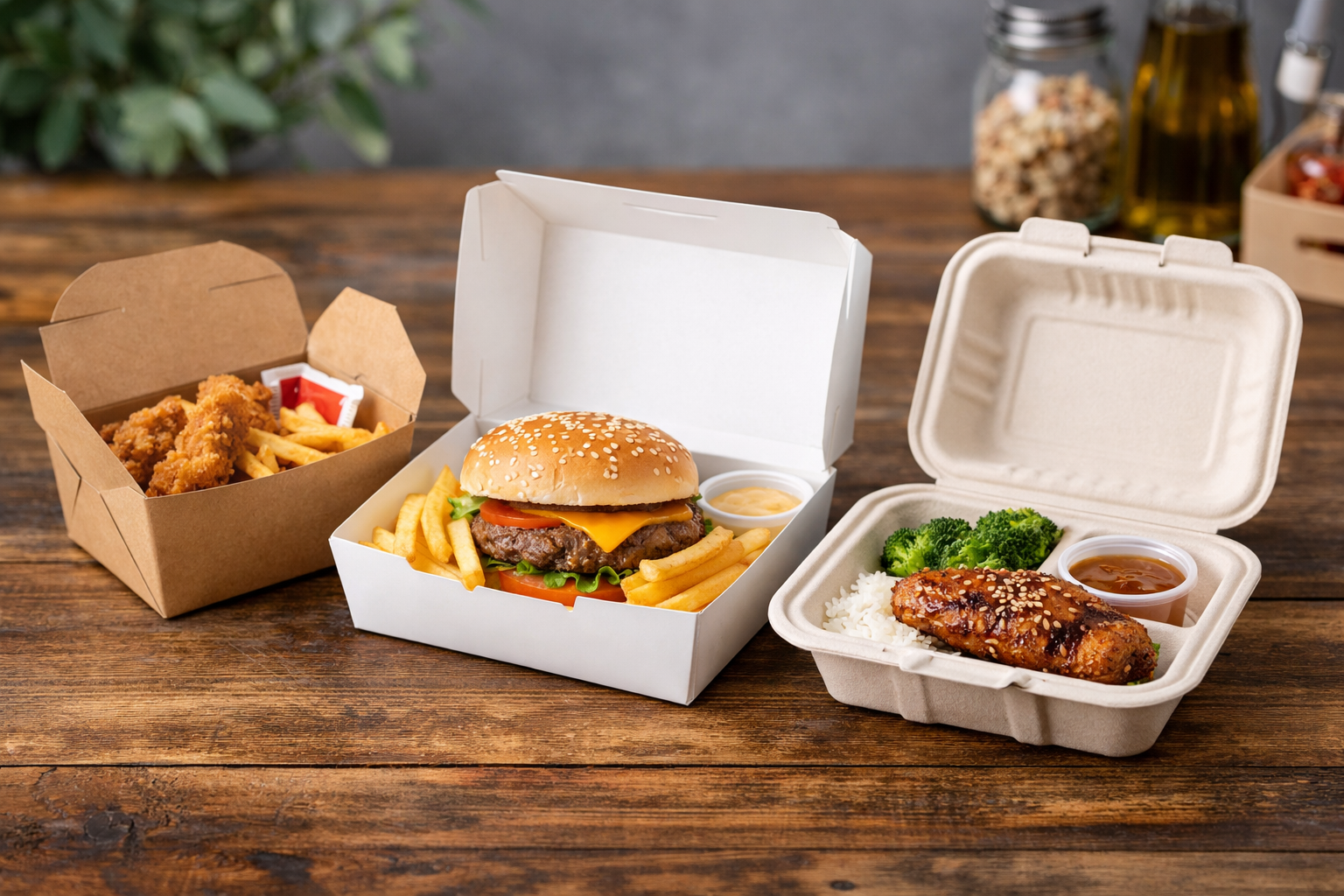
Coated paperboard adds a thin layer, often plant-based like PLA, to block oil, sauce, and moisture while keeping the material lightweight. It handles burgers, pizza, or saucy dishes without getting soggy or leaking. The coating makes it sturdy for stacking during delivery. Many versions stay recyclable or compostable if the coating is eco-friendly. This makes coated paperboard a practical step up from plain paper for messier takeaway foods.
3.3 Molded Pulp and Fiber Trays
Molded pulp comes from recycled paper or plant fibers pressed into shapes like trays or clamshells. It is sturdy with good compartments for multi-item meals and resists some heat and grease naturally. These trays compost in many facilities and cut down on plastic use for sides or full meals. They offer a premium feel and work well for salads, bowls, or fried items with ventilation to keep crispness. Molded fiber reduces waste and meets growing demand for sustainable options.
4. Eco-Friendly and Compostable Takeaway Packaging Materials in 2026
By 2026, compostable food containers and other eco-friendly materials will become mainstream due to government regulations restricting single-use plastics and consumer demand for green products. These materials are derived from renewable plants and can decompose harmlessly into soil. They are suitable for holding hot, cold, or oily foods while reducing environmental impact.
4.1 Bagasse (Sugarcane Fiber) Food Containers
Bagasse uses leftover sugarcane pulp after sugar making, so it turns waste into useful packaging. It is very sturdy, handles high heat without warping, and resists oil and grease naturally. Containers like clamshells or bowls stay strong for hot curries, soups, or fried foods and are microwave-safe. Bagasse is fully compostable in home or commercial settings, breaking down in months. It offers great leak-proofing and durability, making it a top choice for many takeaway needs in 2026.
4.2 PLA (Plant-Based Plastic) and Cornstarch Containers
PLA comes from plants like corn and makes clear, rigid containers good for showing food. It works well for cold salads, drinks, or desserts and provides good moisture resistance. PLA is compostable in industrial facilities, turning into soil without toxins. It softens above about 45°C, so it suits non-hot items best. Cornstarch versions add strength for some uses and share similar eco-benefits. These offer a plastic-like feel with lower environmental harm.
4.3 Bamboo Fiber and Other Plant-Based Packaging Materials
Bamboo fiber grows fast and renewably, creating strong trays or bowls with a nice natural look. It handles heat and some grease well, making it suitable for various takeaway foods. Other plant fibers like wheat straw form molded items that compost easily. These materials feel premium and reduce reliance on trees or plastics. They support sustainability by using quick-growing sources and perform reliably for delivery.
5. Best Packaging Materials for Different Types of Takeaway Food
Choose the right packaging for each food type to keep meals fresh, avoid leaks, and delight your customers every time.
5.1 Best Choices for Hot Meals (Rice, Noodles, Soups)
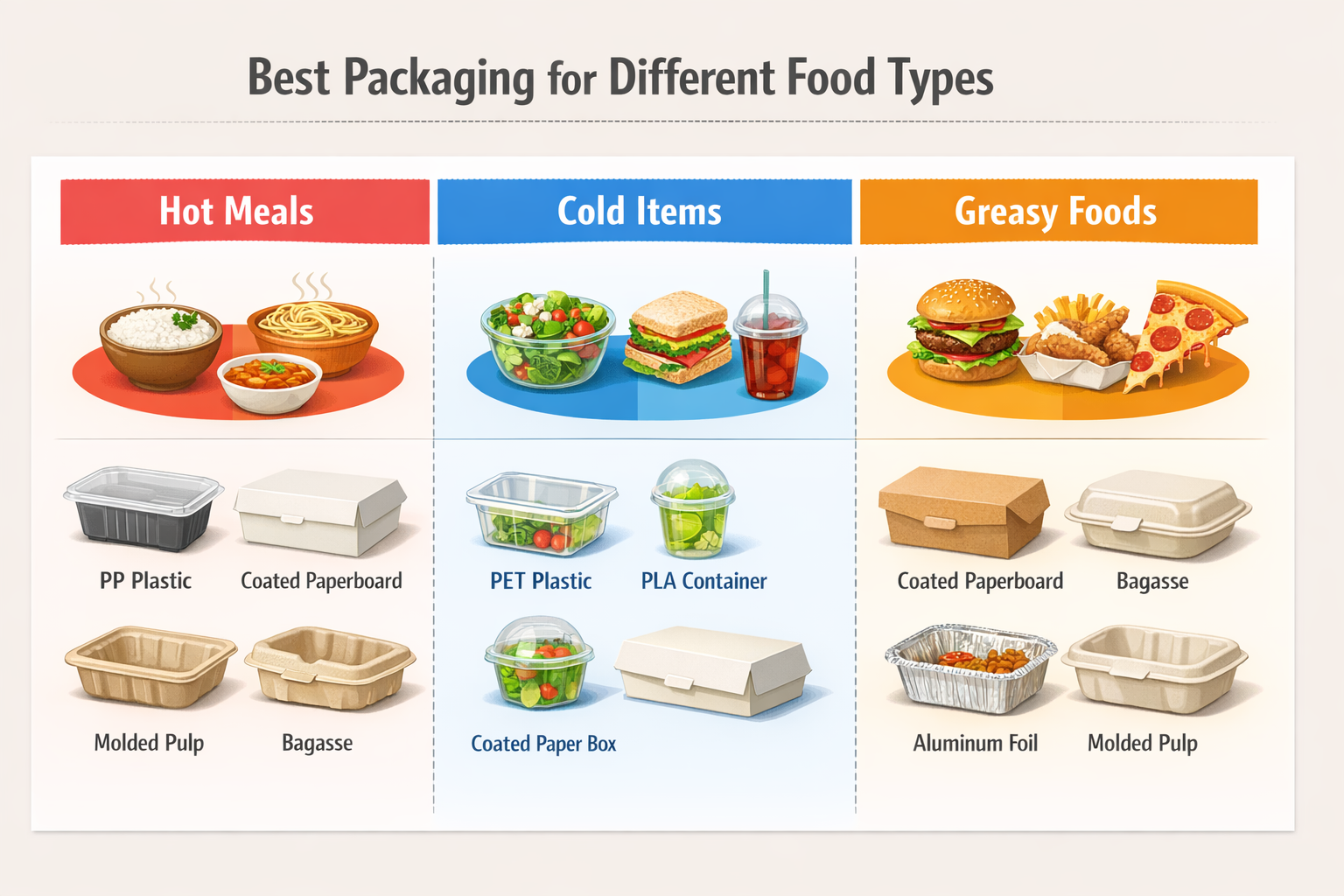
For hot foods, materials such as PP plastic, coated paperboard, molded pulp, and bagasse perform best. These materials resist heat, maintain structure, and prevent leaks, making them suitable for soups, curries, and hot rice dishes.
5.2 Good Options for Cold Items (Salads, Sandwiches, Drinks)
Cold foods benefit from transparent, moisture-resistant packaging such as PET plastic, PLA containers, and coated paper boxes. These materials maintain food freshness and visual appeal while preventing condensation.
5.3 Packaging for Greasy Foods (Burgers, Fried Items, Pizza)
Greasy foods require strong oil barriers. Coated paperboard, bagasse, aluminum foil, and molded pulp containers are effective choices. These materials prevent oil leakage and sogginess, preserving food quality during delivery.
6. Pros and Cons of Major Takeaway Food Packaging Materials
Every material has strengths and weaknesses in cost, performance, and eco-impact. Comparing them helps businesses pick the right mix for their menu and goals.
6.1 Quick Comparison Table Overview
| Material | Best For | Heat Resistance | Leak Protection | Environmental Performance |
|---|---|---|---|---|
| PP Plastic | Hot & cold meals | High | High | Low |
| PET Plastic | Cold foods | Low | High | Low |
| Aluminum Foil | Hot baked foods | Very high | High | Medium |
| Coated Paperboard | Greasy foods | Medium | Medium–High | Medium |
| Molded Pulp | Hot meals | High | Medium | Good |
| Bagasse | Hot & greasy foods | High | Medium–High | Excellent |
| PLA | Cold foods | Low | Medium | Good |
| Bamboo Fiber | Hot meals | High | Medium | Excellent |
This comparison provides a clear guide for restaurants and food businesses to choose the most suitable eco-friendly takeaway food packaging for different menu items, balancing performance, heat resistance, and environmental impact.
6.2 Cost vs Performance vs Environmental Impact
Traditional plastics offer the lowest cost and highest performance but perform poorly in sustainability. Paper-based and fiber-based materials provide a balance between cost and environmental impact. Compostable materials such as bagasse and bamboo fiber deliver strong environmental performance while maintaining functional reliability, making them ideal for future-focused food businesses.
In general, plastic and kraft paper remain the lowest-cost options, while molded pulp, bagasse, and bamboo fiber sit in the mid to higher price range due to material sourcing and processing.
7. Summary of Best Practices for Takeaway Packaging
The best takeaway food packaging strikes a careful balance between food safety, performance, cost, and sustainability. Businesses should choose materials that match each food type, prioritize leak resistance and heat performance, and comply with evolving environmental regulations. Combining multiple materials—such as compostable containers for hot meals and recyclable paper packaging for dry foods—often delivers the most effective, scalable, and customer-friendly results. To explore more ways to optimize your operations, check out our Food Packaging solutions, designed to help businesses stay compliant, sustainable, and efficient.
8. Frequently Asked Questions (FAQ)
8.1 Which takeaway food packaging materials are best for hot meals?
Bagasse, molded pulp, coated paperboard, and PP plastic are among the best packaging materials for hot takeaway food due to their heat resistance and structural strength.
8.2 Are compostable takeaway food containers safe and reliable?
Yes. High-quality compostable containers made from bagasse, bamboo fiber, or molded pulp are food-safe, heat-resistant, and durable enough for most takeaway and delivery applications.
8.3 Can plastic still be used in 2026?
Plastic packaging is still used in many regions, especially PP and PET. However, increasing regulations and consumer demand for sustainable packaging are driving businesses toward recyclable and compostable alternatives.
8.4 How to pick packaging to avoid leaks and sogginess?
Choose materials with strong barrier properties, such as coated paperboard, molded pulp, or plastic containers with secure lids. Matching the packaging to the food type—especially for soups, sauces, and greasy foods—is essential to prevent leaks and sogginess.
Post time: Jan-22-2026