
Many cafés proudly promote “compostable” cups as the eco-friendly choice for hot drinks, winning over customers who want to feel good about their coffee. Yet in reality, these plant-based PLA coatings often soften with boiling temperatures, leading to leaks or deformation—while traditional PE plastic coatings, criticized for environmental impact, reliably handle extreme heat without failing.
This counterintuitive trade-off leaves café owners, chains, and packaging buyers frustrated in 2026: go green and risk operational issues, or stick with proven durability and face sustainability backlash? The decision impacts everything from drink quality and safety to costs and real-world waste handling.
Among today’s Food Packaging Materials, PLA (polylactic acid) and PE (polyethylene) remain the dominant options for hot beverage cups. This article cuts through the marketing hype to compare them based on actual performance in busy cafés and diverse disposal systems—helping you make a practical choice that fits your needs.
1.How PLA and PE Coatings Work in Paper Cups (In Real Applications)
1.1 What Is PE Coating and Why It Became the Industry Standard
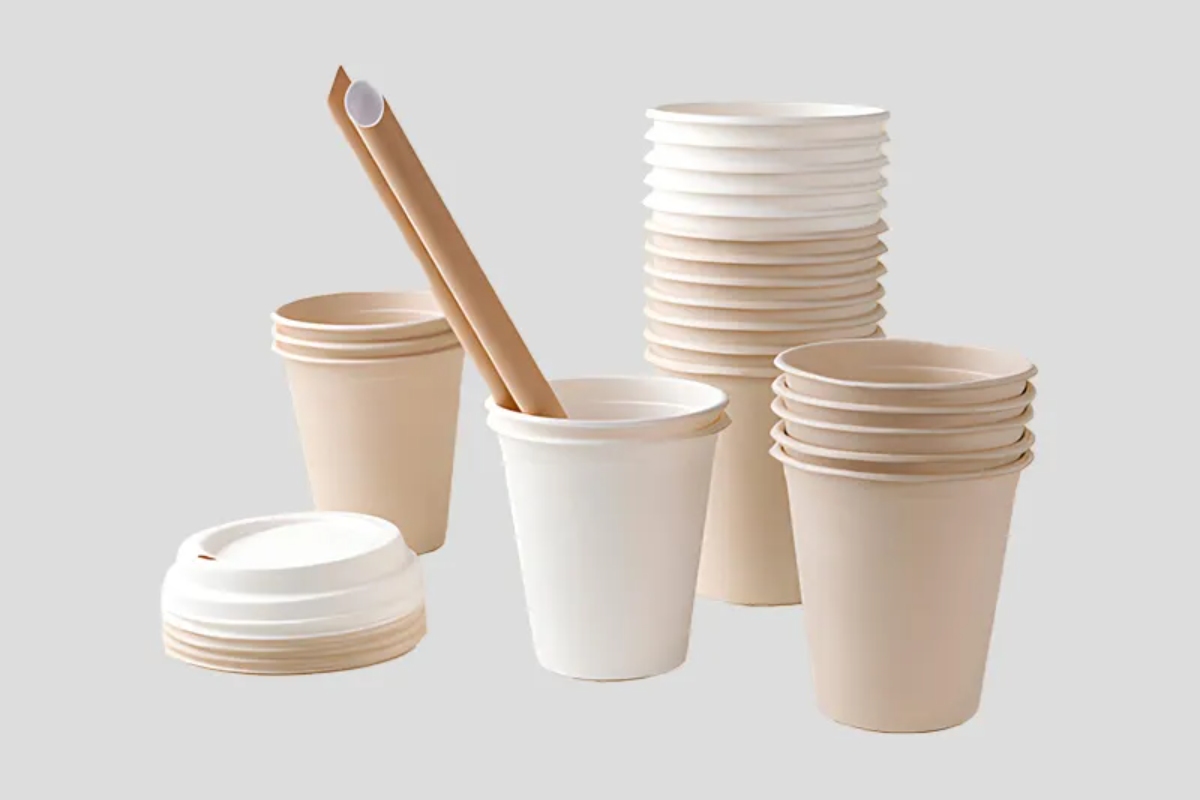
PE coating is a thin layer of polyethylene plastic derived from petroleum, typically applied at 15–20 grams per square meter on the inner surface of the cup. This material is flexible, durable, and creates an effective moisture barrier.
It resists high temperatures, does not react with acidic drinks like coffee, and maintains structural stability during long holding times. For this reason, polyethylene coated cups became the dominant solution for hot beverages in large-scale food service operations. Major chains such as Starbucks and McDonald’s have relied on this material for decades due to its consistency and reliability.
1.2 What Is PLA Coating and Where It Is Actually Used Today
PLA coating is made from polylactic acid, a bioplastic produced from renewable resources like corn starch or sugarcane. The process involves fermenting plant sugars to create lactic acid, which is polymerized into PLA. This coating is applied similarly to PE but requires specific conditions to bond properly. PLA is popular in eco-conscious markets because it is plant-based and compostable in industrial facilities. Today, brands like independent cafes, event organizers, and companies targeting green consumers use PLA cups. For instance, music festivals and corporate events often choose PLA to reduce plastic waste. In Europe and parts of the US, regulations pushing for sustainable packaging have increased PLA adoption. However, it is still less common than PE due to higher costs and performance limits with very hot drinks. Major users include chains experimenting with sustainability pilots.
1.3 Key Differences That Matter in Daily Use
The main differences between PE and PLA affect how cups feel, perform, and end up after use. PE is petroleum-based and glossy, while PLA is plant-based and often matte. PE handles higher temperatures without softening, making it better for boiling drinks. PLA may deform above 70-85°C in standard forms. In daily use, PE cups stay rigid longer in busy settings. PLA appeals to customers who prioritize the environment. Both look similar to consumers, but PLA often carries “compostable” labels. Cost-wise, PLA is 20-50% more expensive. Disposal differs greatly: PE goes to landfills or limited recycling, while PLA needs industrial composting.
| Aspect | PE Coating | PLA Coating |
| Source | Petroleum-based (fossil fuels) | Plant-based (corn, sugarcane) |
| Appearance | Smooth and glossy | Often matte or natural look |
| Common Users | High-volume chains, everyday coffee shops | Eco-focused brands, events, premium cafes |
| Daily Performance | Excellent for very hot drinks | Good for moderate heat |
| End-of-Life | Landfill or specialized recycling | Industrial composting (where available) |
These differences help businesses choose based on needs like cost, heat requirements, or branding.
2. Heat Resistance for Hot Drinks in Real-World Conditions
Hot drinks in coffee shops typically range from 70°C for mild coffee to 95-100°C for tea or extra-hot orders. The coating must prevent softening, leaking, or deformation under these conditions. Real-world tests show how cups behave during rush hours, with repeated pours and long customer hold times. Steam from machines and condensation also test the barrier. In 2026, improved formulations aim to narrow gaps, but current differences remain significant. Businesses report fewer complaints with reliable heat-resistant coatings.
2.1 How PE Performs with Coffee, Tea, and Repeated Heat Exposure
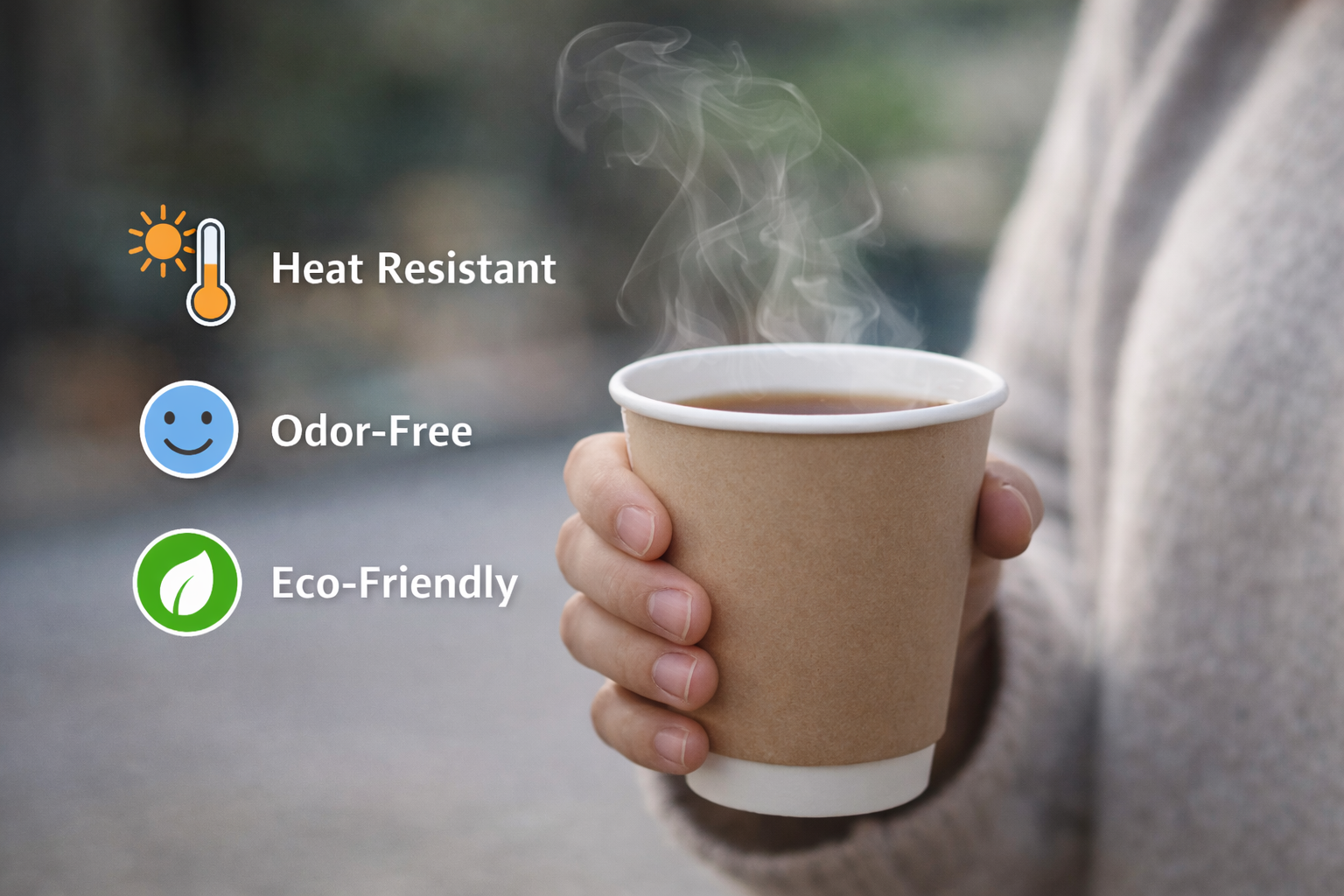
PE coating excels with high temperatures, safely handling up to 120°C without issues. In coffee shops, PE cups stay firm when filled with boiling water for tea. They withstand repeated exposure, like refills or microwave attempts (though not recommended). Tests show no deformation after 30 minutes at 95°C. This reliability makes PE ideal for chains serving extra-hot drinks. Customers can hold cups longer without sogginess. PE’s high melting point ensures the barrier remains intact during transport or outdoor use. Studies confirm minimal changes in structure even after prolonged heat.
2.2 How PE Performs with Coffee, Tea, and Repeated Heat Exposure
Standard PLA softens around 50-70°C, limiting it for very hot drinks. Advanced PLA versions reach 85-90°C, suitable for most coffee but risky for boiling pours. With steam or long holding (over 15 minutes), standard PLA may warp slightly. In real use, cafes limit PLA to drinks below 85°C or use double-wall designs. Some brands report occasional deformation complaints with extra-hot orders. Improved heat-resistant PLA is emerging in 2026, but current versions require careful temperature management. Overall, PLA works well for moderate heat but not extreme conditions.
2.3 Practical Temperature Limits for Paper Cups in 2026
By 2026, PE remains the champion for high heat, while enhanced PLA closes the gap for standard drinks. Real limits depend on formulation quality.
| Drink Type | Typical Temperature | PE Safe? | Standard PLA Safe? | Advanced PLA Safe? |
| Regular Coffee | 70-85°C | Yes | Usually | Yes |
| Extra-Hot Coffee | 85-95°C | Yes | Risky | Usually |
| Boiling Tea | 95-100°C | Yes | No | Limited |
| Steamed Milk Drinks | 70-90°C | Yes | Yes (with care) | Yes |
Choose based on menu: PE for flexibility, PLA for eco-brands with controlled pours.
3. Safety and Chemical Migration: What Buyers Actually Ask About
Customers increasingly ask about chemicals leaching into drinks, especially with heat. Studies show both coatings can release particles, but levels vary. Certified products minimize risks. Microplastics and additives are main concerns. Real exposure happens in minutes with hot liquids. Regulations like FDA and EU standards limit migration.
3.1 PE Coating Safety and Migration Risks Under High Heat
Quality PE meets strict food safety standards with very low migration. However, heat can cause minor release of microplastics or additives. Studies detect particles in hot water, but below health concern levels in certified cups. Low-quality PE may leach more heavy metals or chemicals. Overall, PE is considered safe for daily use when from reputable sources. Risks increase with poor manufacturing or extreme heat.
3.2 PLA Food Contact Safety: What It Solves — and What It Doesn’t
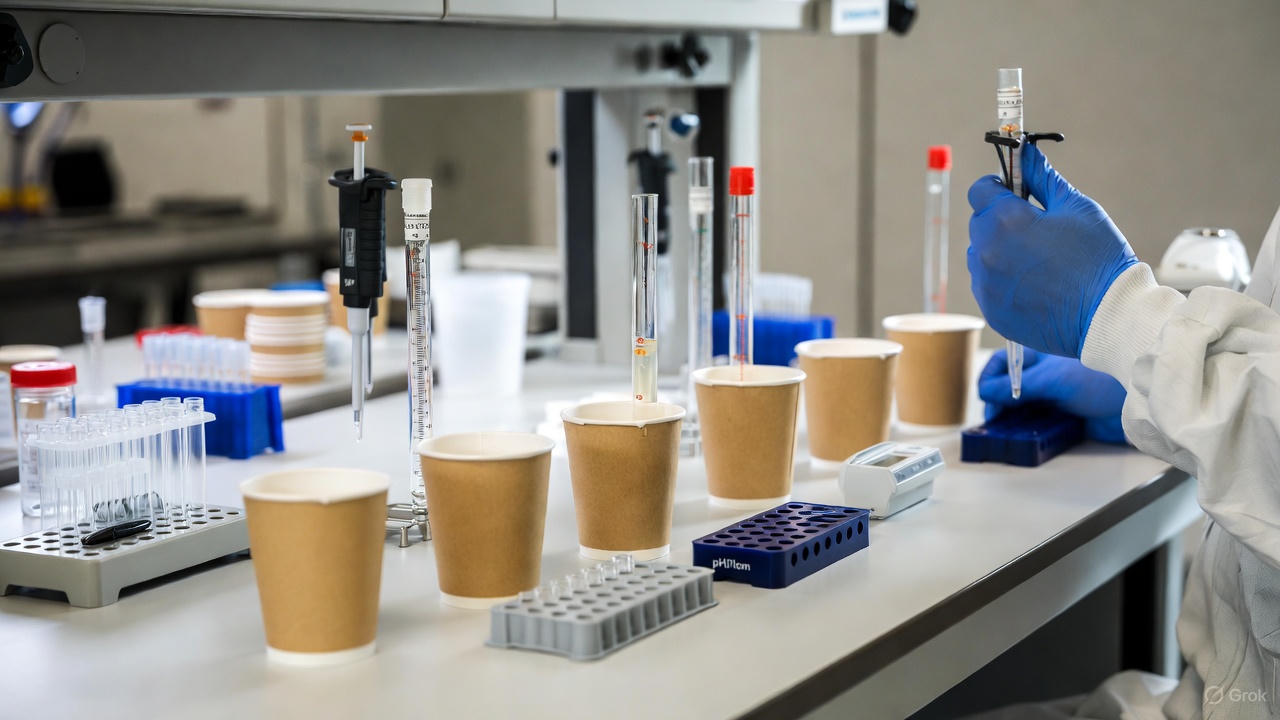
PLA avoids petroleum chemicals and is FDA-approved. It solves fossil fuel dependency but recent studies show higher microplastic release than PE in hot water, often from cellulose fibers. PLA does not leach traditional plastic additives but can release plant-based particles. It solves branding for “natural” but doesn’t eliminate all migration risks. Advanced PLA reduces this issue.
3.3 What Recent Testing and Industry Standards Indicate (Up to 2026)
Tests up to 2025 show both pass migration limits when certified. PLA sometimes releases more particles due to breakdown. Standards like BPI for compostable and FDA for contact ensure safety. In 2026, tighter rules may favor low-migration options. Choose certified suppliers to avoid risks from cheap imports.
4. Environmental Impact Beyond the Marketing Claims
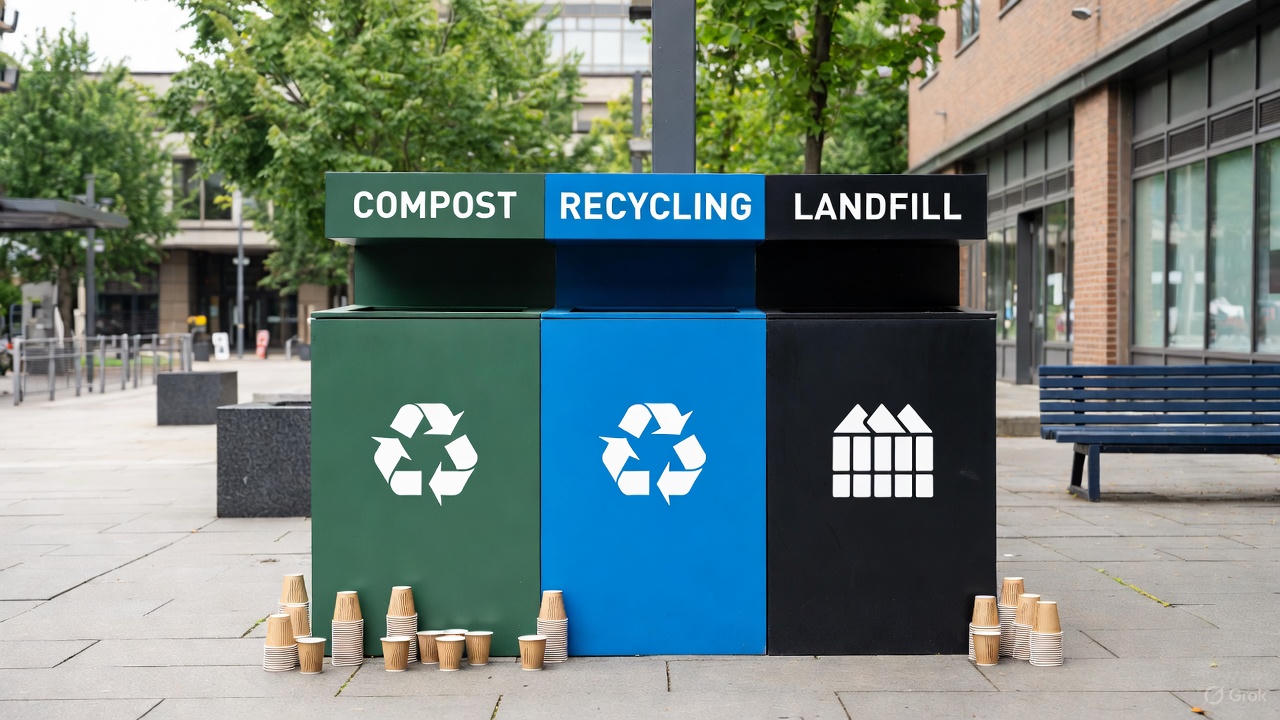
Marketing often highlights PLA as “green,” but real environmental impact depends heavily on disposal conditions. PE relies on fossil fuels, while PLA is made from renewable resources. However, production methods, transportation, and end-of-life handling all affect total emissions.
A truly sustainable paper cup depends not only on the coating material, but also on whether local waste systems can actually process it as intended. Without access to industrial composting or proper recycling facilities, the environmental difference between PLA and PE becomes much smaller than marketing claims suggest.
4.1 Is PLA Really Biodegradable in Current Waste Systems?
PLA is industrially compostable, breaking down in 3-6 months at 55-60°C with microbes. It needs special facilities, not home compost or landfills. In landfills, PLA lasts decades like plastic. Few cities have widespread industrial composting. Without it, PLA offers little advantage over PE environmentally.
4.2 Why PE-Coated Cups Are Hard to Recycle at Scale
PE bonds tightly to paper, requiring specialized plants to separate. Most recycling facilities reject them, sending to landfills. Only a few regions have cup recycling programs. Contamination reduces paper quality. Efforts in 2026 aim to improve, but scale remains limited.
4.3 Carbon Footprint Trade-Offs in Production and Transport
PLA production uses less fossil energy but requires farmland and water. If composted, PLA has lower lifetime emissions. PE has higher fossil dependency but established efficient production. Transport adds similar impacts. Proper disposal tips balance toward PLA.
5. Practical Decision Factors for Cafes, Brands, and Suppliers
Beyond ideals, operations drive choices. Cost, supply, and customer feedback matter most in daily business.
5.1 Cost Comparison and Price Stability in 2026
PE remains cheaper, with stable petroleum prices. PLA costs 20-50% more due to raw materials and processing. In 2026, scaling may reduce PLA prices slightly. Bulk orders amplify savings with PE. Small eco-cafes absorb higher PLA costs for branding.
5.2 Storage, Shelf Life, and Logistics Constraints
PE stores easily in any condition with long shelf life. PLA needs cool, dry storage to prevent premature breakdown. Humidity can affect PLA quality. Logistics favor PE for global supply chains.
5.3 Customer Perception vs Operational Reality
Customer perception plays a major role in packaging decisions. Many buyers associate plant-based materials with environmental responsibility, even when performance trade-offs exist.
Many customers associate compostable materials with eco-friendly paper cups, even when real-world disposal conditions do not always support that assumption. In practice, cafés must balance this perception against issues such as heat resistance, leakage risk, and higher unit costs.
6. Which Coating Makes Sense in Different Use Scenarios?
- Best Choice for High-Volume Coffee Chains:PE wins for cost, heat reliability, and supply ease. Chains like national brands prioritize consistent performance over eco-claims.
- Best Choice for Premium or Eco-Focused Brands:PLA shines for branding and where composting exists. Independent or premium spots attract customers willing to pay more.
- When PE Still Makes More Sense Than PLA:PE prevails for extra-hot menus, tight budgets, or areas without composting. Reliability trumps potential green benefits without infrastructure.
In real purchasing decisions, the choice of coating is only one part of selecting a reliable hot paper cup. Buyers must also consider cup structure, wall thickness, supplier quality control, and how the cup performs throughout its full lifecycle—from filling to disposal.
7. Common Myths vs Reality About PLA and PE Coatings in 2026
As interest in sustainable packaging grows, many ideas about PLA and PE coatings are widely shared online. However, not all of them match real-world conditions. Understanding the difference between common beliefs and actual practice helps readers make clearer judgments.
| Common Belief | Reality |
| PLA cups are always better for the environment | Only when industrial composting exists |
| PE cups are unsafe for hot drinks | Certified PE is considered safe |
| PLA can fully replace PE | Not yet at large scale |
| Compostable means biodegradable anywhere | PLA needs industrial conditions |
| Material choice alone solves waste issues | Infrastructure matters more |
These differences explain why both materials continue to exist in the market in 2026. Packaging decisions are shaped not only by material properties, but also by infrastructure, regulations, and daily use habits.
8. Regional Differences in PLA and PE Adoption
Although PLA and PE coatings are discussed worldwide, their actual use varies greatly by region. These differences are driven less by technology and more by policy support, waste infrastructure, climate, and cost sensitivity. As a result, no single coating works equally well in every market in 2026.
8.1 Europe: Policy-Driven PLA Adoption
In Europe, government policies play a major role in promoting PLA-coated paper cups. Many countries encourage compostable and bio-based packaging to reduce fossil plastic use. In large cities, industrial composting systems are more common, allowing PLA cups to be processed as intended.
This policy and infrastructure support makes PLA a practical option for cafés, events, and catering services in urban areas. However, outside major cities, composting access is still limited, and PLA cups may end up in landfills. This limits their environmental benefit even within Europe.
8.2 United States: Mixed Infrastructure Reality
In the United States, PLA adoption depends heavily on location. Some cities support compostable packaging through established composting programs, while many regions do not. This creates uneven results and consumer confusion.
Because of this inconsistency, PE-coated cups remain the main choice for hot drinks nationwide. They offer stable heat performance, lower cost, and easier logistics for brands operating across multiple states. PLA is often used only in specific cities or pilot programs.
8.3 Asia-Pacific: Cost and Climate Considerations
In the Asia-Pacific region, PE-coated cups continue to dominate due to cost efficiency and practical performance. High humidity and warm climates can affect the storage and reliability of PLA-coated cups, especially during long transport or storage periods.
In addition, limited industrial composting infrastructure reduces the environmental advantage of PLA in many markets. While some premium or international brands are beginning to test PLA, adoption remains limited in everyday hot drink use.
9. Key Takeaways: Making a Practical Choice in 2026
In 2026, PE offers proven performance and lower cost for most hot drink uses. PLA provides environmental advantages where proper disposal exists. Balance heat needs, budget, and local waste systems. Emerging options like water-based coatings may change the landscape soon. Focus on certified products for safety—and for a broader comparison of materials and use cases, refer to our Food Packaging Materials guide.
9.1 Quick Decision Guide Based on Use Case, Not Ideology
| Priority | Choose PE | Choose PLA |
| Maximum Heat Reliability | Yes | Limited (use advanced) |
| Lowest Cost & Supply Ease | Yes | No |
| Eco-Branding & Composting Access | No | Yes |
| Balanced Daily Operations | Standard choice | If infrastructure supports |
| Regulatory Compliance (plastic bans) | Risky in some areas | Safer option |
10. Frequently Asked Questions (FAQ)
10.1 Can PLA-coated cups go in the microwave?
No. Both PLA and PE cups are not microwave-safe; they can deform or leak.
10.2 Are PE-coated cups safe for very hot tea?
Yes. PE handles boiling temperatures without issues in quality cups.
10.3 Why don’t all cafes switch to PLA yet?
Higher cost, lower heat resistance, and limited composting facilities hold many back.
10.4 Can both types be recycled together?
No. They need separate processing; mixing contaminates streams.
Post time: Jan-05-2026