Burger boxes rarely fail in the kitchen. They fail earlier: in a humid shipping container, on a floor-level pallet, or in a back store next to the dish pit. Paperboard absorbs and releases moisture with the air around it, so the supply chain decides whether a box arrives flat, square, and well glued, or warped and weak. This guide shows where moisture gets in and how to stop it.
The short answer: store burger boxes at roughly 40% to 60% relative humidity and 59–77°F (15–25°C), keep them off the floor, leave them in their original wrap, and avoid sudden temperature swings. Most deformation problems, including curled lids, bowed walls, popped locks, and weak glue lines, are caused by moisture changes during transit and storage, not by a flawed box design.
This guide follows a burger box from the factory to the restaurant shelf. It shows where moisture gets in at each stage and gives practical rules for warehouses, containers, receiving checks, and supplier specifications. It is written for restaurant groups, distributors, and packaging buyers who order burger boxes in bulk and want fewer rejected pallets and fewer slow, messy service lines.
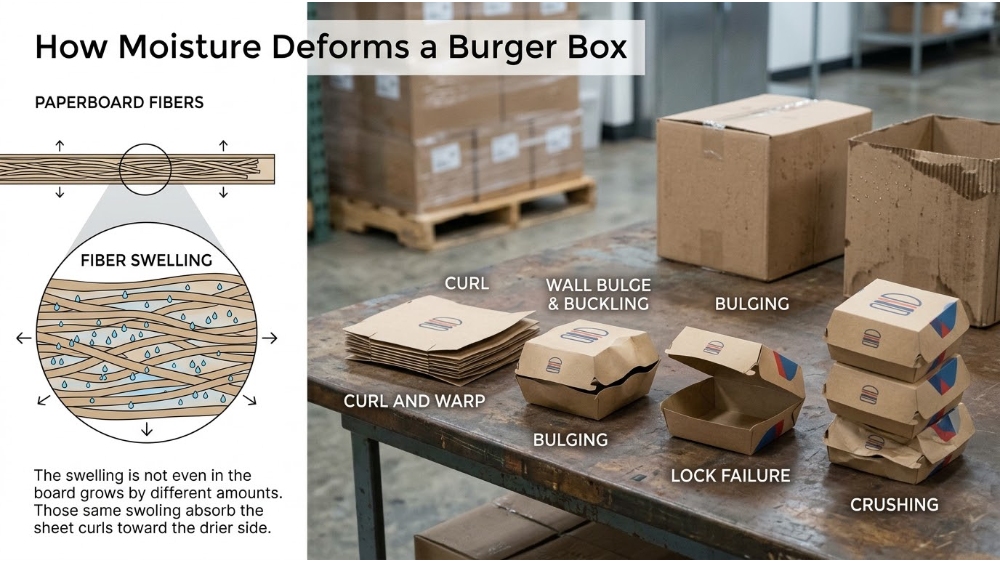
How Moisture Deforms a Burger Box
Paperboard is built from cellulose fibers, and cellulose attracts water vapor. A burger box leaves the converting line at a low moisture content, usually in the single digits as a percentage of weight. After that, the board slowly moves toward equilibrium with the surrounding air. When humidity rises, the fibers take on water and swell. When humidity falls, they dry and shrink.
The swelling is not even. Fibers expand much more across their width than along their length, so board grows by different amounts in the machine direction and the cross direction. If one side of a flat blank or a box wall picks up moisture faster than the other, the sheet curls toward the drier side. That is the basic mechanism behind nearly every moisture-deformation complaint.
Curl and warp: flat blanks bow, so they feed badly into folding machines and sit unevenly when assembled by hand
Wall bulge and buckling: erected clamshell boxes lose their square shape and the lid no longer sits flush
Glue and lock failure: swollen board stresses the glue line, and tuck locks stop holding, so boxes pop open during delivery
Loss of stacking strength: fluted board such as E-flute holds less load when damp, so bottom cartons crush and the pallet leans
Long exposure to sustained high humidity adds a second layer of risk: surface mold, musty odor that transfers to food, and printed areas that scuff or blotch. For a food-contact product, a musty box is a rejected box, even if its shape is fine.
Early warning signs a pallet has taken on moisture:
Outer cartons feel soft or look slightly bulged at the sides
Blanks curl or fan open when removed from the stack
Edges look dark or wavy, and printed areas feel tacky
A faint damp or musty smell when the carton is opened
Where Moisture Enters: From Factory to Restaurant
A bulk burger box order usually passes through six or seven handoffs. Each one has a different moisture risk, and the worst problems tend to happen at the points where nobody is watching the climate. The table below maps the chain and the main control at each stage.
Stage
Main moisture risk
Best control
Factory finishing and packing
Boxes packed while board is still conditioning or in a humid hall
Condition board before packing; seal cartons in poly liner
Factory warehouse
Floor-level storage, open dock doors, rainy season
Pallets off the floor, stretch-wrapped, away from doors
Container loading
Damp pallets, wet dunnage, humid air sealed inside
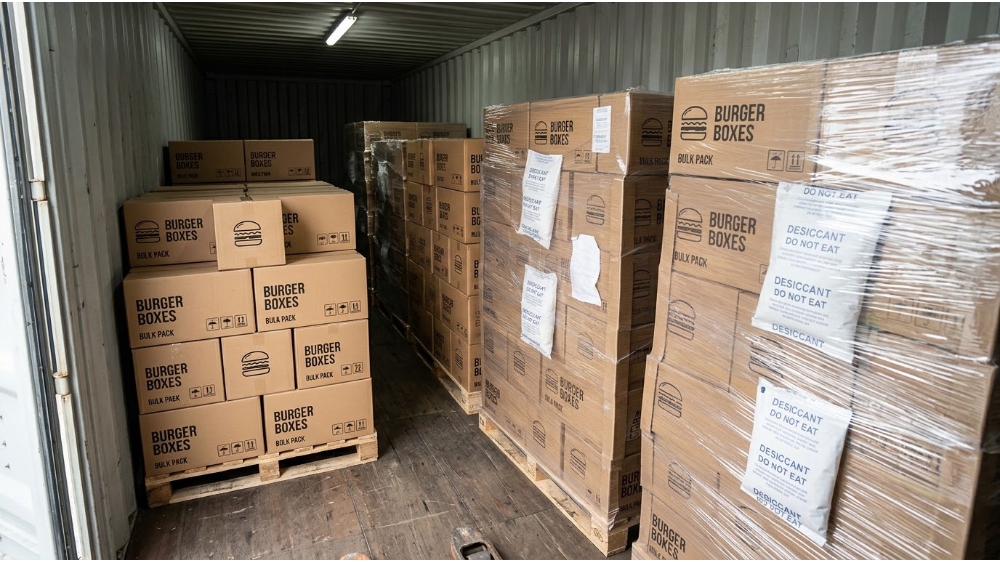
Dry pallets, desiccant, loading inspection photos
Ocean or air transit
Temperature swings that cause condensation
Liner bags, cargo placement, vented or dry-managed container
Shelving away from heat and wet zones, sealed cartons
The key point is that high humidity alone is only part of the story. Rapid temperature change is often the more damaging trigger. Warm, humid air that cools quickly drops its moisture as condensation, and that water forms on cartons and inside wraps. This is why a box can leave a dry factory and still arrive damp after a long trip.
Warehouse Storage Rules That Prevent Warping
Good warehouse practice for burger boxes comes down to five habits: control the climate, stay off the floor, stack carefully, rotate stock, and let boxes adjust before use. None of these costs much. Skipping them is what causes most avoidable losses.
Hold a steady climate
Aim for 40% to 60% relative humidity and a temperature between 59°F and 77°F (15–25°C). Stability matters as much as the exact number. A warehouse that sits at 50% and swings by 20 points across a day is harder on board than one that sits steadily at 60%. A simple digital hygrometer on the racking costs very little and shows problems before a pallet does.
Keep pallets away from dock doors, roller shutters, air-conditioning outlets, and exterior walls. These spots see the biggest daily swings. In very humid regions, a dehumidifier in the storage bay pays for itself quickly.
Get boxes off the floor and out of contact with walls
Concrete floors hold and release moisture, and even a sealed-looking slab can wick dampness upward. Store pallets on dry plastic or wooden pallets, not directly on the floor, and leave a gap of several inches between the stack and any outside wall so air can move. Check that wooden pallets are dry, because damp wood can release water into the carton above it.
Stack within the carton rating
Humidity reduces the load a carton can carry, so a stack that is safe in a dry store may crush in a damp one. Follow the stacking limit printed on the master carton or provided by your supplier, and lower it in humid seasons. Do not stack mixed products unevenly, and keep loose cartons off the top of tall pallets where they can slide or catch drafts.
Rotate stock and set a storage window
Use first-in, first-out. Long storage multiplies every other risk, so many buyers set an internal storage window of six to twelve months for printed boxes, and shorter in humid climates. Confirm the right window with your supplier, because it depends on the board, coating, and ink system.
Let boxes adjust before opening
If a pallet moves from a cold store or truck into a warm room, leave it sealed for at least a day before opening. Opening cold cartons in warm, humid air lets moisture condense directly on the board. The same applies in reverse when a pallet comes in from a hot yard into an air-conditioned space.
Shipping Burger Boxes: Containers, Condensation, and Pallets
Ocean freight is the most common route for bulk burger box orders, and it is also where most moisture damage begins. A container is a steel box. When it is loaded in warm, humid air and then travels through cooler regions or night temperatures, moisture condenses on the roof and walls and can drip onto cargo. Shippers call this container rain. A related effect, ship’s sweat, occurs when cold cargo meets warm, humid air.
You cannot control the voyage, but you can control what goes into the container and how it is protected. These measures make the biggest difference:
Dry loading: avoid loading during or right after rain, and confirm the container floor and walls are dry and clean
Poly liner inside the carton: a sealed liner bag around each stack of boxes slows vapor exchange and protects against drips
Full stretch-wrap plus top sheet: wrap the full pallet and add a top cover so any condensation runs off instead of soaking in
Desiccant: use container-rated desiccant bags or rods sized for the container volume and the expected route
Dry dunnage and pallets: damp wood and paper void fill add water to a sealed space
Smart placement: keep cartons from touching container walls, and avoid stacking the lightest-protected pallets near doors
Seasonal timing also matters. Shipments that cross humid tropical routes in summer or move from warm origins into cold winter destinations carry the highest condensation risk. If an order must ship in those windows, ask your supplier to upgrade the packing: a heavier liner, extra desiccant, and a dry-managed container if available.
For high-value or recurring orders, consider placing a small temperature and humidity data logger inside one carton. After arrival, the log shows when conditions changed. That record turns a vague complaint about warped boxes into a clear conversation about where the problem occurred and who needs to fix it.
Pre-shipment checklist for bulk burger box orders:
Request photos of the sealed pallets and the empty container before loading
Confirm liner bags, stretch-wrap, and top cover are specified in the order
Agree on desiccant type and quantity for the route and season
Plan pickup so the container does not sit at port or in a yard for days
Material and Construction Choices That Resist Deformation
Better handling protects any box, but some design choices make a box more forgiving. The right choice depends on how long your boxes will be in the chain and how humid the route is. Coatings help, but they do not make board waterproof. A coated surface slows moisture, while the cut edges and the uncoated inside of folds stay exposed.
Feature
How it helps
Trade-off
PE or aqueous coating
Slows surface moisture uptake and protects print
Edges stay exposed; coating type affects recyclability
Heavier caliper or basis weight
Stiffer board holds shape better when damp
Higher material cost and freight weight
Fluted board such as E-flute
Rigid structure and good wall strength when dry
Loses stacking strength faster in damp storage
Correct grain direction
Board curls less when folds run with the grain
Must be specified at die-line stage
Glue type and application
Better bond retention under humidity change
Needs testing for your climate and line speed
Flat-packed instead of pre-erected
Compact, easier to protect, and cheaper to ship
Needs assembly labor in the restaurant
Carton packing also plays a role. Smaller inner packs, such as sealed bundles of 50 or 100 boxes in a poly sleeve, protect the stack that is open in the kitchen while the rest stays sealed. A single large carton opened every day lets the entire supply absorb kitchen humidity.
Receiving Inspection and Troubleshooting
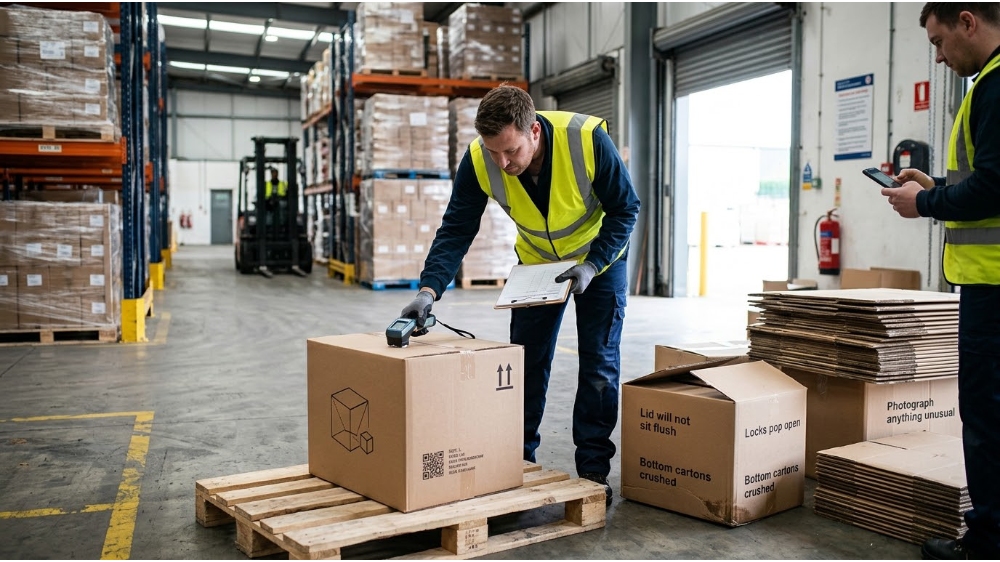
Inspect every delivery before signing for it. A five-minute check at the dock gives you evidence for a claim and prevents damaged stock from entering your storage. Look at the outside first: torn wrap, water stains, crushed corners, or leaning stacks. Then open a carton from the center of one pallet, since the middle is the best test of how well the load was protected.
Assemble a few boxes and test them. Fold them, close the lock, and check that the lid sits flat and stays closed. Leave one assembled box on a shelf for 24 hours and recheck it. If you have a paperboard moisture meter, record the reading and compare it with the range in your supplier’s specification. Photograph anything unusual and report it quickly, because most carriers and insurers set short claim windows.
Symptom
Likely cause
What to do
Blanks curl or bow
Uneven moisture uptake, often from condensation or open storage
Condition in sealed packs for 24–48 hours; reject if curl persists
Lid will not sit flush
Swollen walls or grain-direction mismatch
Test several boxes; if widespread, claim against the supplier
Locks pop open
Board swelling or weakened glue line
Stop use on delivery orders; review glue and storage conditions
Bottom cartons crushed
Humidity reduced carton strength under load
Reduce stack height; check pallet and storage climate
Musty smell or spots
Long exposure to high humidity
Do not use for food contact; document and quarantine
Mildly curled boxes can sometimes recover if they are kept sealed in a stable room, but recovery is not reliable. Do not use boxes with weak glue lines, mold, or odor, regardless of how they look. A bad box that reaches a customer costs more than the box itself.
Supplier Specs and Ordering Habits That Protect Your Stock
Many deformation problems start with an order that never said how the boxes should be packed. Put protection requirements in writing. A clear packing specification gives you a basis for a claim and tells the factory what “good” looks like.
Ask your supplier to confirm these points before production starts:
Moisture content range of the board at dispatch
Inner pack format, poly liner, and master carton strength
Pallet pattern, stretch-wrap, corner protection, and top cover
Desiccant plan and container type for your route and season
Recommended storage conditions and shelf life for your exact board and print
Ordering habits matter too. Large annual orders reduce unit cost, but they also lengthen storage time and increase moisture exposure. In humid climates, smaller, more frequent shipments can cost less overall once you count waste and rejected stock. Match order size to your storage space, your climate, and how fast you actually use boxes.
Working with a supplier that manages production, printing, packing, and shipment planning as one chain also removes handoffs where responsibility gets lost. For help matching burger box specifications, protective packing, and shipping plans to your route and climate, contact Maibao Packaging for a sourcing consultation.
Need burger boxes that arrive flat, strong, and ready to use?
Talk to a packaging specialist about box materials, protective packing, and shipping plans matched to your menu, your climate, and your delivery route.
What humidity is too high for storing burger boxes?
Sustained humidity above about 70% starts to cause real problems, including swelling, weaker glue, and mold risk over time. For best results, stay within 40% to 60% and avoid large daily swings.
How long can burger boxes be stored?
It depends on the board, coating, ink, and climate. Many buyers plan on six to twelve months in a controlled store and less in humid regions. Ask your supplier for a recommended window for your specific product.
Can warped burger boxes be fixed?
Light curl may ease if the boxes rest sealed in a stable, moderate-humidity room for a day or two. Severe warping, weak glue lines, or any mold or odor means the stock should not be used for food.
Do desiccant bags in cartons really help?
They help in sealed containers and sealed liners, where they absorb moisture from the trapped air. They do not replace dry loading, proper wrap, or climate control, and they must be sized for the space and the route.
Post time:
Oct-16-2026
For inquiries about our products or pricelist, please leave your email to us and we will be in touch within 24 hours.