
Many cafés believe that choosing a “sustainable” cup automatically means choosing the right one.
In reality, some cups that look eco-friendly on paper struggle when filled with freshly brewed hot coffee—softening, leaking, or making drinks uncomfortable to hold.
In 2026, hot coffee cup selection has become a balancing act between performance, regulations, cost control, and credibility. A material that works well for cold drinks may fail under high temperatures, while another that complies with policy requirements may frustrate customers during daily service.
Paper cups, PLA cups, and bagasse cups are often presented as equally viable coffee packaging solutions, yet their real-world performance tells a very different story once heat, handling time, and disposal systems are considered.
This guide cuts through the assumptions and marketing claims to compare these three materials side by side—helping cafés and food service buyers identify which option truly works best for hot coffee in 2026.
1. Why Hot Coffee Cup Materials Matter in 2026
1.1 The scale of global hot coffee consumption
Industry estimates consistently place the global disposable cup market in the tens of billions of dollars each year, with hot coffee representing one of the largest and most frequent use cases. Across cafés, quick-service restaurants, offices, and takeaway counters, billions of hot coffee cups are used annually as part of everyday routines.
In high-traffic locations, a single café may serve hundreds to thousands of hot coffee cups per day, multiplying material choices into significant operational and environmental impacts over time. At this scale, even small differences in cup performance—such as heat resistance, leakage, or insulation—can quickly affect customer experience, waste volume, and long-term costs.
1.2 What defines a good material for hot drinks
A strong hot coffee cup needs to handle temperatures of 85-100°C (185-212°F) without leaking, softening, or releasing harmful chemicals. It should insulate well so hands do not burn, cost reasonable amounts for businesses, feel good to hold, and dispose of easily without hurting the environment. New rules in 2026 make plastic-free or truly compostable options more important than ever.
2. Understanding the Three Main Cup Materials
2.1 Paper cups and inner linings
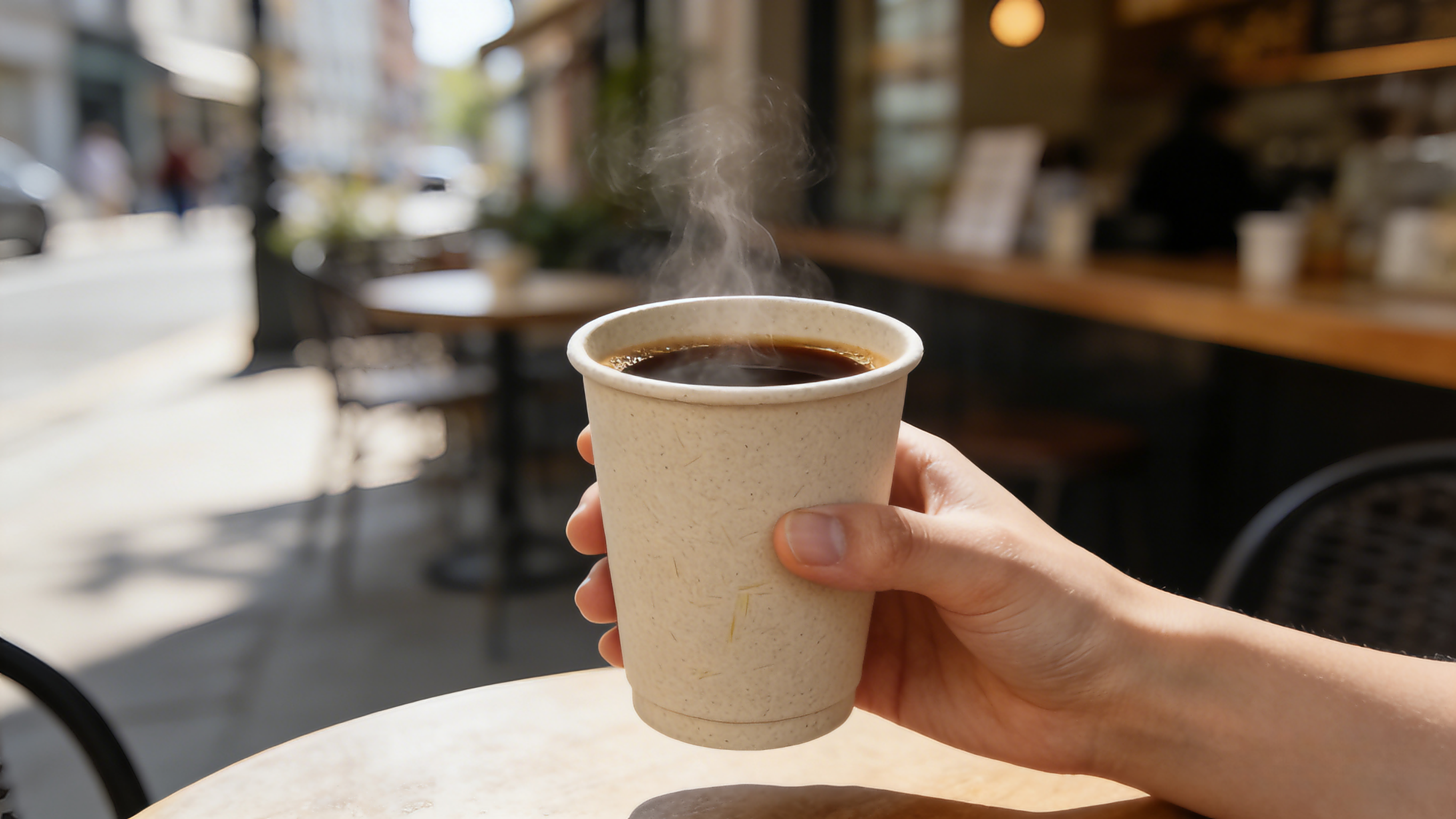
Paper cups are made from thin layers of paperboard, which comes mostly from trees. To stop hot coffee from leaking through the paper, manufacturers add a special inner coating, called a lining. The most common lining is polyethylene (PE), a type of plastic made from oil, but some newer cups use PLA (a plant-based material) or water-based coatings instead. These linings make the cup waterproof and help it hold hot drinks without getting soggy right away. However, the type of lining greatly affects how well the cup works for very hot coffee and how easy it is to recycle or compost later. Paper cups are lightweight and easy to print colorful designs on, which is why many cafes like them.This makes paper cups a reliable choice for hot coffee service when paired with the right lining, but their long-term sustainability depends heavily on local recycling capabilities and coating type.
2.2 PLA cups: plant-based bioplastic
PLA stands for polylactic acid, and it is a bioplastic made from plant starches like corn or sugarcane. This material looks clear and shiny, just like regular plastic, so it is often used for clear cold-drink cups or as a lining inside paper cups. PLA is popular because it comes from renewable plants instead of oil. However, standard PLA softens or deforms when it gets too hot, usually above 50–60°C (about 122–140°F). Some improved versions, like crystallized PLA (CPLA), can handle up to 90°C for short times, but pure PLA cups are still not the best choice for boiling hot coffee. Overall, PLA works well for cold or warm drinks but has clear limits with very hot beverages.This limits PLA’s suitability for cafés serving freshly brewed, high-temperature coffee.
2.3 Bagasse cups: molded sugarcane fiber
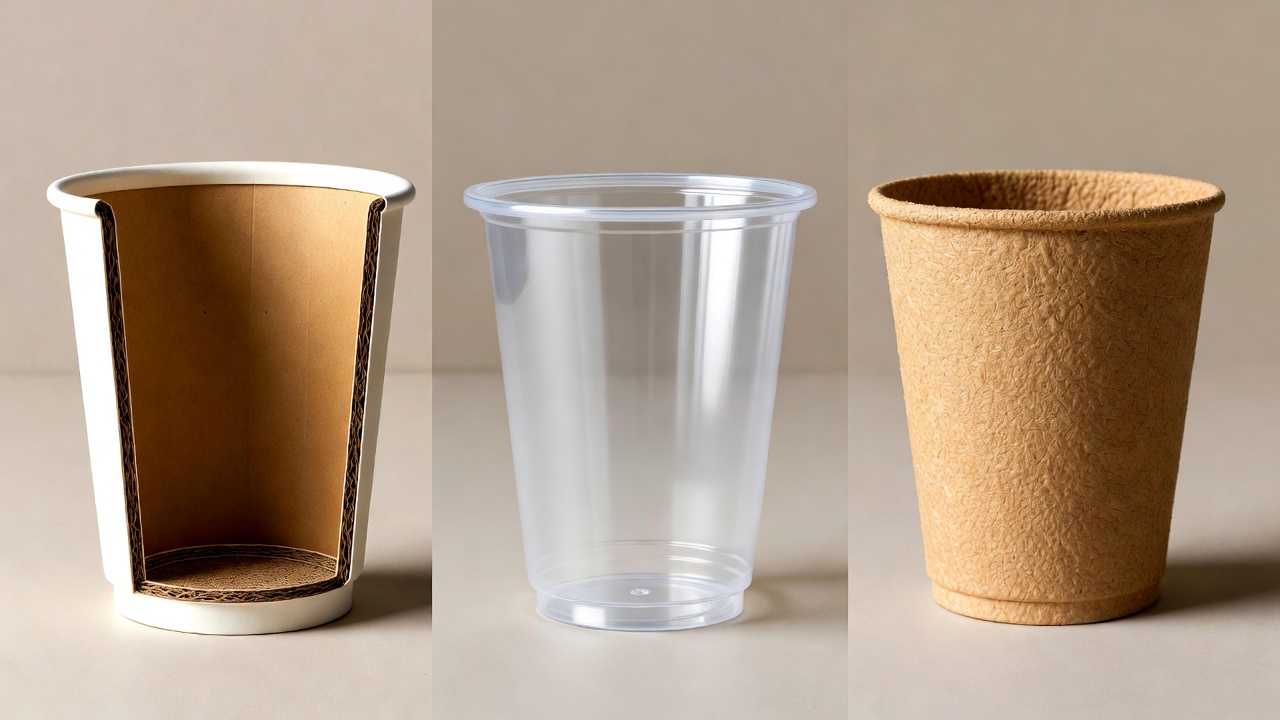
Bagasse is the dry, stringy leftover fiber after factories squeeze juice out of sugarcane plants. Instead of throwing it away or burning it, companies press and mold this natural fiber into strong cups and bowls. Bagasse cups do not need any extra plastic lining because the fibers themselves naturally resist water, oil, and heat very well. They usually have a light brown or beige color that looks earthy and natural. These cups feel thick and sturdy in your hand, and they come from farm waste, so they help reduce waste from sugarcane farming. Many people like bagasse because it feels more eco-friendly and performs reliably with hot drinks.This makes bagasse cups particularly suitable for cafés serving hot coffee that need strong heat resistance, a sturdy feel, and a clearer composting pathway without plastic linings.
3. Heat Resistance: Which Material Handles Hot Coffee Best?
3.1 Heat performance of paper cups with different linings
Paper cups with PE plastic lining can safely hold hot coffee up to about 95–100°C without leaking, as the plastic creates a strong barrier. The outside of single-wall paper cups often gets very hot, so people usually add cardboard sleeves to protect their hands. Double-wall paper cups (with two layers of paper) insulate much better and keep the outside cooler for longer. PLA-lined paper cups work okay for moderate hot drinks around 70–85°C, but they can soften or leak if the coffee is boiling hot for too long. Water-based coatings on some new paper cups offer good heat performance up to 90°C and are easier to recycle. Overall, lined paper cups handle everyday hot coffee well, but the lining type decides how reliable they are at higher temperatures.
3.2 PLA limitations under high temperatures
Standard PLA material starts to soften around 50–60°C, which is much lower than the temperature of freshly brewed hot coffee (usually 85–95°C). This means pure PLA cups can warp, become soft, or even leak when filled with boiling drinks, making them unsafe or uncomfortable to hold. Even as a lining inside paper cups, regular PLA can lose strength with very hot liquids over time. Advanced versions like CPLA (crystallized PLA) improve things and handle up to 90°C for lids or short use, but they are still not as strong as other options for long holds of hot coffee. Because of these heat limits, experts recommend PLA mainly for cold beverages or only mild warm drinks. Using PLA for very hot coffee often leads to disappointing results.
3.3 Bagasse performance with hot coffee
Bagasse cups handle high heat very well, staying strong and leak-free even at temperatures over 100°C, and some tests show they resist up to 120°C. The thick natural fibers act like built-in insulation, so the outside of the cup stays cooler and does not burn fingers as easily. No plastic lining is needed, which means there is no risk of melting or chemicals moving into the drink. Many bagasse cups can even go in the microwave for short reheats without deforming or leaking. Cafes report that bagasse holds hot coffee shape and temperature better than PLA or basic paper for 30–60 minutes or longer. This makes bagasse one of the most reliable choices for truly hot beverages.
4. Environmental Impact and End-of-Life Reality
4.1 Recycling challenges of traditional paper cups
Most traditional paper cups have a PE plastic lining, which makes them very hard to recycle because recycling machines cannot easily separate the plastic from the paper. In many places, only a tiny percentage (sometimes less than 5%) of these cups actually gets recycled, and the rest end up in landfills. Even when collected, the mixed materials often contaminate recycling streams and cause problems for facilities. This means traditional paper cups create more waste than people think, despite looking like simple paper. Growing rules in 2026 push for better options because these cups add to long-term pollution. Overall, they are not as green as their name suggests.
4.2 PLA compostability: theory vs reality
PLA is designed to be industrially compostable, meaning it breaks down in 3–6 months in special high-heat composting facilities with the right microbes and conditions. In real life, many cities do not have these facilities, so PLA cups often end up in landfills or regular recycling bins where they do not break down properly. PLA also looks like regular plastic, which confuses sorting machines and can ruin batches of recycled material. At home compost piles, PLA usually takes much longer or fails to decompose fully. While PLA is better than oil-based plastic because it comes from plants, correct disposal is very important for its eco benefits. Without the right systems, its green promises often fall short.
4.3 Bagasse composting and biodegradation
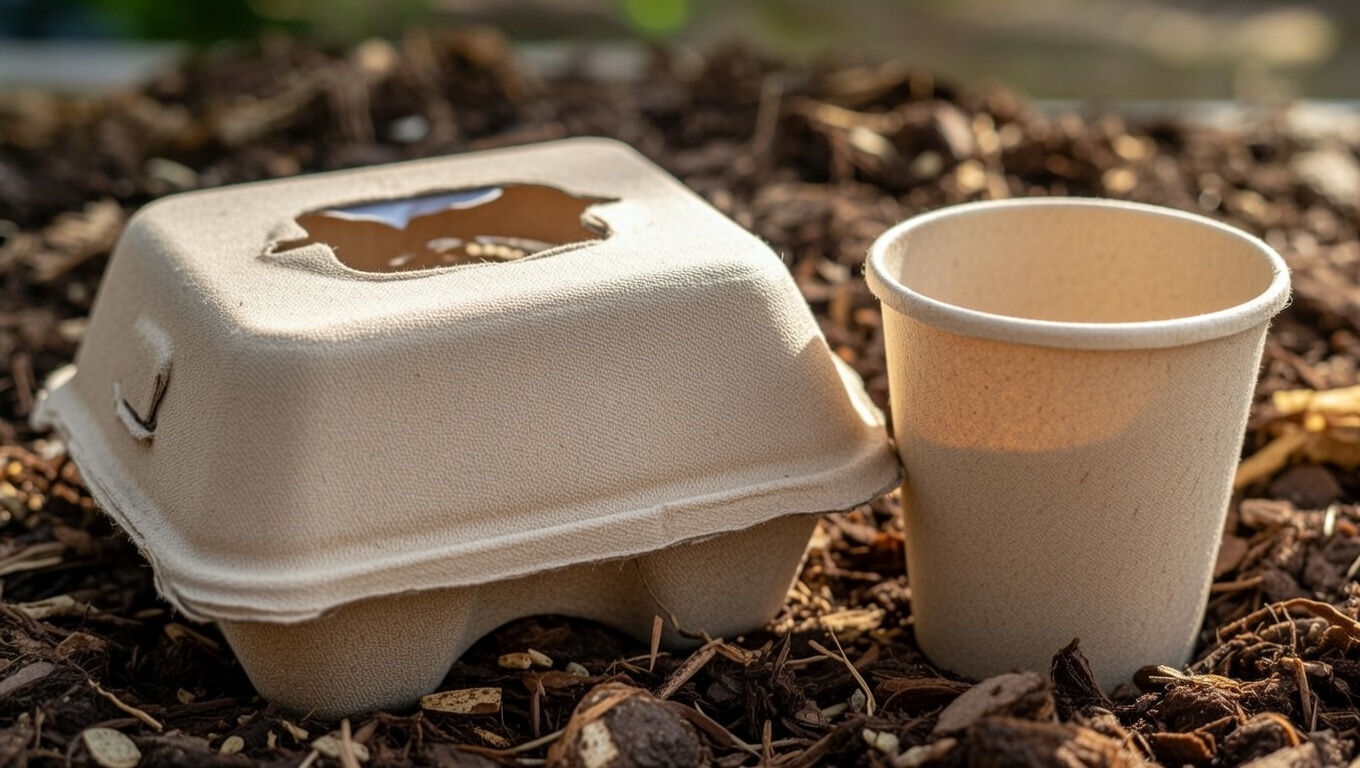
Bagasse cups break down naturally and quickly, usually in 30–90 days in both home and industrial compost piles, turning into rich soil without leaving harmful residues. They are made from farm waste, so they do not use new trees or oil, and their production has a very low carbon footprint. Bagasse is fully compostable and often certified for home use, which makes disposal easier in many places. Even if they end up in a landfill, they degrade faster than plastic-lined cups. This material supports farmers by giving value to sugarcane leftovers instead of burning them. In 2026, bagasse is seen as one of the most truly sustainable choices for the planet.
5. Cost, Durability, and Everyday Practical Use
5.1 Market pricing and supply stability
Traditional PE-lined paper cups are the cheapest option, making them popular for cafes with tight budgets. PLA-lined paper or pure PLA cups usually cost 20–40% more because of the plant-based materials and extra processing. Bagasse cups have the highest upfront price, often 30–50% more than basic paper, but prices are dropping in 2026 as more factories produce them. Many businesses find that bagasse saves money over time because they need no extra sleeves and attract eco-conscious customers who pay more. Supply for bagasse is growing fast due to demand, while paper remains easy to find everywhere. Long-term, the total cost (including brand benefits and rules compliance) often favors bagasse.
5.2 Strength, feel, and customer experience
Paper cups feel smooth and light but can become soggy or weak if the lining gets damaged after long use. PLA feels like regular plastic—rigid at first—but it can soften or warp with heat, which makes holding uncomfortable. Bagasse cups feel thick, sturdy, and a bit textured, like natural wood fiber, and they stay strong without leaking even after 30–60 minutes of hot coffee. The natural insulation in bagasse keeps the outside cooler, so no sleeve is usually needed. Customers often say bagasse feels premium and more trustworthy for hot drinks. Many prefer the earthy look and solid feel over shiny plastic or thin paper.
5.3 Feedback from cafés and food service operators
Cafes that switch to bagasse report far fewer customer complaints about leaks, burns, or soggy cups compared to paper or PLA. Workers like bagasse because the cups pair well with lids, stay firm, and handle busy rush hours without issues. PLA-lined cups work for moderate drinks but get more problems with extra-hot coffee orders. Traditional paper stays common because of low cost, but cafes face pressure from new rules and customer requests for greener choices. Many operators say bagasse builds a positive brand image and brings in customers who care about the environment. Feedback shows bagasse often wins for real-world daily use in 2026.
6. Regulations and Market Trends in 2026
6.1 Policies reducing single-use plastics
In 2026, many countries and cities have strict rules that limit or ban certain single-use plastics, including plastic-lined cups in places like the EU, UK, Singapore, and parts of Asia. Governments push for materials that are easier to recycle or compost to cut down on waste. Bans on harmful chemicals like PFAS in packaging also affect traditional paper linings. These laws make PE-lined paper cups harder and more expensive to use in some areas. Compostable options like bagasse and PLA-lined products get more support because they meet the new standards. Businesses must change to avoid fines and stay legal.
6.2 Growth of bagasse and material innovation
Bagasse is growing very fast in popularity because it needs no plastic lining and works perfectly with hot drinks. New factories make bagasse cups in more sizes, colors, and designs so they look modern and attractive. Improved PLA versions try to fix heat problems, but bagasse leads for hot coffee needs. Many big cafe chains test or switch to bagasse to follow rules and please eco-friendly customers. Innovations focus on making bagasse cheaper and stronger while keeping it natural. In 2026, bagasse is becoming a top choice as the market moves away from plastic-heavy options.The differences between these materials become even clearer when compared side by side.
7. Comparison Table: Bagasse vs PLA vs Paper Cups
| Factor | Paper Cup | PLA Cup | Bagasse Cup |
| Heat resistance | Medium–High | Medium | High |
| Structural strength | High | Medium | High |
| Leak resistance | High | Medium | High |
| Compostability | Limited | Industrial only | High |
| Customer comfort | Medium | Medium | High |
| Real-world usability | High | Medium | High |
8. Final Verdict: Which Material Is Best for Hot Coffee?
As regulations tighten and customer expectations rise, choosing the right cup material is no longer just a sustainability decision—it is a business strategy. For cafés and food service brands aiming to future-proof their operations, aligning performance, compliance, and brand values has become essential. Working with suppliers that offer flexible custom food packaging options enables businesses to select cup materials, sizes, and designs that truly match their hot coffee needs while remaining competitive in a rapidly changing market.
After comparing heat handling, environmental impact, cost, durability, and 2026 market trends, bagasse clearly stands out as the best material for hot coffee cups. It naturally withstands high temperatures without any plastic lining, composts efficiently in both home and industrial settings, and uses agricultural waste instead of trees or fossil-based materials—making it well aligned with tightening regulations. For a broader perspective on material selection across foodservice packaging, see this food packaging materials guide.
9. Frequently Asked Questions (FAQ)
9.1 Can PLA cups handle very hot coffee?
No, standard PLA softens or deforms above 60-70°C. Special versions handle more, but PLA works better for cold or moderate drinks than boiling hot coffee.
9.2 Are bagasse cups suitable for hot soup and beverages?
Yes, bagasse handles hot soup and drinks over 100°C well. The fibers resist oil, water, and heat naturally, with no leaks or softening.
9.3 Why haven’t all cafés switched to bagasse yet?
Bagasse costs more at first, and not every area has strong composting programs. Many cafes stick with cheap paper while learning about options and waiting for prices to drop.
9.4 Is PLA-lined paper better than PE-lined paper?
Yes, PLA-lined is better—it comes from plants and composts in facilities, unlike PE plastic which harms recycling and the environment more.
Post time: Jan-13-2026