

12 oz vs 16 oz Coffee Cups: Which Size Is Right for Your Business?
Coffee Packaging Guide
12 oz vs 16 oz Coffee Cups
Which coffee cup size is right for your business? Compare capacity, recipes, customer expectations, storage, cost, and packaging decisions before choosing.
A 12 oz coffee cup is generally the safer all-purpose choice for standard hot coffee, balanced milk drinks, European cafés, offices and businesses with limited storage. A 16 oz coffee cup is usually better for large lattes, iced coffee, flavored drinks, drive-thru service and customers who expect a larger takeaway portion.
However, choosing between 12 oz and 16 oz is not simply a question of serving more coffee. The extra four ounces can affect espresso strength, milk and syrup costs, cup height, lid compatibility, carton volume, refrigerator shelf efficiency and the way customers perceive value.
This guide compares the two most common coffee cup sizes from the perspective of coffee shops, fast-food restaurants, bakeries, convenience stores, hotels, offices, distributors and chilled beverage brands. And bring you a reliable & one-stop coffee packaging solution.
What Is the Difference Between a 12 oz and 16 oz Coffee Cup?
A 16 oz cup provides 4 additional US fluid ounces, or about 118 ml, of nominal capacity compared with a 12 oz cup. However, the extra space is usually used for milk, water, ice, foam, syrup, or an extra espresso shot—not simply more brewed coffee.
A 12 oz cup holds approximately 355 ml, while a 16 oz cup holds about 473 ml. Actual fill volume is lower because space is needed for lids, foam, ice, and spill prevention.
In practice, the main difference is often cup height rather than rim size. For example, one commercial paper cup range measures 4.107 inches (104 mm) for a 12 oz cup and 5.322 inches (135 mm) for a 16 oz cup, while both use the same 3.537-inch (90 mm) rim size for compatible lids. Dimensions vary by supplier, so buyers should always check specifications.
| Decision factor | 12 oz coffee cup | 16 oz coffee cup |
|---|---|---|
| Nominal capacity | 12 US fl oz, approximately 355 ml | 16 US fl oz, approximately 473 ml |
| Common market position | Small, regular or medium | Medium or large |
| Best suited to | Standard hot coffee, balanced lattes, offices, bakeries and specialty cafés | Large lattes, iced coffee, drive-thru, QSR and convenience retail |
| Espresso-to-milk balance | Easier to maintain | May require a stronger dose or additional shot |
| Space for ice | Limited | Better for ice and liquid together |
| Space for foam and toppings | Moderate | More suitable for whipped cream and toppings |
| Storage requirement | Lower | Higher |
| Refrigerated shelf efficiency | Usually better | Requires more vertical clearance |
| Printable branding area | Smaller | Larger |
| Main commercial advantage | Recipe consistency and cost control | Upselling and perceived value |
| Main risk | May appear small in large-portion markets | Weak coffee flavor, higher ingredient cost and greater storage use |
How Much Beverage Actually Fits in a 12 oz or 16 oz Cup?
Nominal capacity should not be treated as the recommended serving line. Operators need to distinguish among brimful capacity, practical fill volume and the final serving volume after foam, ice or toppings are added.
For example, the representative 12 oz specification above lists a 13.76 oz flush fill and a 12.04 oz practical fill. The corresponding 16 oz cup lists a 17.40 oz flush fill and a 15.62 oz practical fill.
This difference matters when testing recipes. Filling a nominal 16 oz cup to the rim is not a realistic service standard because attaching the lid can displace liquid and increase the risk of spills.
Before ordering disposable coffee cups, prepare the actual drink in a sample cup and measure:
- The liquid volume before foam or ice is added
- The finished fill height below the rim
- The space required by the underside of the lid
- The effect of movement during takeaway or delivery
- The remaining volume after ice begins to melt
Is a 12 oz Coffee Cup Small or Medium?
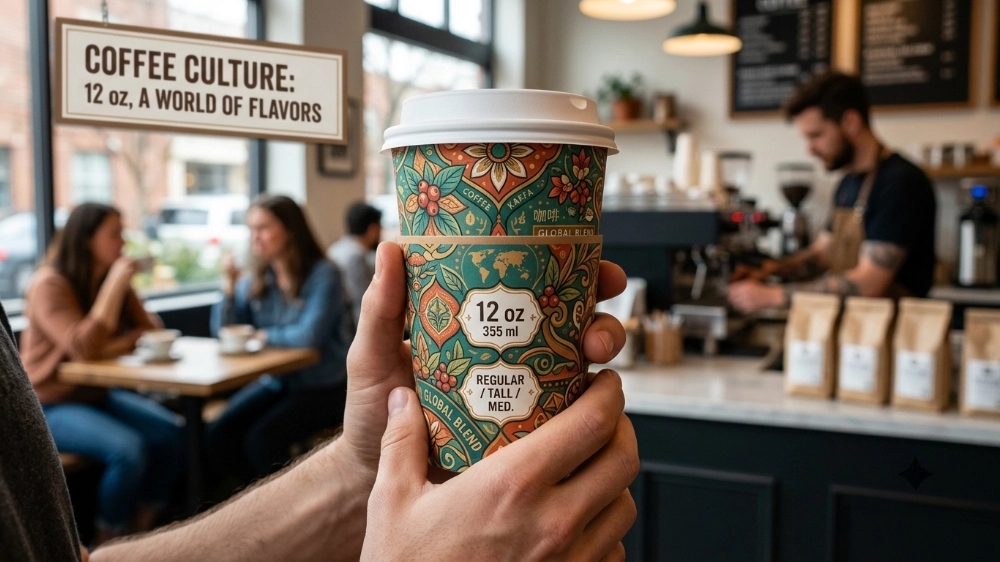
A 12 oz cup can be described as small, regular or medium depending on the brand and market. Coffee cup size names are merchandising terms rather than universal technical standards.
In the United States, Starbucks identifies 12 fl oz as Tall and 16 fl oz as Grande on products such as its Flat White menu. In the United Kingdom, Pret A Manger describes 12 oz as regular and 16 oz as large.
This distinction is important for international buyers. A cup presented as “medium” in one market may be viewed as “small” by customers in another, even though the physical capacity is identical.
When Should a Business Position 12 oz as Its Regular Size?
A 12 oz cup works well as the regular size when hot coffee and milk-based drinks represent most sales. It is particularly suitable where customers value flavor balance, moderate portions and a clear everyday price point.
Businesses that can confidently use 12 oz as their core or regular size include:
- Specialty coffee shops
- UK and European takeaway cafés
- Bakeries where coffee accompanies food
- Hotels and office coffee stations
- Conference and catering services
- Small cafés with limited stockroom space
- Businesses selling premium coffee in controlled portions
Is a 16 oz Coffee Cup Considered Large?
A 16 oz cup is generally treated as a large hot coffee or a standard-to-large iced drink. It gives operators more room for milk, ice, syrups, foam and toppings, but it can weaken coffee intensity when the recipe is not adjusted.
The size is particularly relevant in the United States, where larger takeaway beverages, drive-thru service and cold coffee are important parts of the market. The National Coffee Association reported that cold, iced and frozen blended drinks represented 31% of coffee consumed in its June 2025 survey, compared with 23% in January.
A 16 oz format is therefore commercially useful, but it should not be selected simply because it appears to offer better value. The recipe, price and operating system must support the additional volume.
When Does 16 oz Create Better Customer Value?
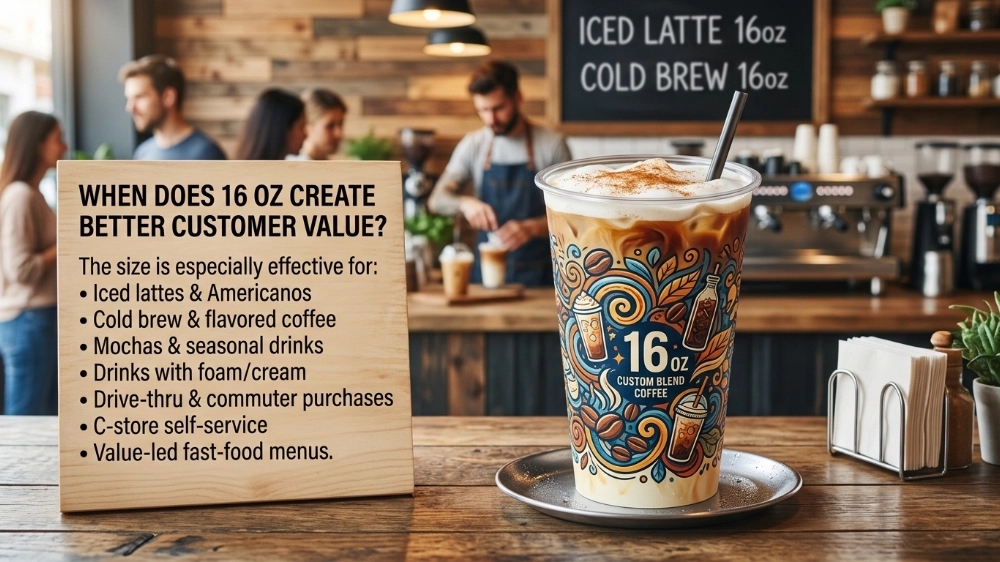
A 16 oz cup creates clear value when customers genuinely receive a longer, larger or more customized beverage. It is less effective when the extra capacity is filled only with inexpensive ice or excessive milk without a corresponding improvement in taste.
The size is especially effective for:
- Iced lattes and iced Americanos
- Cold brew and flavored cold coffee
- Mochas and seasonal beverages
- Drinks with whipped cream or cold foam
- Drive-thru and commuter purchases
- Convenience-store self-service coffee
- Value-led fast-food menus
Is 12 oz or 16 oz Better for Black Coffee, Latte, Cappuccino and Mocha?
The right size depends on the coffee-to-water or coffee-to-milk ratio, not only the drink name. A 12 oz cup protects concentration more easily, while a 16 oz cup works when the recipe is intentionally designed for a longer or more indulgent beverage.
Is 12 oz or 16 oz Better for Drip Coffee?
A 12 oz cup is usually sufficient for standard filter coffee consumed with breakfast, pastries or a short commute. It offers a substantial serving without creating unnecessary waste or allowing the beverage to cool before it is finished.
A 16 oz cup may be more suitable for convenience stores, motorway locations, QSR breakfast service and long commutes. In these settings, customers often evaluate the purchase through volume and convenience as well as flavor.
Is 12 oz or 16 oz Better for an Americano?
A 12 oz Americano normally maintains a clearer relationship between espresso and added water. A 16 oz version can work, but the café should decide whether to increase the espresso dose or intentionally offer a lighter drink.
The key is to set recipes by finished beverage size. Using one espresso dose for every cup can make the larger version taste noticeably weaker, even when customers pay a higher price.
Is 12 oz or 16 oz Better for a Latte?
A 12 oz latte usually produces a more concentrated espresso-and-milk balance and is easier for a new café to standardize. A 16 oz latte can support a higher selling price, but the operator must decide whether it also receives more espresso.
Starbucks offers both 12 fl oz and 16 fl oz Caffè Latte sizes, demonstrating how a multi-size menu can create a clear step between smaller and larger servings. Independent cafés do not need to copy the same menu, but they do need a defined recipe for each size.
When costing a larger latte, include:
- Additional milk
- Any additional espresso
- Extra syrup or sauce pumps
- The larger cup
- A possible change in sleeve size
- Higher freight and storage requirements
Should Cappuccino Be Served in 12 oz or 16 oz?
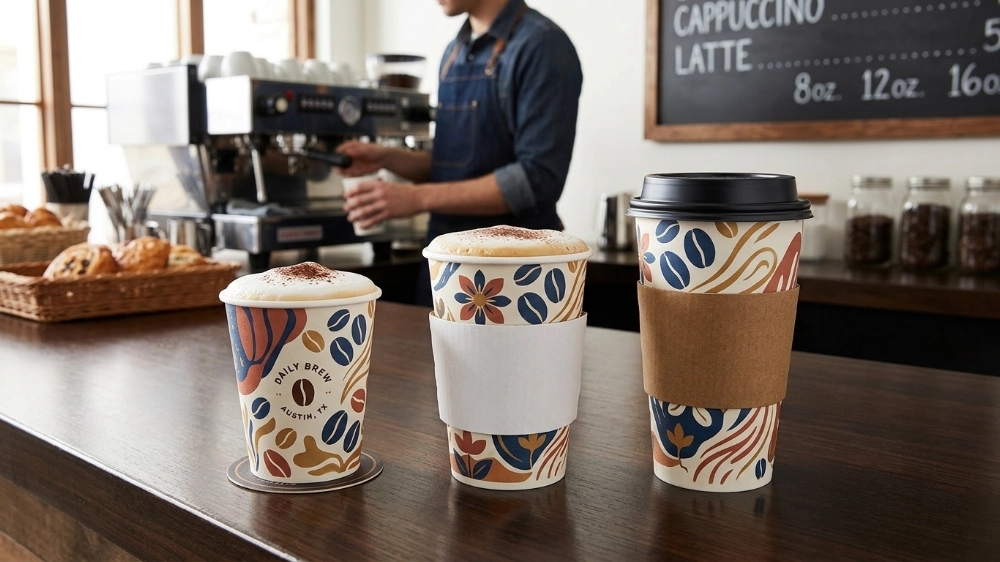
A 12 oz cup is the more practical of the two for a takeaway cappuccino because it limits the amount of milk while allowing room for foam. A 16 oz version moves further away from an espresso-led drink and becomes more dependent on customer expectations than traditional proportions.
Mainstream chains may still sell larger cappuccinos. Pret, for example, states that its standard cappuccino is served as a 12 oz drink, while its wider menu also includes large options for selected beverages.
A specialty café should consider an 8 oz cup for a more compact cappuccino and reserve 12 oz for customers who want a larger takeaway format. A 16 oz cappuccino should be added only when there is proven demand.
Is 16 oz Better for Mocha and Flavored Coffee?
A 16 oz cup is often more suitable for mocha, flavored latte and seasonal drinks because sauces, syrups, whipped cream and toppings require additional room. The larger printed surface can also help seasonal packaging create more visual impact.
However, these drinks may carry significantly more ingredient cost than plain coffee. The price difference between 12 oz and 16 oz should cover the full recipe change rather than only the difference in empty cup cost.
Is 12 oz or 16 oz Better for Iced Coffee?
A 16 oz cup is normally better for iced coffee because ice occupies part of the nominal capacity. A 12 oz format remains useful for concentrated, premium, portion-controlled or refrigerated drinks where compact packaging is an advantage.
An iced drink should be specified using two measurements: the amount of liquid and the amount of ice. Without a defined fill method, employees may serve inconsistent quantities even when every order uses the same cup.
For businesses building an iced beverage range, clear 12 oz and 16 oz PET cups can display coffee layers, milk, ice and toppings. Paper cups may be preferred when full-wrap branding, light protection or a consistent hot-and-cold packaging system is more important.
How Should Ice Change the Cup Size Decision?
Ice reduces the amount of sellable liquid that fits inside the cup, but it also affects temperature, dilution and product appearance. The correct ice level depends on the beverage recipe rather than a universal percentage.
A 12 oz iced latte can work when the drink is intentionally compact and espresso-forward. A 16 oz cup gives staff more working room and makes it easier to deliver a visually full iced drink without crowding the lid.
For businesses building an iced beverage range, clear 12 oz and 16 oz PET cups can display coffee layers, milk, ice and toppings. Paper cups may be preferred when full-wrap branding, light protection or a consistent hot-and-cold packaging system is more important.
Which Coffee Cup Size Is Best for Different Types of Businesses?
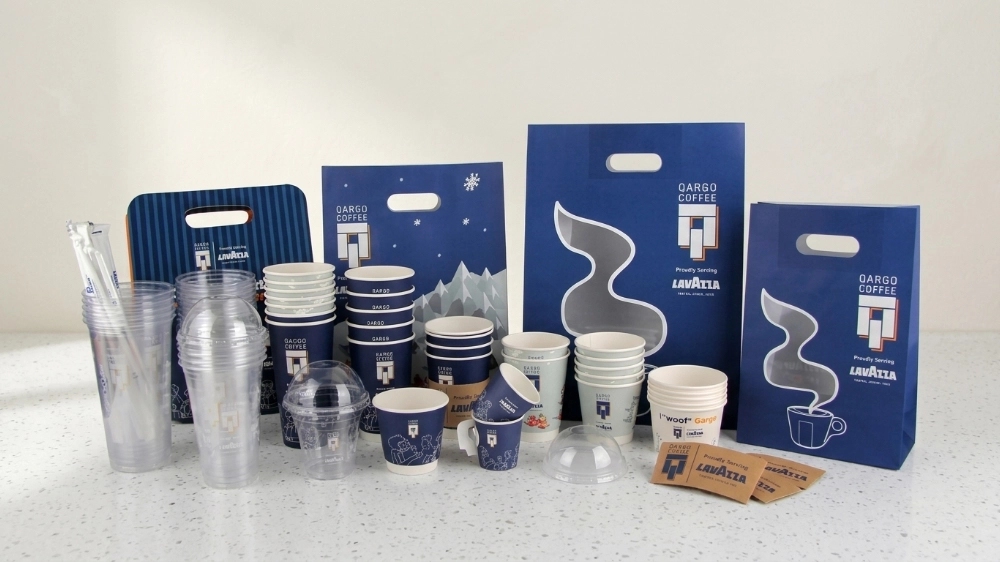
The best size changes according to beverage mix, customer dwell time, local habits, selling channel and storage capacity. A size that works for a drive-thru operator may be inefficient for a bakery, hotel or specialty café. If you want to skip those text, and decide coffee cup size easily, you could try to contact a packaging supplier to offer you coffee packaging professional solution.
| Business type | Recommended core size | Optional second size | Main reason |
|---|---|---|---|
| US drive-thru café | 16 oz | 12 oz | Large, flavored and iced drinks |
| UK or European café | 12 oz | 16 oz | Regular hot-drink portions |
| Specialty coffee shop | 12 oz | 8 oz or 16 oz | Espresso balance and menu control |
| Fast-food restaurant | 16 oz | 12 oz | Value meals and takeaway convenience |
| Bakery or dessert shop | 12 oz | 16 oz | Coffee as an add-on, with room to expand into indulgent drinks |
| Convenience store or petrol station | 16 oz | 12 oz | Self-service, travel and perceived value |
| Office, hotel or conference | 12 oz | None or 8 oz | Lower waste and easier portion control |
| Supermarket chilled coffee brand | 12 oz | 16 oz | Shelf efficiency versus larger value format |
| Food truck or mobile catering | 12 oz | 16 oz | Limited storage and simplified service |
| Packaging distributor | Both | 8 oz and 20 oz | Coverage of multiple customer segments |
What Size Is Best for a Specialty Coffee Shop?
A 12 oz cup is generally the stronger core choice for a specialty café because it protects espresso intensity and keeps the milk volume manageable. A 16 oz option can be added for iced coffee, batch brew or customers who explicitly request larger drinks.
A compact hot-drink range might use 8 oz for cappuccino and flat white, 12 oz for latte and filter coffee, and 16 oz only for iced drinks. This creates meaningful differences rather than offering several sizes that contain nearly identical recipes.
What Size Is Best for a Fast-Food Restaurant?
A 16 oz cup is often more compatible with QSR expectations because it fits value meals, drive-thru orders and longer consumption occasions. A 12 oz option remains useful for breakfast coffee, lower entry pricing and markets with more moderate portion expectations.
Fast-food operators should also evaluate speed. If the same 90 mm lid fits both cup sizes, staff can work faster and the business can reduce lid SKUs without eliminating customer choice.
What Size Is Best for a Bakery or Dessert Shop?
A 12 oz cup is usually sufficient when coffee supports the main purchase of bread, cake or pastries. It controls ingredient cost and leaves customers comfortable carrying both a drink and packaged food.
A 16 oz cup becomes more useful when the business sells iced lattes, matcha, chocolate drinks, milkshakes or beverages with whipped toppings. Bakeries developing a broader takeaway range can also review these coffee shop takeaway packaging ideas when coordinating cups, sleeves, carriers and food packaging.
What Size Is Best for a Convenience Store or Petrol Station?
A 16 oz cup normally aligns better with self-service and on-the-road consumption because customers expect a drink that lasts through a journey. Larger cups also provide more room for visible branding and promotional messages.
A 12 oz size should still be considered for entry-level pricing, waste reduction and customers who want a smaller hot drink. The best self-service system may therefore offer 12 oz as regular and 16 oz as large while using one compatible lid.
What Size Is Best for Hotels, Offices and Conferences?
A 12 oz cup is usually easier to manage in hotels, offices and events because it provides a substantial serving without encouraging excessive waste. It also works better where coffee is available alongside water, tea, food and possible refills.
A 16 oz cup may be justified for long conferences, outdoor events or locations where returning for a refill is inconvenient. Organizers should still consider the physical size of cup holders, trays and waste bins.
What Size Should a New Café Buy First?
A new hot-drink-led café will usually find 12 oz safer as its first core size. A 16 oz-first strategy makes more sense for a concept centered on iced coffee, flavored lattes, drive-thru service or US-style large portions.
When the budget or order quantity permits only one size, use the menu to decide:
- Choose 12 oz when most drinks are hot, simple and espresso-led.
- Choose 16 oz when most drinks are iced, flavored or milk-heavy.
- Choose neither until actual recipes have been tested in physical samples.
Should US and European Coffee Businesses Choose Different Sizes?
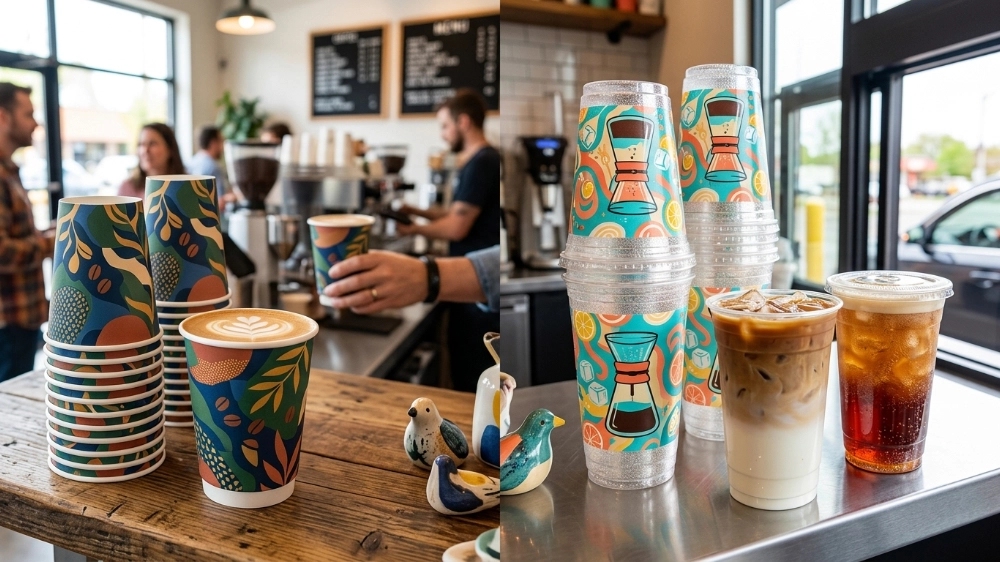
US operators are more likely to treat 16 oz as a core size because large takeaway, iced, flavored and drive-thru drinks are commercially important. UK and European cafés can often make 12 oz their regular format, particularly when sales are led by hot espresso-based drinks.
The difference can be seen in current chain terminology. Starbucks identifies 12 fl oz as Tall and 16 fl oz as Grande, while Pret describes 12 oz as regular and 16 oz as large.
Which Size Is Better for the US Market?
A US café, QSR or convenience business should usually include 16 oz when it serves iced drinks, flavored beverages or drive-thru customers. However, that does not mean 12 oz should be removed from the menu.
Offering both sizes creates a familiar regular-and-large step, supports price segmentation and lets customers choose between concentration and volume. A 12 oz-only range may still work for a premium specialty concept that deliberately rejects oversized beverages.
Which Size Is Better for the UK and Europe?
A 12 oz cup is often the safer regular format for UK and European takeaway coffee because it aligns with moderate hot-drink portions. A 16 oz option is useful in high-traffic locations, international chains, tourist areas and businesses with growing iced-beverage sales.
European buyers should also consider local packaging regulations, collection systems and material requirements. Cup capacity alone does not determine whether the packaging is appropriate for a market.
Which Size Is Better for Supermarket Refrigerated Displays?
A 12 oz cup normally uses vertical refrigerated space more efficiently, while a 16 oz cup provides a larger visual panel and stronger value message. The correct format depends on finished pack height, shelf spacing, product facings, sealing method and the retailer’s planogram.
There is no single standard supermarket refrigerator size that automatically determines the best cup. Commercial merchandising systems use different widths, depths and shelf configurations, and many have adjustable shelves.
How Large Are Typical Supermarket Refrigerated Shelves?
Commercial refrigerated cases vary significantly by store and equipment model. One current Hussmann medium-temperature merchandiser, for example, accepts 18-, 20-, 22- and 24-inch shelf depths and can be configured with four to eight shelves.
This means a packaging buyer should not ask only, “Will a 16 oz cup fit in a supermarket refrigerator?” The more useful questions are:
- What is the finished height after film, lid or overcap is attached?
- How much handling clearance is required above the pack?
- How many display levels does the retailer want?
- How many cups must face forward on each shelf?
- Will the cups be loaded individually or in trays?
- What are the shipping case and retail-ready packaging dimensions?
Why Is 12 oz Often Better for Chilled Ready-to-Drink Coffee?
A 12 oz cup is often suitable for premium dairy coffee, cold brew concentrate and portion-controlled chilled drinks. Its lower height can make it easier to maintain several display levels and increase the number of units merchandised within a limited vertical space.
The representative 12 oz and 16 oz cups compared earlier differ in height by approximately 31 mm. That difference can become significant when retailers attempt to add another shelf level or optimize the space above each row.
A compact format can also communicate a more concentrated or premium product. It is particularly useful when the retail price is supported by ingredients, branding and product quality rather than sheer volume.
When Is 16 oz Better for Chilled Coffee?
A 16 oz format is better when the chilled drink competes through refreshment, extended consumption or value. It also offers more printed area for branding, nutrition information and visual differentiation on the shelf.
The larger size should still be tested in the actual merchandising system. A stronger shelf presence is not valuable if the finished cup reduces shelf levels, creates unstable stacking or increases secondary packaging costs beyond the commercial benefit.
Should Refrigerated Coffee Use a Sip Lid or Sealed Film?
Freshly prepared takeaway coffee can use a sip-through lid, but prepacked refrigerated coffee generally needs a more secure closure for distribution and retail handling. Depending on the product, this may involve heat-sealed film, an overcap or another tamper-evident system.
Retail beverage packaging should be evaluated for leakage, seal integrity, condensation, chilled transport and the expected shelf life. A café lid that performs well during a 20-minute takeaway journey is not automatically suitable for a product moving through a refrigerated distribution chain.
Can 12 oz and 16 oz Coffee Cups Use the Same Lid?
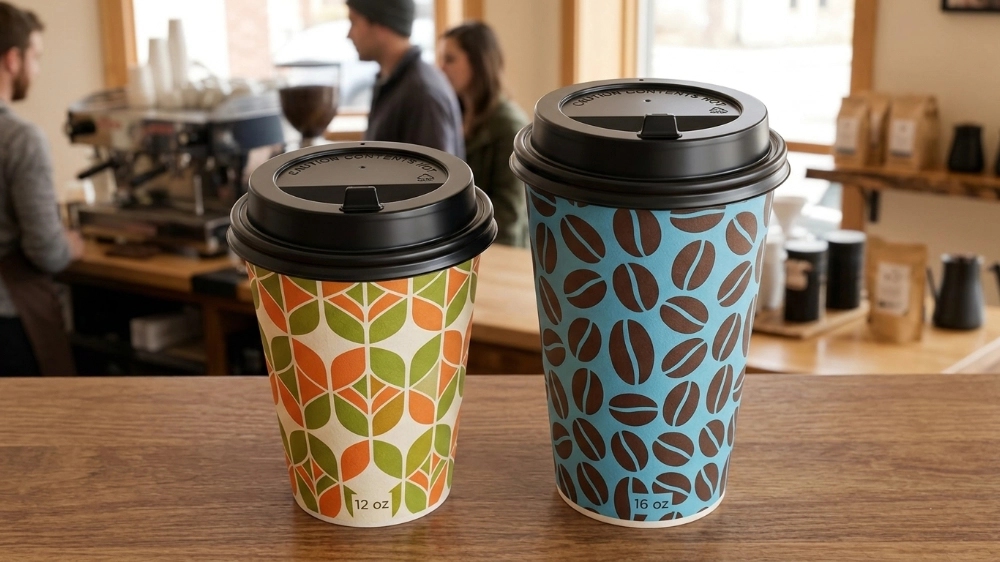
Many commercial 12 oz and 16 oz paper cup families use the same rim diameter, allowing one lid to fit both sizes. Compatibility must still be confirmed with physical samples because nominal lid diameter alone does not guarantee identical rolled-rim geometry.
Graphic Packaging’s hot beverage product range provides examples in which 12 oz and 16 oz cups list the same lid family. This type of system can reduce purchasing complexity, staff errors and emergency lid inventory.
A shared lid system can help reduce:
- Number of inventory items
- Storage requirements
- Staff selection errors
- Emergency purchasing pressure
- Operational complexity
What Must Be Checked Beyond the Rim Diameter?
Lid fit depends on more than a published 90 mm measurement. The rim profile, board thickness, coating, forming tolerance and lid design all influence retention and leakage performance.
A proper compatibility test should check:
- How firmly the lid snaps onto the rim
- Whether the lid rotates or lifts under pressure
- Leakage around the seam and drinking opening
- Fit after the cup is filled with a hot beverage
- Performance during squeezing and normal carrying
- Whether condensation changes cold-cup fit
Can Both Sizes Use the Same Sleeve?
Some sleeves can fit both sizes, but cup taper and bottom diameter may position the sleeve differently. A sleeve that fits securely on a 12 oz cup may sit too low or feel loose on a taller 16 oz cup.
Businesses choosing between single-wall and insulated cups should compare the complete service cost. A single-wall paper cup may have a lower unit cost but require a separate sleeve for very hot drinks, while a double-wall cup incorporates additional insulation into the cup structure.
Will Both Sizes Fit the Same Dispenser and Cup Holder?
The same rim diameter does not guarantee identical performance in dispensers or vehicle cup holders. Height, bottom diameter, taper, nesting depth and stack length all affect operational fit.
This is especially important for vending machines, self-service counters and drive-thru businesses. Samples should be tested in the actual dispenser, takeaway carrier and a representative selection of vehicle cup holders before the final specification is approved.
Which Size Costs More When the Full Drink Is Included?
A 16 oz drink normally costs more because it may use additional cup material, milk, coffee, syrup, ice, toppings, carton volume and storage space. The correct comparison is contribution per completed drink, not the purchase price of the empty cup.
Does a 16 oz Cup Always Need More Espresso?
No universal rule requires an extra shot, but keeping the same espresso dose while adding more milk or water changes the taste. The business must decide whether the larger size is intended to maintain strength or offer a lighter, longer drink.
For every 12 oz and 16 oz recipe, record:
- Espresso dose or brewed coffee volume
- Milk or water volume
- Syrup and sauce quantity
- Ice fill method
- Foam or topping allowance
- Finished fill line
- Total ingredient cost
Can a 16 oz Cup Produce a Higher Margin?
A 16 oz drink can produce more gross profit when the selling-price increase exceeds the additional ingredient and packaging cost. It can reduce margin when expensive ingredients are added without a sufficient price difference.
For example, dairy alternatives, extra espresso, sauces and whipped toppings may cost much more than the four-ounce capacity difference suggests. Operators should calculate each recipe independently rather than applying one standard upgrade price to every drink.
How Do 12 oz and 16 oz Cups Affect Storage and Shipping?
A 16 oz cup generally occupies more carton and warehouse volume even when the case contains the same number of cups. This matters for compact stores, food trucks, distributors and importers paying freight by pallet or cubic meter.
In Graphic Packaging’s compostable hot cup range, both sizes are packed at 1,000 cups per case, but the 12 oz case has a cube of 3.15 while the 16 oz case has a cube of 3.99. The example illustrates why a larger cup can increase logistics requirements even when the unit count is unchanged.
What Should Wholesale Buyers Compare?
Wholesale buyers should compare more than pieces per carton. The following measurements determine the real logistics cost:
- Cups per sleeve
- Sleeves per carton
- Carton dimensions
- Carton gross weight
- Cartons per pallet
- Cups per cubic meter
- Container loading quantity
- Separate lid, sleeve and accessory cartons
A distributor may prefer to stock both sizes because it serves several customer types. A single café may achieve better cash flow and stock rotation by using one core cup size and one shared lid.
Should a Business Offer Both 12 oz and 16 oz Coffee Cups?
Offering both sizes creates a clear regular-and-large menu and gives customers more control over volume and price. The disadvantage is additional inventory, more recipes, extra staff training and a higher risk of picking or ordering errors.
When Should You Offer Both Sizes?
Stock both 12 oz and 16 oz when each size supports a distinct purchase occasion. The combination works particularly well when 12 oz is used for standard hot drinks and 16 oz is used for large, iced or customized drinks.
Both sizes are easier to manage when:
- They share one lid
- Sales volume supports two cup inventories
- The menu shows a meaningful price difference
- Recipes are documented separately
- Staff can identify sizes quickly
- Storage locations are clearly organized
When Should You Offer Only 12 oz?
A 12 oz-only system suits specialty cafés, bakeries, offices, catered events, compact stores and businesses that prioritize consistency. It is also a sensible starting point for a new operator testing demand before expanding the menu.
Using one size can simplify cup ordering, lid management, recipe cards, staff training and point-of-sale programming. The business should still make sure the portion feels appropriate for its target market.
When Should You Offer Only 16 oz?
A 16 oz-only system works best for concepts built around iced beverages, flavored drinks, drive-thru service, convenience and large portions. It is less suitable when traditional espresso balance, low ingredient use or moderate European-style portions are central to the brand.
A 16 oz-only business should avoid using one weak recipe across the entire menu. Black coffee, latte, cold brew and topped seasonal drinks may all require different usable fill volumes.
How Can You Decide Between a 12 oz and 16 oz Coffee Cup?
Choose 12 oz when flavor balance, hot drinks, compact storage, moderate portions and cost control are the main priorities. Choose 16 oz when the business depends on iced drinks, larger servings, drive-thru convenience, flavored beverages or upselling.
Choose 12 oz When:
- Most orders are hot coffee or espresso-based drinks.
- The target market accepts moderate portions.
- Coffee flavor should remain prominent in milk drinks.
- The business has limited counter or warehouse space.
- A single core cup size is preferred.
- Refrigerated shelf-height efficiency is important.
- Ingredient and packaging cost control take priority.
Choose 16 oz When:
- Iced coffee is a major product category.
- Customers expect large takeaway drinks.
- Drive-thru or convenience service dominates sales.
- The menu includes syrups, sauces, foam or toppings.
- A larger printing area has branding value.
- The business can price additional ingredients correctly.
- Storage, dispensers and carriers support the taller cup.
Choose Both When:
- The menu needs clear regular and large sizes.
- Hot and iced drinks are both commercially important.
- The two cups can share one lid family.
- Sales volume justifies separate inventories.
- Staff can follow different recipes accurately.
- The larger size creates measurable revenue rather than unnecessary complexity.
What Should Buyers Check Before Ordering Coffee Cups?

Buyers should confirm the actual drink recipe, practical fill, cup dimensions, lid fit, wall structure, coating, printing area, carton size and equipment compatibility. Samples should be tested with the real beverage and complete service system before mass production. The most important is that selecting the right, real manufacturer can bring you professional, one-stop, and quality packaging services.
Which Cup Dimensions Must Be Confirmed?
Nominal capacity alone is not sufficient for purchasing. Request a technical specification covering:
- Brimful or flush-fill capacity
- Recommended practical fill
- Rim diameter
- Cup height
- Bottom diameter
- Cup taper
- Nesting depth
- Stack height per sleeve
- Carton dimensions
These measurements affect lids, sleeves, dispensers, cup holders, refrigerated shelves and transport cartons.
Which Cup Structure Should Be Selected?
Single-wall cups are lightweight and economical but may require sleeves for very hot beverages. Double-wall and ripple-wall cups offer more insulation and a more substantial feel, but normally use more material and shipping space.
Businesses can explore custom double-wall coffee cups when heat protection and premium presentation are important. For cost-sensitive, high-volume service, custom 12 oz and 16 oz single-wall cups may be a more efficient solution when paired with suitable sleeves.
What Should Be Tested Before Mass Production?
A production-approved sample should be evaluated as a complete packaging system, not as an empty cup. Testing should include:
- Practical beverage fill
- Lid attachment and retention
- Leakage around the rim and side seam
- Resistance to softening during the expected use time
- Heat protection and sleeve fit
- Print position, color and barcode readability
- Nesting and dispenser release
- Fit in carriers and vehicle cup holders
- Carton compression and transport stability
- Seal integrity and condensation for refrigerated products
Businesses requiring branded service packaging can review the available options for custom printed takeaway coffee cups, including multiple sizes, cup structures and printing methods.
Is a 12 oz or 16 oz Coffee Cup Better for Your Business?
A 12 oz cup is the more versatile core format for standard hot coffee, balanced milk drinks, specialty cafés, bakeries, offices, European markets and businesses with limited storage. A 16 oz cup is stronger for iced coffee, flavored beverages, drive-thru service, QSRs, convenience retail and US-style large portions.
The best decision is not based on capacity alone. It should combine customer expectations, beverage recipes, selling prices, lid compatibility, equipment, warehouse space, freight cost and retail display requirements.
Before committing to a bulk order, test both sizes using the actual drink, lid, sleeve, dispenser, carrier and sales environment. The right cup is the one that protects product quality while making service simpler and commercially sustainable. If you’re still hesitating about cup size of your coffee business, you can contact professional packaging supplier to provide you one-stop solution.
Frequently Asked Questions
Is 12 oz a standard coffee cup size?
Yes, 12 oz is widely used for standard hot coffee, lattes and takeaway drinks, although some businesses call it small and others call it regular or medium. It is a practical core size for businesses that prioritize balanced recipes and manageable ingredient costs.
Is 16 oz too large for a latte?
A 16 oz latte is not necessarily too large, but it may taste weak if it receives the same espresso dose as a 12 oz latte. The recipe should be adjusted so that the additional capacity does not come entirely from extra milk.
Can 12 oz and 16 oz coffee cups use the same lid?
Yes, many commercial cup ranges use the same rim diameter for both sizes. Buyers should still test the physical cup-and-lid combination because the same nominal diameter does not guarantee secure compatibility across different manufacturers.
Which coffee cup size should a new café buy first?
A hot-drink-led café will usually find 12 oz safer as its first core size, while an iced, flavored or drive-thru concept may benefit more from 16 oz. The final choice should reflect the menu, target market, storage space and average selling price.
Post time: Jul-15-2026